Gongfu Brewing: The Chinese Method That Transforms How Tea Tastes
- Gongfu brewing (工夫泡茶) uses a high tea-to-water ratio and multiple short infusions — typically 5–8g of tea per 100–150ml of water, steeped for just 10–30 seconds per round, yielding 7–15+ infusions from the same leaves
Quick Answer
- Gongfu brewing (工夫泡茶) uses a high tea-to-water ratio and multiple short infusions — typically 5–8g of tea per 100–150ml of water, steeped for just 10–30 seconds per round, yielding 7–15+ infusions from the same leaves
- The method originated in the Chaoshan (潮汕) region of Guangdong Province, with written records dating to the Qing dynasty. Chaozhou Gongfu Tea was inscribed on UNESCO's Representative List of the Intangible Cultural Heritage of Humanity in 2022
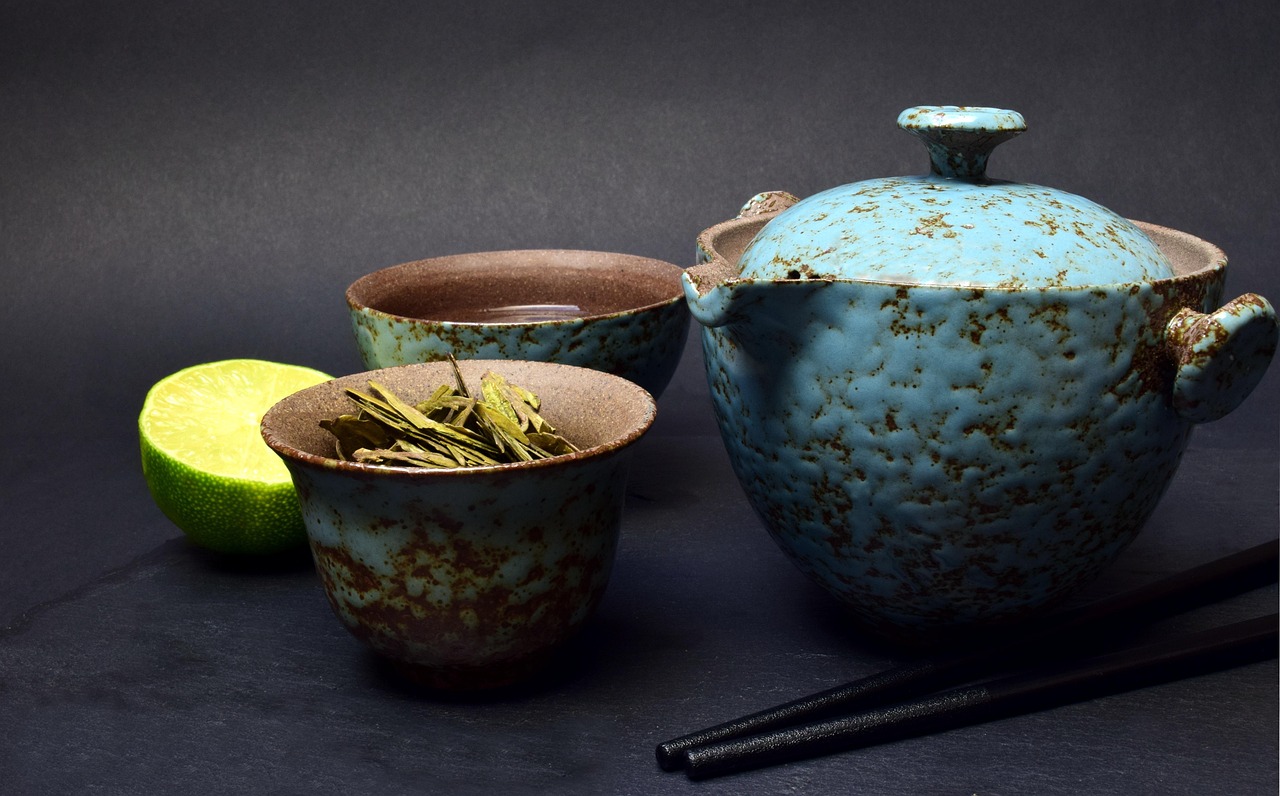
- The two essential gongfu brewing vessels are the gaiwan (盖碗) and the Yixing purple clay teapot (紫砂壶) — each has distinct advantages depending on the tea type and the brewer's goals
- Gongfu brewing extracts flavors in layers rather than all at once, revealing complexity that a single long steep completely misses — the first infusion of a good oolong tastes nothing like the fifth or tenth
Most people in the West brew tea by dropping a bag or some leaves into a large mug, adding hot water, and waiting 3–5 minutes. One steep, one flavor, done.
Gongfu brewing does the opposite. Small vessel. Lots of leaf. Very short steeps. And then you do it again. And again. And again — sometimes 10 or 15 times with the same leaves, each infusion revealing something different.
The word "工夫" (gōngfu) in this context doesn't mean kung fu. It means skill, effort, and attention to detail — the same word used in Chaoshan (潮汕) dialect to describe anything done with meticulous care. Gongfu tea is tea made with care.
This guide covers the method, the equipment, the technique, and the common mistakes — drawing from Chinese sources including Chaozhou tea culture documentation, Zhihu tea communities, and traditional tea arts references.
Use the Brewing Calculator for precise parameters, or explore our Tea Database for teas especially suited to gongfu brewing.
The History: Where Gongfu Brewing Comes From
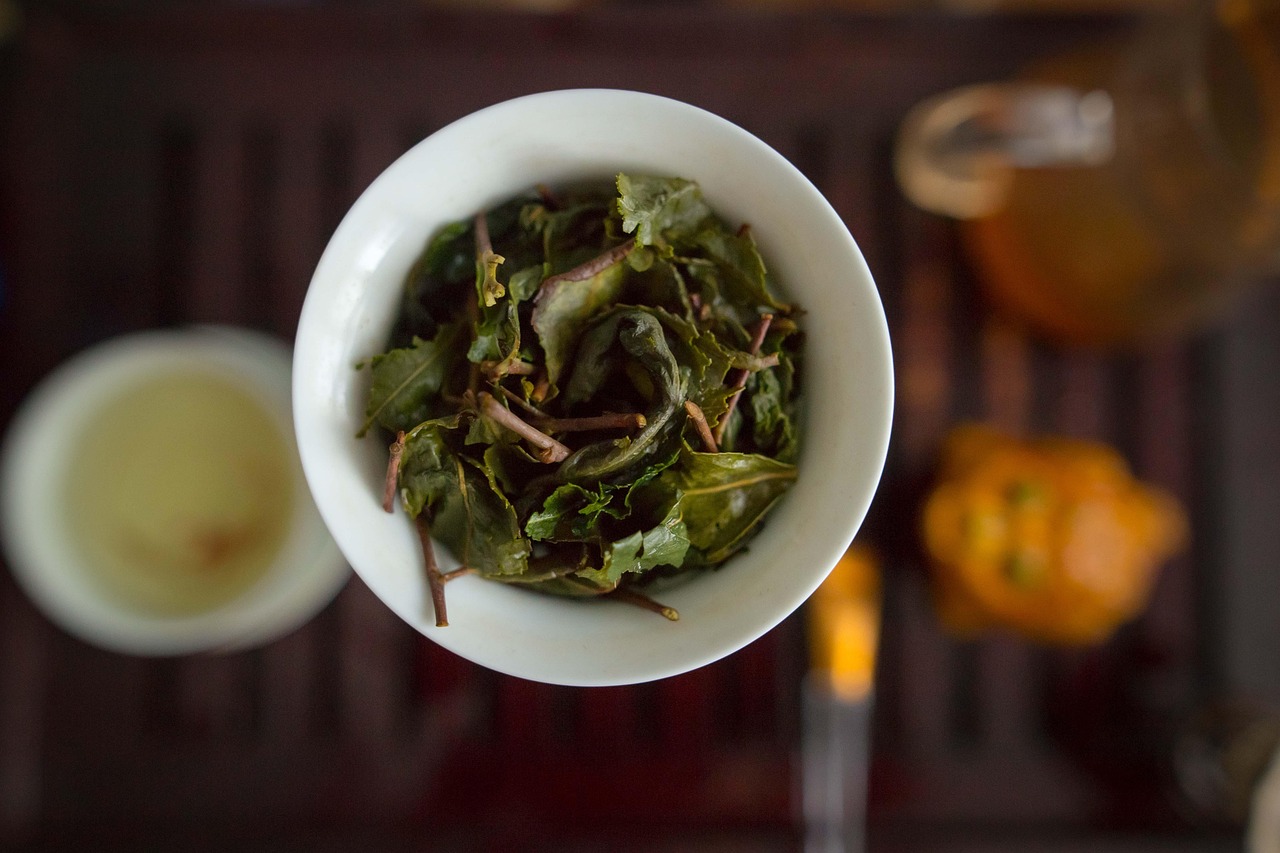 Photo by directmonitor on Pixabay
Origins in Chaoshan
Gongfu tea (工夫茶) is most strongly associated with the Chaoshan region of Guangdong Province — the cities of Chaozhou (潮州), Shantou (汕头), and Jieyang (揭阳). In Chaoshan culture, gongfu tea is not a hobby or a ceremony. It is daily life. Every home, every shop, every office has a tea setup. Meetings start with tea. Guests are greeted with tea. Arguments are settled over tea.
The earliest written record scholars widely accept is in Yu Jiao's (俞蛟) Chao Jia Feng Yue Ji (《潮嘉风月记》), a Qing dynasty text that describes the elaborate tea-drinking customs of the Chaozhou area. This places gongfu tea's documented history at least 200+ years, though the oral tradition likely goes back much further.
The practice also has deep roots in southern Fujian — the Zhangzhou (漳州) and Quanzhou (泉州) areas — which share linguistic and cultural ties with Chaoshan. Some scholars argue the practice originated in Fujian's Wuyi Mountains before migrating south to Guangdong.
UNESCO Recognition
In November 2022, "Traditional tea processing techniques and associated social practices in China" was inscribed on UNESCO's Representative List of the Intangible Cultural Heritage of Humanity. Chaozhou Gongfu Tea (潮州工夫茶艺) was specifically included as one of the representative practices. This recognition was a milestone: it acknowledged gongfu tea not just as a brewing method but as a living cultural practice that has been continuously practiced for over a thousand years.
Spread Beyond Chaoshan
Gongfu brewing spread from Chaoshan and southern Fujian to the rest of China and eventually the world. Today, tea shops across China — from Beijing to Chengdu to Kunming — use gongfu technique as the default way to serve premium tea. The method has also been adopted by tea enthusiasts in Taiwan, Japan, Korea, Europe, and North America.
But the Chaoshan version remains the most codified and ritualized. In Chaoshan, the number of cups (traditionally three), the pouring technique (关公巡城, "Guan Gong patrols the city"), and even the arrangement of the tea set follow specific conventions passed down through generations.
Why Gongfu Brewing Changes Everything
The Science of Extraction
Tea flavor comes from the dissolution of soluble compounds — polyphenols, amino acids, caffeine, aromatic volatiles, sugars, and minerals — from the leaf into the water. How much of each compound dissolves depends on:
- Temperature: Hotter water extracts more and faster
- Time: Longer steeping extracts more
- Surface area: Broken leaves release compounds faster than whole leaves
- Ratio: More leaf per unit of water means more concentrated extraction
Western-style brewing uses a low leaf-to-water ratio (2–3g per 250ml) and a long steep (3–5 minutes). This extracts a broad, averaged flavor in one shot. It works. But it's a blunt instrument.
Gongfu brewing uses a high leaf-to-water ratio (5–8g per 100–150ml) and very short steeps (10–30 seconds). Each infusion extracts a different layer of flavor:
- First infusion: The most volatile aromatic compounds and surface-level flavors. Often floral, bright, and light
- Middle infusions (3–7): The "heart" of the tea. Body, sweetness, minerality, and the tea's core character emerge
- Late infusions (8–15): The deeper, more subtle compounds. Sweetness, woodiness, and a calm smoothness
This layered extraction is why tea enthusiasts often say gongfu brewing "reveals" a tea. You experience its full range rather than a single averaged impression.
Practical Advantages
Beyond flavor, gongfu brewing has practical benefits:
- You drink more tea from the same leaves: 7–15 infusions from 5–8g of leaf yields far more total tea than one Western steep from 3g
- You control bitterness: Short steeps prevent over-extraction. If one infusion is too strong, the next will be lighter
- You learn the tea: Watching how a tea changes across infusions teaches you about its quality, processing, and storage better than anything else
- It's social: The small cups and repeated pouring create a natural rhythm for conversation
The Equipment
Essential: Gaiwan (盖碗)
The gaiwan — literally "lidded bowl" — is a three-piece vessel: saucer, bowl, and lid. Standard gongfu gaiwans hold 100–150ml. The gaiwan is the most versatile gongfu brewing tool because:
- Porcelain doesn't absorb flavors: Every tea tastes like itself, not like the last tea you brewed
- You can observe the leaves: The wide opening lets you see leaf quality, watch the unfurling, and smell the wet leaf aroma (闻香)
- Temperature control: The thin porcelain cools quickly, giving you more control over extraction
- Easy to clean: Rinse and it's ready for a completely different tea
The gaiwan is the recommended vessel for beginners and for anyone who drinks many different types of tea.
Holding technique: The "three-finger method" (三指法) is standard. Thumb and middle finger grip the bowl rim on opposite sides. Index finger rests on the lid to hold it in place while pouring. The key is gripping the rim, not the body — the body is too hot.
A common complaint: "the gaiwan burns my fingers." This is almost always a technique issue, not a design issue. If you're getting burned, you're either gripping too low (touching the hot body instead of the rim) or using a gaiwan with a poorly designed rim that doesn't flare out enough. A well-made gaiwan with a proper flared rim and correct technique should not burn you.
Essential: Yixing Purple Clay Teapot (紫砂壶)
Yixing (宜兴) teapots are made from a special purple clay (紫砂) found near Yixing city in Jiangsu Province. The clay's microscopic pore structure gives it unique properties:
- Breathability: The clay allows minimal air exchange, slightly softening the brew
- Absorption: Over time, the pot absorbs tea oils, building a "seasoning" (包浆) that enhances future brews
- Heat retention: Yixing holds heat longer than porcelain, good for teas that need sustained high temperature (pu-erh, roasted oolong)
The dedication principle: Traditional practice dictates that one Yixing pot should be dedicated to one type of tea. A pot used for ripe pu-erh for years develops a pu-erh seasoning that would interfere with a delicate green oolong. Serious tea drinkers often own multiple pots — one for pu-erh, one for rock tea, one for Tieguanyin.
Choosing size: For solo gongfu sessions, 80–120ml. For 2–3 people, 120–180ml. Larger pots exist but defeat the gongfu principle of concentrated extraction.
Authenticity concerns: The Yixing teapot market has serious counterfeiting issues. Genuine Yixing purple clay (zisha) is a limited resource. Many "Yixing" pots sold cheaply online are made from ordinary clay mixed with chemical colorants. For a first Yixing pot, buy from a reputable dealer and expect to spend at least 200–500 yuan for a genuine handmade pot. Factory-made genuine zisha pots start around 100–200 yuan.
Supporting Equipment
Fair cup / Gongdao bei (公道杯): Also called a "tea pitcher" or cha hai (茶海). After steeping, you pour from the gaiwan or teapot into this pitcher first, then from the pitcher into the individual cups. Purpose: ensures each cup gets the same strength of tea (hence "fair cup").
Tea cups (品茗杯): Small cups, typically 30–50ml. The small size is intentional — you're meant to drink each cup in 2–3 sips, appreciating the aroma and flavor before the next infusion.
Tea tray (茶盘): A tray with a drain to catch water overflow. During gongfu sessions, you pour water over the teapot and rinse cups freely — the tray catches everything. Modern alternatives include dry-pour trays and tea mats (壶承).
Tea tools set (茶道六君子): A set of six bamboo or wooden tools — tea scoop, tea pick, tea needle, tea tongs, tea funnel, and tool holder. The most useful are the pick (for clearing spout blockages), the scoop (for transferring leaf into the vessel), and the tongs (for handling hot cups).
Kettle: A variable-temperature electric kettle is ideal for gongfu. Different teas need different temperatures. Quick heating between infusions keeps the session flowing.
The Gongfu Method: Step by Step
 Source: Yunnan Sourcing
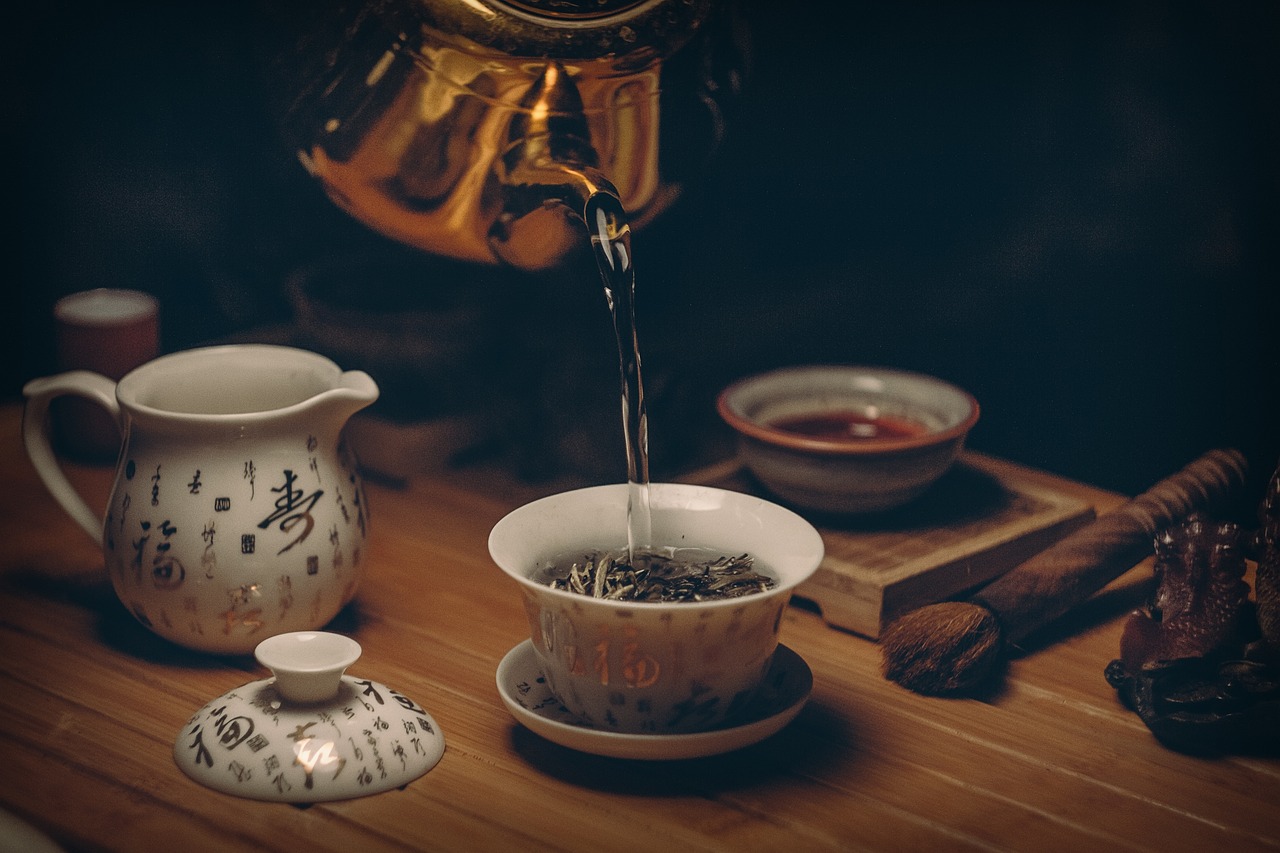 Photo by
 Preparation
- Heat your water to the appropriate temperature for your tea type (see chart below)
- Warm the vessel: Pour hot water into and over your gaiwan or teapot. This pre-heats the vessel so it doesn't cool your brewing water. Pour the warming water into your fair cup, then use it to warm the drinking cups. Discard
- Measure your tea: 5–8g for a 100–150ml vessel. For ball-rolled oolongs (Tieguanyin), use the lower end since they expand dramatically. For pu-erh, use the higher end
Brewing
- Add tea to the vessel: Drop the dry leaf in. Put the lid on. Lift the lid and smell — the residual heat from pre-warming releases the dry leaf aroma (干香). This tells you a lot about the tea before you even add water
- Rinse (洗茶): Pour hot water over the leaves, let it sit for 3–5 seconds, then pour it out completely. This "wakes up" the leaves and washes off surface dust. For pu-erh, you may rinse twice. For green tea and white tea, skip the rinse or make it very brief (1–2 seconds)
- First infusion: Pour water, start timing. For most teas, 10–20 seconds is enough for the first real infusion. Pour out completely — don't leave water sitting on the leaves between infusions
- Pour into fair cup first: This mixes the early pour (weaker) with the late pour (stronger) for even concentration
- Pour from fair cup into drinking cups: Fill each cup about 70% full — the Chinese convention is "七分满" (seven-tenths full), leaving room to hold the cup comfortably without burning fingers
Subsequent Infusions
- Increase time gradually: Add 3–10 seconds per subsequent infusion. The exact increase depends on the tea — delicate teas need smaller increments, robust teas can handle larger jumps
- Observe the changes: Pay attention to how the color, aroma, and flavor shift across infusions. This is the whole point of gongfu — experiencing the tea's evolution
- Know when to stop: When the tea tastes thin and watery despite extended steeping times, the leaves are spent. A quality tea should give you at least 7 meaningful infusions; exceptional teas can go 15–20
The Traditional Three-Cup Method (Chaoshan Style)
In traditional Chaoshan gongfu tea, only three cups are used regardless of how many people are present. Three is the standard because:
- Three cups fit naturally in a triangular arrangement on the tea tray
- The three-cup configuration represents the ideal balance in Chaoshan tea culture
- Three guests is the traditional number for an intimate tea session
If more people are present, they take turns. If fewer, extra cups are still set out as a sign of hospitality (an empty cup invites a guest to join).
The pouring technique follows "关公巡城" (Guan Gong patrols the city) — the pourer moves back and forth across the three cups in a continuous, even stream, rather than filling one cup at a time. This ensures equal strength in each cup. The final drops, called "韩信点兵" (Han Xin marshals the troops), are distributed drop by drop into each cup — these last drops are the most concentrated and flavorful.
Gongfu Parameters by Tea Type
| Tea Type | Water Temp | Tea Amount (per 100ml) | First Steep | Steep Increase | Expected Infusions |
|---|---|---|---|---|---|
| Green tea | 75–85°C | 3–4g | 15–20 sec | +5 sec | 3–5 |
| White tea | 85–95°C | 4–5g | 15–20 sec | +5 sec | 5–8 |
| Yellow tea | 80–85°C | 3–4g | 15–20 sec | +5 sec | 3–5 |
| Light oolong (Tieguanyin) | 90–95°C | 5–7g | 10–15 sec | +3–5 sec | 7–10 |
| Roasted oolong (Da Hong Pao) | 95–100°C | 5–7g | 10–15 sec | +5 sec | 7–12 |
| Dan Cong oolong | 95–100°C | 5–7g | 5–10 sec | +3–5 sec | 8–15 |
| Red tea | 90–100°C | 4–5g | 10–15 sec | +5–10 sec | 5–8 |
| Raw pu-erh (young) | 95–100°C | 7–8g | 8–10 sec | +3–5 sec | 10–20 |
| Raw pu-erh (aged) | 100°C | 7–8g | 10–15 sec | +5 sec | 10–20 |
| Ripe pu-erh | 100°C | 7–8g | 10–15 sec | +5–10 sec | 8–15 |
These are starting points. Adjust based on your personal taste, the specific tea, and how the tea responds. Gongfu is a dialogue between you and the tea — the parameters guide the conversation, not dictate it.
Common Mistakes and How to Fix Them
Mistake 1: Steeping Too Long
The most common beginner error. Even 10 extra seconds in a small, leaf-packed vessel can mean the difference between sweet and bitter. Use a timer until you develop an intuitive sense.
Fix: Start with shorter steeps than you think necessary. You can always steep longer next time; you can't un-steep a bitter cup.
Mistake 2: Not Draining Completely
Leaving water in the vessel between infusions continues extracting the leaves, making the next pour bitter and muddy.
Fix: Tilt the gaiwan or pot fully and wait for the last drops to drain. Some people give a gentle shake at the end to clear residual water. Make sure to drain completely within a few seconds.
Mistake 3: Using the Wrong Water Temperature
Boiling water on a delicate green tea scalds it. Lukewarm water on a roasted oolong under-extracts it. Temperature matters more in gongfu than in Western brewing because the concentrated leaf-to-water ratio amplifies the effect.
Fix: Get a variable-temperature kettle. Learn the general temperature zones: delicate teas below 85°C, medium teas 85–95°C, robust teas at or near boiling.
Mistake 4: Too Much or Too Little Leaf
Overpacking the vessel produces overwhelmingly strong, bitter tea that's undrinkable even at 5-second steeps. Underpacking produces thin, watery tea no matter how long you steep.
Fix: Use a scale. Seriously. A 0.1g kitchen scale costs almost nothing and eliminates guesswork. Weigh your leaf until you develop a feel for the right amount by sight.
Mistake 5: Ignoring the Rinse
Skipping the rinse for pu-erh or oolong means your first infusion includes dust, loose particles, and surface compounds that can taste harsh or flat.
Fix: Always rinse compressed and heavily processed teas (pu-erh, roasted oolong). For fresh green tea and light white tea, a very brief rinse (1–2 seconds) or no rinse is fine.
Mistake 6: Buying Equipment Before Learning Technique
Spending hundreds on a Yixing pot before you know how to use a gaiwan is like buying a professional camera before you understand exposure.
Fix: Start with an inexpensive porcelain gaiwan (100–150ml) and small cups. Master the basics — timing, pouring, temperature control — before investing in specialized equipment.
Water: The Other Half of Tea
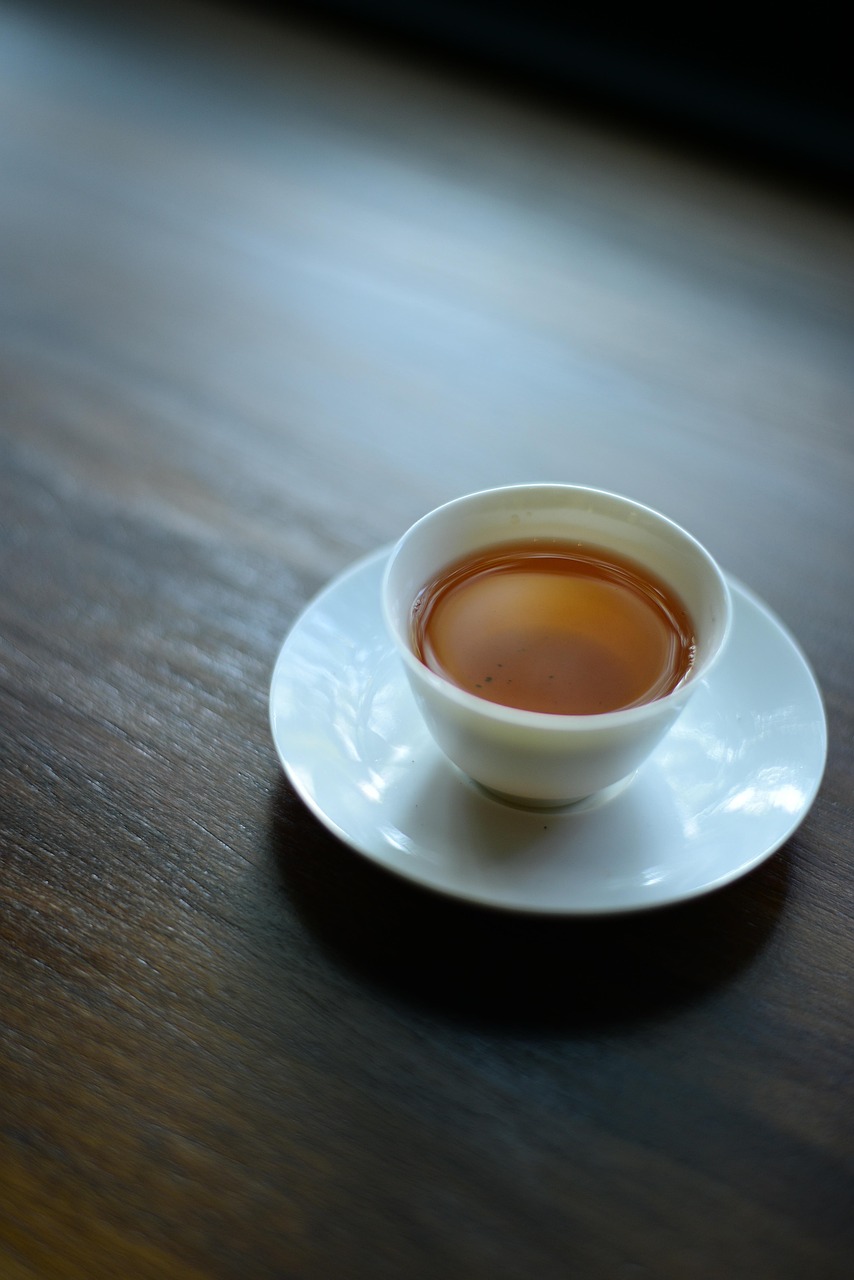 Photo by
 Chinese tea culture has always treated water as equal to the tea leaf itself. The Tang dynasty tea sage Lu Yu (陆羽) devoted an entire chapter of his Classic of Tea (《茶经》) to water selection, ranking spring water first, river water second, and well water third.
For gongfu brewing, water quality matters even more than for Western-style brewing because the concentrated extraction amplifies everything — including the taste of the water itself.
What to Look For
- Total dissolved solids (TDS): Ideally 50–150 ppm. Too low (distilled water) produces flat, lifeless tea. Too high (hard tap water over 300 ppm) overwhelms the tea's delicate flavors and creates surface film
- pH: Slightly acidic to neutral (6.5–7.5). Alkaline water (above 7.5) dulls tea color and suppresses aroma
- Chlorine: Must be absent. Chlorinated tap water destroys tea aromatics. At minimum, let tap water sit uncovered for 24 hours or use a carbon filter
- Mineral content: Some minerals (calcium, magnesium at low levels) enhance tea flavor. Excess iron gives a metallic taste and turns tea liquor dark
In practice, most serious Chinese tea drinkers use either bottled spring water or filtered water. In Chaoshan, the traditional choice is mountain spring water (山泉水) — many tea shops keep a supply of local spring water specifically for tea.
Water Temperature Control
A variable-temperature electric kettle is the single most useful upgrade for gongfu brewing. Being able to dial in 85°C for green tea versus 100°C for pu-erh — and maintain that temperature across 10+ infusions — transforms your results.
If you're using a regular kettle, learn to gauge temperature by visual cues:
- 70–80°C: "Shrimp eyes" (虾眼) — small bubbles forming on the bottom
- 80–90°C: "Crab eyes" (蟹眼) — larger bubbles rising, thin steam
- 90–95°C: "Fish eyes" (鱼眼) — big bubbles, vigorous steam
- 100°C: Rolling boil — continuous large bubbles breaking the surface
These traditional Chinese water-reading terms have been used by tea makers for centuries, long before thermometers existed.
The Mindset: Why Gongfu Is More Than Technique
Gongfu brewing is technically simple — small pot, lots of leaf, short steeps. A beginner can learn the mechanical process in 15 minutes. But the depth comes from attention.
Each infusion is slightly different. The color shifts. The aroma changes. The mouthfeel evolves. Paying attention to these shifts is the actual "gongfu" — the skill and care. It's a form of active presence that many practitioners describe as meditative, though the Chaoshan tradition would never use that word. In Chaoshan, gongfu tea is not meditation. It's hospitality, social bonding, and daily rhythm.
The ritual elements — warming the vessel, smelling the dry leaf, observing the liquor color, distributing the tea evenly — exist for practical reasons. But they also slow you down. They create a pocket of deliberateness in a day that otherwise rushes past. That's not incidental. That's the point.
Whether you approach gongfu as a flavor-maximization technique, a cultural practice, a social ritual, or a daily moment of calm — it works on all those levels. Start with the technique. The rest follows naturally.
Gongfu vs. Western vs. Grandpa Style
There's no single "right" way to brew tea. Different methods suit different contexts:
| Method | Leaf:Water | Steep Time | Infusions | Best For |
|---|---|---|---|---|
| Gongfu | 1:15–20 | 10–30 sec | 7–15 | Tasting sessions, premium tea, social drinking |
| Western | 1:50–100 | 3–5 min | 1–3 | Quick cups, tea bags, casual drinking |
| Grandpa style | 1:50 | Continuous | 3–5 refills | Office, travel, everyday convenience |
Grandpa style (大杯泡) is worth knowing — it's how most Chinese people actually drink tea daily. Throw a small amount of leaf into a large glass or thermos, add hot water, and drink directly, refilling with water as the level drops. The tea sits with the leaves continuously, but the low leaf-to-water ratio prevents over-extraction. It's not elegant, but it's practical and ubiquitous in Chinese offices and homes.
Building a Gongfu Practice: From Beginner to Confident
Week 1–2: Learn the Mechanics
Buy a 110ml gaiwan, a fair cup, and 2–3 small cups. Pick one tea — a mid-grade Tie Guan Yin or ripe pu-erh is ideal for beginners. Brew it gongfu-style every day. Focus on the mechanics: warming, pouring, timing. Use a timer. Don't worry about "tasting notes" yet — just get comfortable with the rhythm.
Week 3–4: Start Comparing
Buy two different teas of the same type — say, two different Tie Guan Yins at different price points. Brew them back-to-back in the same session. This comparative tasting is how your palate develops fastest. You don't learn much from drinking one tea in isolation. You learn enormous amounts from drinking two teas side by side.
Month 2–3: Expand Your Range
Try teas from different categories. A roasted Da Hong Pao after weeks of light Tie Guan Yin will be a revelation. A young raw pu-erh after ripe pu-erh will shock you. Each new category teaches you something about what tea can be — and refines your appreciation of what you already know.
Ongoing: The 10,000-Cup Journey
Chinese tea culture has a saying: you need to drink 10,000 cups before you really understand tea. That's not hyperbole — it's roughly what it takes to develop the palate memory needed to evaluate tea confidently. At 3–4 gongfu sessions per week, that's about 5–7 years.
The good news: every single one of those cups is enjoyable. This isn't practice in the unpleasant sense. It's just drinking good tea, paying attention, and gradually accumulating the sensory vocabulary to articulate what you're tasting.
Frequently Asked Questions
Do I need expensive equipment to start gongfu brewing?
No. A basic porcelain gaiwan (30–80 yuan), a fair cup (20–50 yuan), and two or three small cups (10–30 yuan each) is all you need. Total starting cost: under 200 yuan. The tea matters far more than the equipment. A cheap gaiwan with good tea will produce a better experience than an expensive Yixing pot with bad tea.
Which teas are best suited for gongfu brewing?
Oolong tea benefits the most from gongfu — it was literally developed for this method. Pu-erh (both sheng and shou) is a close second. Red tea works well, especially high-quality Chinese red teas. White tea responds beautifully to gongfu, especially aged white tea. Green tea and yellow tea can be brewed gongfu but require more careful temperature and timing control because they're more delicate. Japanese green teas (sencha, gyokuro) are generally not ideal for gongfu.
How do I choose between a gaiwan and a Yixing teapot?
Start with a gaiwan. It's versatile, affordable, and doesn't commit you to one tea type. Move to Yixing once you know which tea type you drink most often and want to dedicate a pot to it. If you drink pu-erh daily, a Yixing pot dedicated to pu-erh will enhance the experience over time. If you drink a different tea every day, stick with the gaiwan.
Why do some people pour water over the outside of the teapot?
This is a traditional practice in Chaoshan gongfu tea. Pouring hot water over the outside of the pot serves two purposes: it maintains a high, even temperature during steeping (important for heavy oolongs and pu-erh), and it's used to "raise the pot" (养壶) — the tea liquid that splashes on the pot's surface contributes to developing the patina over time.
Is gongfu brewing just for Chinese tea?
It was developed for Chinese tea, and Chinese teas respond to it best. But the principle — concentrated leaf, short steeps, multiple infusions — can be applied to any tea that has enough complexity to reveal across infusions. High-quality Taiwanese oolongs, some Japanese teas, and even certain Indian teas can be interesting in gongfu style. The key question: does this tea have enough depth to show different faces across 7+ infusions? If yes, gongfu will bring that out.
Related Reading
- The 6 Types of Chinese Tea: A Complete Guide from Chinese Sources
- Pu-erh Tea: Sheng vs. Shou, Aging, and How to Buy Without Getting Scammed
- Da Hong Pao vs. Tie Guan Yin: China's Two Most Famous Oolongs Compared
— The Tea Atlas Team