Long Jing (Dragon Well): China's Most Famous Green Tea Explained
- Long Jing (龙井) is China's single most famous green tea, consistently ranked first in every modern "Ten Great Chinese Teas" list, with a history stretching back to the Tang dynasty and imperial recognition under the Qing
Quick Answer
- Long Jing (龙井) is China's single most famous green tea, consistently ranked first in every modern "Ten Great Chinese Teas" list, with a history stretching back to the Tang dynasty and imperial recognition under the Qing
- Only tea grown within the West Lake (西湖) production zone qualifies as "Xi Hu Long Jing" — the broader Long Jing appellation covers three production areas (West Lake, Qiantang, Yuezhou) across 18 counties in Zhejiang Province, totaling 110 万亩 of tea gardens producing 26,800 tons annually
- The hand-roasting technique uses ten distinct hand movements (十大手法) — shake, fold, press, grab, toss, push, buckle, grind, squeeze, and flatten — and has been listed as a National Intangible Cultural Heritage since 2008
- Prices range from a few hundred yuan per jin for Qiantang-origin Long Jing to over 10,000 yuan per jin for pre-Qingming Shifeng-origin Xi Hu Long Jing, making authenticity verification one of the biggest challenges for buyers
Long Jing might be the most counterfeited tea in China. Walk into any tea market in Hangzhou during spring and every vendor claims to sell "authentic West Lake Dragon Well." Most of it isn't. The real thing comes from a narrowly defined zone around West Lake, processed by hand in iron woks using techniques that take years to master.
This guide draws entirely from Chinese sources — Baidu Baike, Zhihu tea communities, the China Tea Marketing Association, and Zhejiang provincial agricultural standards — to explain what makes Long Jing what it is, how to tell the real thing from imitations, and how to brew it properly.
If you're new to Chinese tea, start with our complete guide to the six types of Chinese tea for context on where green tea fits in the broader classification system.
The History of Long Jing Tea
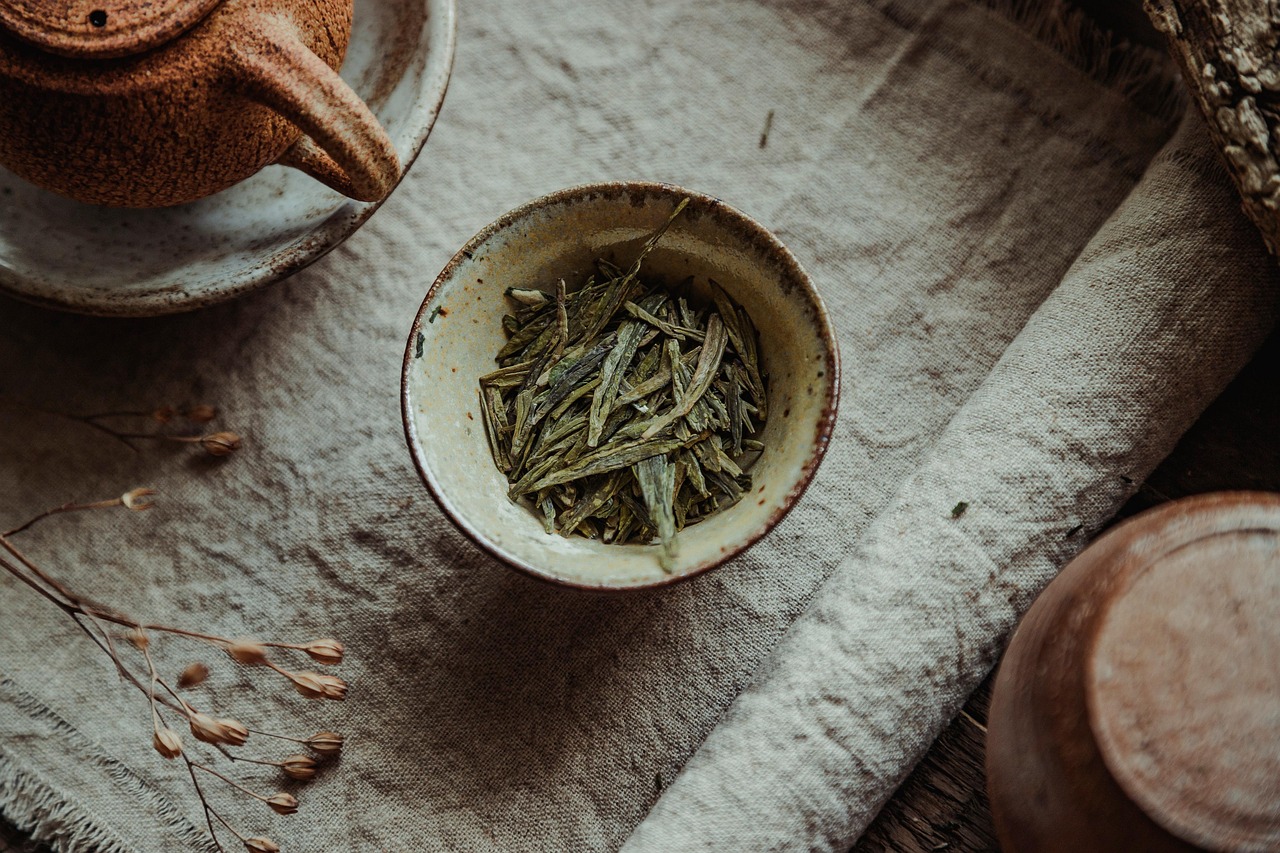
Photo by mirkostoedter on Pixabay
From Temple Tea to Imperial Tribute
Long Jing's documented history begins in the Tang dynasty (618–907 CE), when tea sage Lu Yu (陆羽) mentioned the Tianzhu Temple (天竺寺) and Lingyin Temple (灵隐寺) areas near West Lake as tea-producing zones in his Classic of Tea (《茶经》). But the tea didn't carry the Long Jing name yet.
By the Northern Song dynasty (960–1127), three teas from the West Lake area — Xianglin Tea (香林茶) from Lower Tianzhu, Baiyun Tea (白云茶) from Upper Tianzhu, and Baoyun Tea (宝云茶) from Geling — were already listed as imperial tribute teas. The Long Jing name itself first appeared in writing during this period, referring to the Dragon Well spring in the hills southwest of the lake.
The Ming dynasty (1368–1644) transformed Long Jing from a regional curiosity into a nationally recognized tea. The shift from compressed tea cakes to loose-leaf processing — mandated by the Hongwu Emperor in 1391 — suited Long Jing's flat, pan-fired style perfectly. By the late Ming, Long Jing was firmly established among China's elite teas.
The Qianlong Emperor and the Eighteen Imperial Tea Trees
The most famous Long Jing legend involves the Qianlong Emperor (乾隆), who visited West Lake multiple times during the 18th century. On one visit, he reportedly went to the Hu Gong Temple (胡公庙) tea gardens below Shifeng Mountain and was so impressed that he designated eighteen tea trees as "imperial tea trees" (御茶树). Those eighteen trees still stand today — fenced off, carefully maintained, and producing a tiny quantity of tea that sells at auction for astronomical prices.
Whether every detail of the legend is historically accurate matters less than what it reveals: by the Qing dynasty, Long Jing had reached the pinnacle of Chinese tea culture. It has stayed there ever since.
The Three Production Areas
Not all Long Jing is created equal. Chinese national standards divide Long Jing into three production zones, each producing tea of different character and price.
West Lake Production Area (西湖产区)
This is the only zone that can label its tea "Xi Hu Long Jing" (西湖龙井). It covers approximately 168 square kilometers around West Lake in Hangzhou, further divided into first-tier (一级产区) and second-tier (二级产区) zones.
First-tier core zones — the "five characters" (五字号):
| Zone | Chinese | Key Area | Character |
|---|---|---|---|
| Shi (狮) | 狮字号 | Shifeng Mountain (狮峰山) | Considered the absolute finest. Liquor is yellow-green ("husked rice color" / 糙米色), with pronounced chestnut aroma. Highest prices |
| Long (龙) | 龙字号 | Longjing Village (龙井村) | Adjacent to Shi zone, similar quality. Clean, bright flavor |
| Yun (云) | 云字号 | Yunqi, Wuyun Mountain (五云山) | Similar to Mei zone, balanced flavor profile |
| Hu (虎) | 虎字号 | Hupao (虎跑), Maojiabu | Named after the Tiger Spring. Smooth, mellow character |
| Mei (梅) | 梅字号 | Meijia Wu (梅家坞) | The largest single production area, accounting for roughly one-third of all Xi Hu Long Jing output. Fresh, clean bean-like aroma |
The second-tier zone extends to the broader Xihu District, covering areas like Longjing, Zhuantang, Shuangpu, and parts of Binjiang.
Qiantang Production Area (钱塘产区)
Covers several counties in Hangzhou's surrounding areas, including Xiaoshan, Yuhang, Fuyang, Lin'an, Tonglu, Jiande, and Chun'an. Tea from this zone is labeled "Qiantang Long Jing" (钱塘龙井). Quality can be very good — just not at the same level as Xi Hu origin. Prices are significantly lower, typically a few hundred yuan per jin.
Yuezhou Production Area (越州产区)
Covers parts of Shaoxing, Shengzhou, Xinchang, Zhuji, and other counties in eastern Zhejiang. This is the newest and largest Long Jing production area. Tea is labeled "Yuezhou Long Jing" (越州龙井). Good everyday drinking tea at accessible prices.
Key production data (2023): The total Long Jing tea garden area across all three zones covers 1.1 million mu (approximately 73,300 hectares), with annual production of 26,800 tons and an output value of 6.223 billion yuan. For context, China's total green tea production in 2022 reached approximately 1.854 million tons.
Long Jing Grading System
Long Jing tea is graded according to national standards. The Xi Hu Long Jing standard (GH/T 1115-2015) establishes five grades:
| Grade | Chinese | Picking Standard | Leaf Appearance | Typical Price (per 500g) |
|---|---|---|---|---|
| Premium (精品) | 精品 | Single bud or one bud, one leaf initial | Flat, smooth, even, jade green | 5,000–10,000+ yuan |
| Special (特级) | 特级 | One bud, one leaf initial | Flat, bright green, tight | 3,000–5,000 yuan |
| First (一级) | 一级 | One bud, one leaf | Flat, still green, minor variation | 1,000–3,000 yuan |
| Second (二级) | 二级 | One bud, one to two leaves | Flat but slightly broader, yellow-green | 500–1,000 yuan |
| Third (三级) | 三级 | One bud, two leaves | Broader, less uniform, darker green | 200–500 yuan |
The broader national Long Jing standard (GB/T 18650) uses six grades: Special, First through Fifth.
Pre-Qingming vs. Pre-Guyu
The most important price divider is harvest timing:
- Mingqian (明前) — Picked before the Qingming Festival (around April 5). The earliest, most tender buds. Smallest yield, highest price. A jin of Mingqian Xi Hu Long Jing from a core zone routinely costs 5,000–8,000 yuan
- Yuqian (雨前) — Picked between Qingming and Grain Rain (around April 20). Leaves are slightly larger and more developed. Still considered excellent tea, at 1,000–3,000 yuan per jin
- Guhou (谷后) — Picked after Grain Rain. Lower grade, lower price. This is everyday Long Jing
The Chinese tea world has a saying: "明前茶,贵如金" — "Pre-Qingming tea is precious as gold." For Long Jing, this isn't metaphorical. The difference between a March 28 harvest and an April 10 harvest can be thousands of yuan per jin.
The Making of Long Jing: Ten Hand Movements
 Source: Yunnan Sourcing
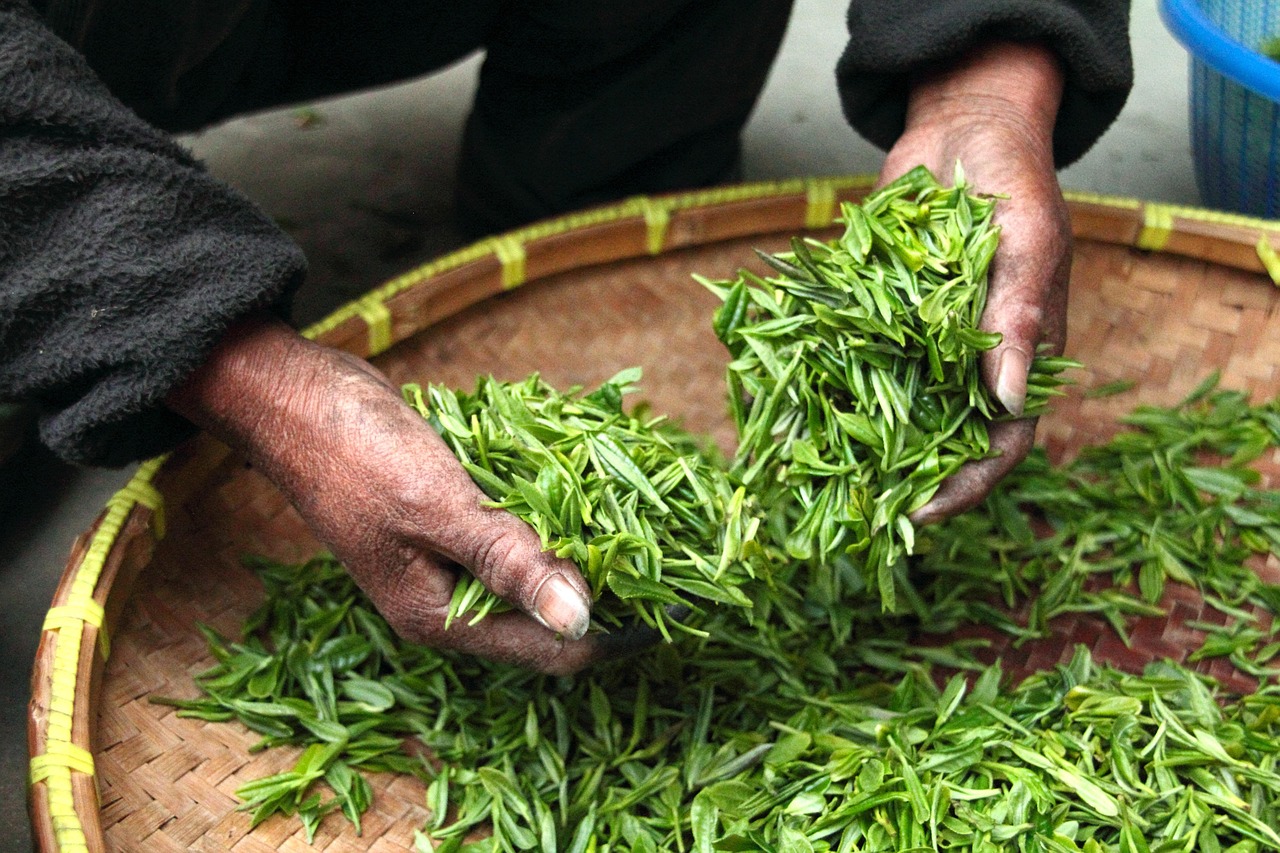 Photo by highnesser on Pixabay
Picking
Long Jing picking standards are strict. For premium grade, pickers select only the single terminal bud or the bud with one barely opened leaf — no more. A skilled picker collects roughly 60,000–80,000 buds per day to produce about one jin (500g) of finished tea. That labor intensity is one reason premium Long Jing costs what it does.
Withering (摊放)
Fresh leaves are spread thinly on bamboo trays in a cool, ventilated area for 8–10 hours. This step reduces moisture content from about 75% to 68–70% and allows some of the grassy aroma to dissipate while the characteristic Long Jing fragrance begins to develop.
Pan-Firing: The Ten Hand Movements (十大手法)
This is what makes Long Jing unique among Chinese green teas. The entire kill-green and shaping process happens in a single iron wok (铁锅), controlled entirely by the tea master's hands. The wok temperature, hand pressure, and specific movements determine the final shape, color, and aroma.
The ten traditional hand movements are:
- Shake (抖) — Loosening and separating the leaves to release moisture evenly
- Fold/Gather (搭) — Gathering leaves together in the wok
- Press (搨) — Pressing leaves flat against the wok wall
- Press down (捺) — Firmer pressing to establish the flat shape
- Toss (甩) — Tossing leaves to separate them and cool slightly
- Grab (抓) — Grasping and pressing handfuls of leaves
- Push (推) — Pushing leaves along the wok surface to polish
- Buckle (扣) — Folding leaves back on themselves
- Press/Squeeze (压) — Final pressure to set the flat shape
- Grind (磨) — Polishing the leaves against the wok for smoothness
The process is divided into two phases:
- Qingguo (青锅): The first firing at 100–150°C, lasting about 12–15 minutes. This is the kill-green step where enzymes are deactivated and basic shape is formed
- Huiguo (辉锅): After a rest period of about one hour for moisture redistribution (回潮), the tea is returned to the wok at 60–80°C for a longer, gentler second firing that finalizes the shape, develops aroma, and reduces moisture to below 5%
In 2022, the traditional tea-processing techniques associated with Xi Hu Long Jing were inscribed on UNESCO's Representative List of the Intangible Cultural Heritage of Humanity as part of China's traditional tea-making practices. The hand-roasting technique had already been designated a Chinese national-level intangible cultural heritage in 2008.
Sensory Profile: What Good Long Jing Tastes Like
The Four Absolutes (四绝)
Xi Hu Long Jing is traditionally described by its "four absolutes" — the four qualities that define its character:
- Green color (色绿): The dry leaf is a bright, even jade green (or yellow-green for Shifeng origin). The brewed liquor is clear and bright, ranging from light green to a pale yellow-green
- Rich aroma (香郁): Depending on origin, the aroma can be described as chestnut-like (板栗香), bean-like (豆香), or orchid-like (兰花香). It should be clean, lasting, and without any grassy or burnt notes
- Sweet taste (味甘): The liquor is fresh, mellow, and sweet with no harsh astringency. Good Long Jing produces a strong "returning sweetness" (回甘) — a sweet aftertaste that lingers after swallowing
- Beautiful shape (形美): The leaves are flat (扁), smooth (平), straight (直), and glossy (光). They should be uniform in size and color
How to Identify Authentic Xi Hu Long Jing
Fake Long Jing is everywhere. Here's what to look for, according to Chinese tea experts:
Visual inspection:
- Authentic Xi Hu Long Jing leaves are flat but not paper-thin, with a natural slight curve
- Color should be a consistent green or yellow-green — bright neon green often indicates added coloring or non-traditional processing
- The leaves should feel smooth but not slippery, with a slightly dry, crisp texture that produces powder when rubbed hard between fingers
Aroma test:
- Take a small amount of dry tea and breathe warm air onto it (哈气), then immediately smell. Authentic Long Jing has a clear, clean aroma — chestnut or bean. Fake versions often smell grassy, smoky, or have an artificial "green tea" scent
Liquor observation:
- The brewed tea should be clear and translucent, never cloudy
- Color ranges from light green to yellow-green. Very pale or very dark color is a warning sign
- Leaves in the cup should be uniform and intact, opening to reveal one bud with one leaf
Provenance verification:
- Since 2001, authentic Xi Hu Long Jing has been sold with a "地理标志产品" (Geographical Indication Product) label
- Each package should have a traceable anti-counterfeiting code
- The Hangzhou municipal government issues annual production quotas and traceability tags
For deeper comparison with other famous Chinese oolongs, see our Da Hong Pao vs. Tie Guan Yin comparison.
How to Brew Long Jing
Long Jing is one of the simpler Chinese teas to brew — but the details matter.
Glass Cup Method (玻璃杯泡法)
This is the traditional and most common method for Long Jing. The transparent glass lets you watch the leaves slowly sink and unfurl, which is part of the aesthetic experience.
Parameters:
- Water: 80–85°C (176–185°F). Never use boiling water — it scorches the tender leaves, producing bitterness and destroying the delicate aroma
- Tea amount: 3–5g per 200ml glass
- Steeping: 1–3 minutes for the first infusion
- Refill: Add water when about one-third remains in the cup. Good Long Jing handles 3–4 infusions
Step-by-step:
- Warm the glass with hot water, then discard
- Place tea leaves in the glass
- Pour a small amount of 80°C water (about one-fifth of the glass) to wet the leaves. Swirl gently. Wait 30 seconds — this is the "awakening" step (润茶)
- Pour remaining water using a high-pour technique to agitate the leaves
- Wait 1–2 minutes before drinking
Gaiwan Method
For more control over steeping, use a gaiwan (盖碗). This is closer to the gongfu brewing approach but adapted for green tea:
- Tea amount: 3g per 100–120ml gaiwan
- Water temperature: 80–85°C
- First infusion: 30–45 seconds
- Subsequent infusions: Add 10–15 seconds per round
- Expected infusions: 4–6
Water Selection
Chinese tea experts consistently emphasize water quality. The famous pairing is Long Jing tea with Hupao Spring Water (虎跑泉水) — "龙井茶叶虎跑水" is one of the celebrated "dual absolutes of West Lake" (西湖双绝). In practical terms: use soft, mineral-light water. Hard tap water with high chlorine will ruin any good Long Jing.
Use our Brewing Calculator for precise parameters tailored to your specific Long Jing grade.
Buying Long Jing: A Practical Guide
 Photo by farwestteatraders on Pixabay
When to Buy
The freshest Long Jing arrives in late March through April. Pre-Qingming tea (明前茶) typically hits the market in the last week of March. If you see "pre-Qingming Xi Hu Long Jing" for sale in February, it's either fake or from a southern province with an earlier harvest — not authentic Hangzhou production.
Price Expectations
Be realistic about pricing. If someone offers "Xi Hu Long Jing" for 100 yuan per jin, it's not from the West Lake area. Period. Here's a rough guide:
| Origin | Grade | Price Range (per 500g) |
|---|---|---|
| Xi Hu — Core zone (Shifeng) | Premium/Mingqian | 8,000–15,000+ yuan |
| Xi Hu — Core zone (Meijia Wu) | Special/Mingqian | 3,000–8,000 yuan |
| Xi Hu — Second-tier zone | First grade/Yuqian | 1,000–3,000 yuan |
| Qiantang | Good quality | 300–800 yuan |
| Yuezhou | Good quality | 150–500 yuan |
Where to Buy
See real Long Jing examples: Imperial Dragon Well and Competition Grade Dragon Well at Yunnan Sourcing.
- Direct from farmers: If you know someone in the West Lake production area, this is ideal. Many Long Jing families sell directly via WeChat
- Branded producers: Companies like Shifeng (狮峰), Lu Zhenghao (卢正浩), and Xi Hu Brand (西湖牌) offer authenticated products with traceability
- Tea markets: Hangzhou's tea markets have wide selection but require knowledge to avoid fakes
- Online: Major platforms like JD.com and Tmall carry verified products, but always check for geographical indication certification
Storage
Long Jing is a green tea — it doesn't improve with age. Store it:
- In an airtight container (tin or aluminum foil bag)
- In the refrigerator at 0–5°C
- Away from strong odors (tea absorbs smells easily)
- Consume within 12–18 months for best flavor
For more on tea storage principles, see our guide to storing and aging Chinese tea.
Long Jing in Chinese Culture
Long Jing isn't just a beverage. It occupies a unique place in Chinese cultural identity.
Every spring, the "first picking" of Xi Hu Long Jing makes national news. Television crews show up at tea gardens. Prices for the season's first batch are reported alongside stock market figures. Provincial governors use Long Jing as diplomatic gifts. When Chinese leaders host foreign dignitaries, Long Jing is frequently the tea served.
The 2016 G20 Summit in Hangzhou put Long Jing on the world stage when it was served to heads of state. The 2022 Asian Games, also held in Hangzhou, featured Long Jing prominently in cultural programming.
For tea farmers in the West Lake area, Long Jing is an economic lifeline. A family with one mu (about 667 square meters) of tea garden in the core Shifeng zone can earn over 100,000 yuan from a single spring harvest — more than many urban salaries. This economic reality explains both the fierce protection of the Xi Hu geographical indication and the constant temptation to counterfeit.
Common Misconceptions
"Flat green tea from Zhejiang = Long Jing"
Not true. Long Jing refers to tea from specific designated areas processed according to specific standards. Other flat green teas (like some Anji Bai Cha or generic "Longjing-style" tea) may look similar but are not Long Jing.
"The greener, the better"
Many consumers assume the greenest Long Jing is the best. In reality, the finest Shifeng Long Jing has a distinctive yellow-green tint — the famous "husked rice color" (糙米色). An aggressively green color sometimes indicates the tea was processed at lower temperatures to preserve color at the expense of flavor development.
"Machine-made Long Jing is always inferior"
Machine processing has improved dramatically. While the highest-grade Xi Hu Long Jing is still hand-roasted, well-made machine-processed Long Jing from good raw material can be excellent drinking tea. The key variable is leaf quality, not just processing method.
"Long Jing should be brewed with boiling water"
This is one of the most common mistakes. Long Jing's tender buds are easily scorched. Water at 80–85°C extracts the amino acids and subtle aromatics that make Long Jing special. Boiling water extracts too many bitter catechins too quickly.
Frequently Asked Questions
What is the difference between Long Jing (龙井) and Xi Hu Long Jing (西湖龙井)?
Long Jing is the broader appellation covering three production areas in Zhejiang Province: West Lake, Qiantang, and Yuezhou. Xi Hu Long Jing specifically refers to tea from the West Lake production zone in Hangzhou — covering the five core zones of Shi, Long, Yun, Hu, and Mei plus second-tier surrounding areas. Only Xi Hu Long Jing carries the prestigious geographical indication. The distinction matters because Xi Hu origin tea commands significantly higher prices and is considered superior in quality.
Why is pre-Qingming (明前) Long Jing so much more expensive?
Three factors drive the price: timing, yield, and tenderness. Pre-Qingming tea is the first harvest of spring, when buds are smallest and most concentrated in amino acids (which create sweetness and umami). The yield is extremely low — each bush produces only a small handful of qualifying buds. And the harvest window is narrow, roughly 7–10 days depending on weather. Supply is fixed and limited; demand is intense. A jin of Mingqian Xi Hu Long Jing requires roughly 60,000–80,000 individual hand-picked buds.
How can I tell if my Long Jing is authentic?
Check three things: provenance documentation (look for the 地理标志产品 label and anti-counterfeiting code), sensory qualities (flat smooth leaves, clean chestnut or bean aroma, clear yellow-green liquor, sweet non-astringent taste), and price (authentic Xi Hu Long Jing is never cheap — if the price seems too good, it probably isn't real). Buying from established brands with traceability systems (like Shifeng or Lu Zhenghao) reduces risk significantly.
How many times can I steep Long Jing?
Using the glass cup method, Long Jing typically supports 3–4 good infusions. The first infusion is the most aromatic, the second is often considered the best balance of flavor and body, and the third is mellower and sweeter. Using gongfu-style brewing with a gaiwan, you can get 4–6 shorter infusions. Once the leaves lose their color and the liquor becomes thin and tasteless, the tea is spent.
Is Long Jing supposed to taste sweet or bitter?
Good Long Jing should taste predominantly sweet and fresh (鲜爽), with a mellow body and no harsh bitterness. A slight, pleasant vegetal quality is normal, but it should quickly give way to the characteristic "returning sweetness" (回甘). If your Long Jing tastes primarily bitter or astringent, either the tea quality is poor, the water was too hot, or the steeping time was too long. Try reducing temperature to 80°C and shortening the steep.
Related Reading
- The Six Types of Chinese Tea: A Complete Guide
- Gongfu Brewing: The Chinese Method That Transforms How Tea Tastes
- Chinese Tea Regions: A Map of Where the Best Teas Come From
— The Tea Atlas Team