Top 10 Chinese Black (Red) Teas Compared: Keemun, Lapsang, Dianhong (2026)
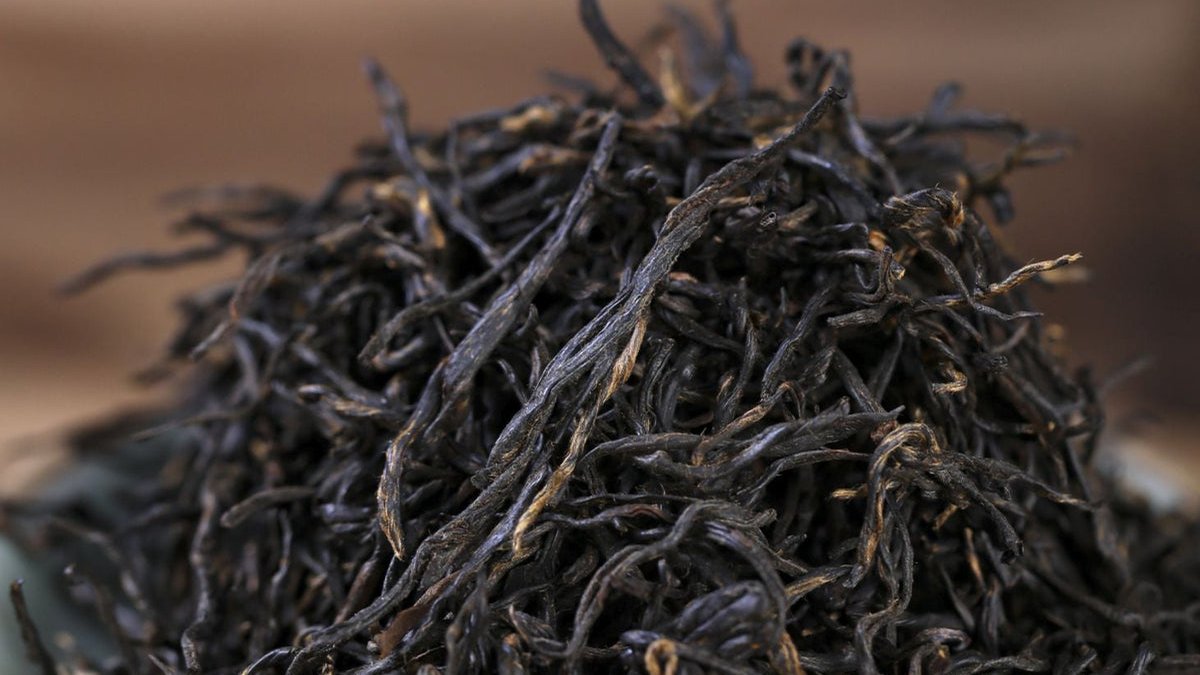
Chinese tea drinkers do not say "black tea." They say Hongcha (hóng chá / 红茶) — red tea — because the brewed liquor pours a copper-red, not black. The English label stuck because British buyers in the 17th century described the dark dry leaf, not the cup. The category itself was invented in Fujian's Wuyi mountains in the late Ming dynasty (Wikipedia, 2025).
Quick Answer
- "Black tea" in English = Hongcha (红茶) in Chinese — literally "red tea."
- Fujian, Yunnan, Anhui, and Guangdong are the four origin pillars.
- Keemun, Dianhong, and Yingde form the historic top three.
- Yunnan Sourcing, Teavivre, and Mei Leaf are the vetted Western vendors.
| Rank | Tea | Region | Flavor Notes | Verdict |
|---|---|---|---|---|
| 1 | Keemun (祁门红茶) | Qimen, Anhui | Wine, cocoa, orchid | Best classic Hongcha benchmark |
| 2 | Lapsang Souchong (正山小种) | Tongmu, Wuyi | Pine smoke, longan | Best smoked tradition |
| 3 | Dianhong (滇红) | Yunnan | Honey, malt, sweet potato | Best malty everyday Hongcha |
| 4 | Jin Jun Mei (金骏眉) | Tongmu, Wuyi | Honey, stone fruit | Best luxury bud tea |
| 5 | Yingde No.9 (英德红茶) | Yingde, Guangdong | Cocoa, raisin | Best Cantonese cocoa profile |
| 6 | Yixing Hong (宜兴红) | Yixing, Jiangsu | Bread, raisin, chocolate | Best lesser-known sleeper |
| 7 | Zhengshan Unsmoked (正山小种) | Tongmu, Wuyi | Longan, honey, cinnamon | Best Wuyi gateway tea |
| 8 | Sichuan Hong (川红) | Yibin, Sichuan | Caramel, light citrus | Best value gongfu Hongcha |
| 9 | Bailin Gongfu (白琳工夫) | Fuding, Fujian | Apricot, malt | Best golden-tip Fujian |
| 10 | Liu Bao (六堡茶) | Wuzhou, Guangxi | Betel, earth, aged wood | Best aged dark crossover |
Chinese tea drinkers do not say "black tea." They say Hongcha (hóng chá / 红茶) — red tea — because the brewed liquor pours a copper-red, not black. The English label stuck because British buyers in the 17th century described the dark dry leaf, not the cup. The category itself was invented in Fujian's Wuyi mountains in the late Ming dynasty (Wikipedia, 2025).
Processing follows four steps. Wither, roll, oxidize, dry. Oxidation runs at 80-100% — the highest of any tea category — which is what turns polyphenols into theaflavins and thearubigins, the pigments behind that red cup (Mei Leaf, 2025). Pricing below reflects 2026 catalogs from Yunnan Sourcing, Teavivre, Mei Leaf, and Path of Cha.
1. Keemun (祁门红茶) — The Anhui Original (Verdict: Best classic Hongcha benchmark)
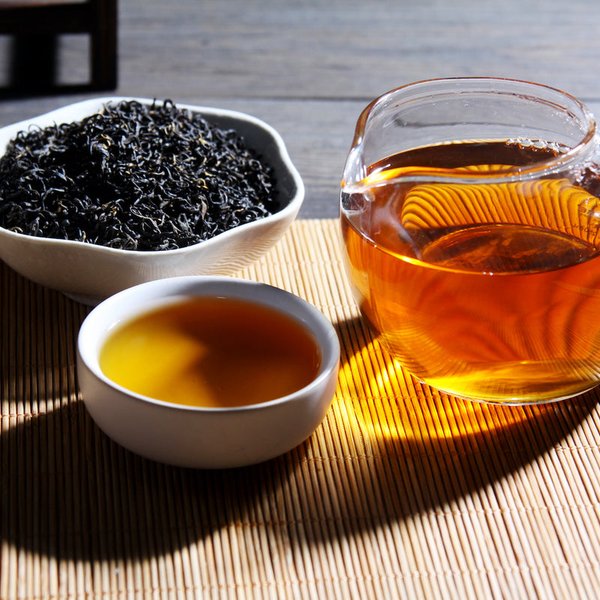
Keemun (qí mén / Qimen) comes from Qimen County in Huangshan prefecture, Anhui. The cultivar is a local population variety descended from Huangshan Mao Feng stock (Yunnan Sourcing, 2026). First produced in 1875, Keemun was the tea that built Twinings' English Breakfast blend and Fortnum & Mason's afternoon tray.
Three grades dominate the export market. Keemun Mao Feng uses leaf-and-bud sets and brews with stone-fruit aromatics. Keemun Hao Ya A and B are graded on bud content. Keemun Gong Fu is the workhorse — full leaf, even rolling, balanced cup (Sazen Tea, 2025).
The signature aroma is "Qimen Xiang" — a wine-and-orchid note Western tasters often hear as cocoa. The 2026 Yunnan Sourcing Imperial Grade pours $14.50 per 50 grams; Competition Grade hits $32 per 50 grams (Yunnan Sourcing, 2026). Brew it at 90°C, 4 grams per 150ml, three steeps. Skip the milk — Keemun is too aromatic to bury.
2. Lapsang Souchong (正山小种) — Pine-Smoked Wuyi Original (Verdict: Best smoked tradition)
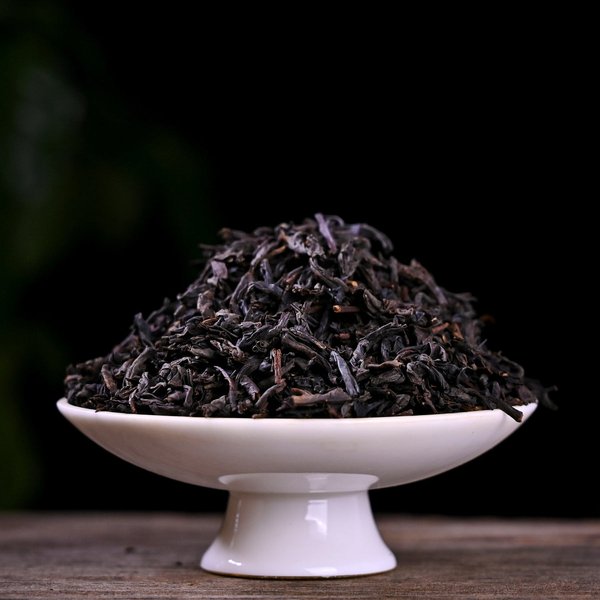
Lapsang Souchong (zhèng shān xiǎo zhǒng / "small-leaf from the original mountain") is the prototype black tea. Tongmu village in the Wuyi Mountains is the legally protected origin — anything from outside the Tongmu Pass is technically Waishan, not Zhengshan (Wikipedia, 2025). The smoking step came from 17th-century soldiers who used pine fires to rush-dry leaves before a march.
Authentic smoked Lapsang uses Masson pine in a Qinglou drying loft for 15-20 hours. The smoke compounds — guaiacol, longifolene — bind to the leaf and survive multiple steeps (Mei Leaf, 2025). Modern Wuyi smoking is restrained; the heavy creosote profile sold as "Russian Caravan" is usually export-grade Waishan over much harsher smoke.
Yunnan Sourcing's Traditional Smoked Zheng Shan Xiao Zhong runs about $17 per 50 grams in 2026 (Yunnan Sourcing, 2026). Verdant Tea's 2025 lot prices around $13 per 25 grams (Verdant Tea, 2025). Brew at 95°C, short steeps. The smoke fades; longan and pine resin take over by steep three.
3. Dianhong (滇红) — Yunnan Malt Bomb (Verdict: Best malty everyday Hongcha)
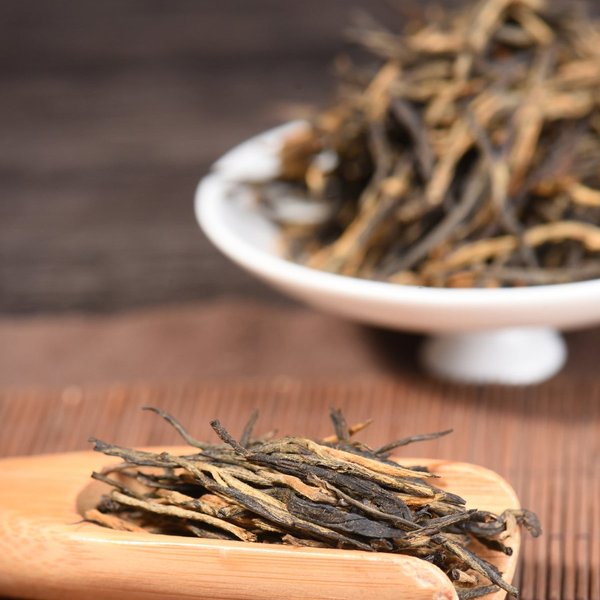
Dianhong (diān hóng / Yunnan red) is the youngest of China's "Big Three" black teas. The category was created in 1939 when wartime tea master Feng Shaoqiu adapted Keemun techniques to Yunnan's large-leaf assamica cultivar (Wikipedia, 2025). The result: a maltier, sweeter, more honeyed cup than anything from Anhui.
Grades scale by bud content. Yunnan Gold uses pure tips. Golden Needle is bud-and-leaf. Standard Dianhong runs full leaf (Harney & Sons, 2026). The more gold, the sweeter and more delicate. Path of Cha's Jin Ya Dian Hong from Fengqing County leads with honey and stone fruit (Path of Cha, 2026).
Wholesale 2026 pricing shows the spread — $45 per kilo for Jin Si grade, $155 per kilo for Xiao Jin Ya supergrade (China Tea Wholesale, 2026). Harney sells a 2 oz tin for $21 (Harney & Sons, 2026). Brew gongfu at 90°C, 5g per 100ml. It also takes milk well — the malt holds up.
4. Jin Jun Mei (金骏眉) — The Hermès of Hongcha (Verdict: Best luxury bud tea)
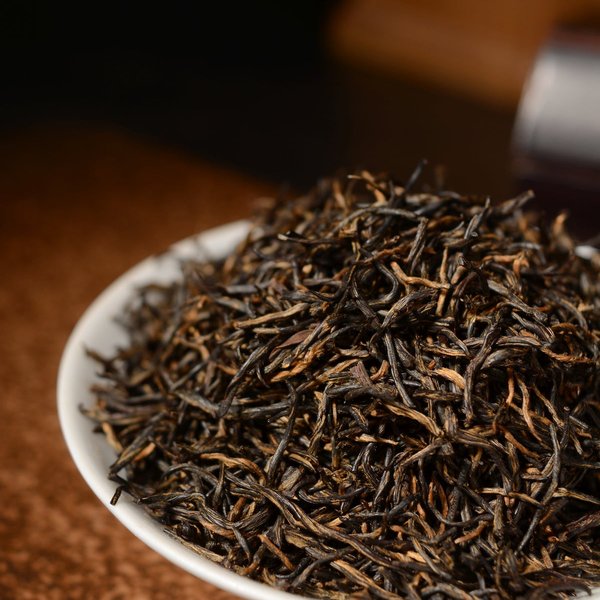
Jin Jun Mei (jīn jùn méi / golden steed eyebrow) was invented in 2005 by Tongmu farmers experimenting with all-bud picking. The name comes from the golden-tipped curve of the dry leaf (Tea Journey, 2025). It is the most expensive Chinese black tea on the market — and the most counterfeited.
One gram of authentic Jin Jun Mei requires roughly 108 hand-plucked buds from Tongmu's Cai Cha varietal at 1,400m. Half an hour of picking per gram (Tea Journey, 2025). True Tongmu lots run $6,000 to $16,000 per kilo at origin — that is $6 to $16 per gram (Tea Journey, 2025).
Yunnan Sourcing's Premium Grade AA Jin Jun Mei sits around $42 per 25 grams in 2026 (Yunnan Sourcing, 2026). Anything under $30 per 50 grams labeled "Jin Jun Mei" is almost certainly outside-Tongmu leaf. Brew at 90°C, 4g per 100ml, flash steeps. The cup is pale honey, not red — that is the tell.
5. Yingde No.9 (英德红茶) — Guangdong's Cocoa Cup (Verdict: Best Cantonese cocoa profile)
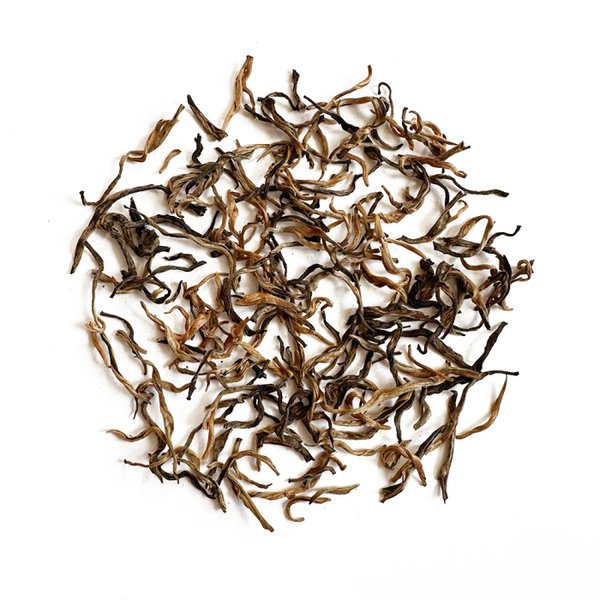
Yingde Black Tea (yīng dé hóng chá) comes from Yingde city, Guangdong. The dominant cultivar is Yinghong No.9 — bred in the 1960s from Yunnan assamica seedlings transplanted to the Pearl River basin (Wikipedia, 2025). It is the youngest of China's "Big Three" recognized black teas.
The flavor signature is cocoa. Not chocolate-bar sweet, but raw nib, with a raisin top note and a clean sweet finish (Tea Quest, 2025). Yingde grew up alongside Hong Kong dim sum culture — the tea was bred to cut through dumpling fat and char siu sauce.
Tea in Town's 2022 Ying Hong No.9 retails at $29.90 for 75 grams in 2026 (Tea in Town, 2026). JY House London stocks it for the UK market (JY House London, 2026). Brew at 95°C, 5g per 150ml. Strong, dark, and forgiving — Yingde is the Cantonese answer to Assam.
6. Yixing Hong (宜兴红) — The Teapot City's Tea (Verdict: Best lesser-known sleeper)
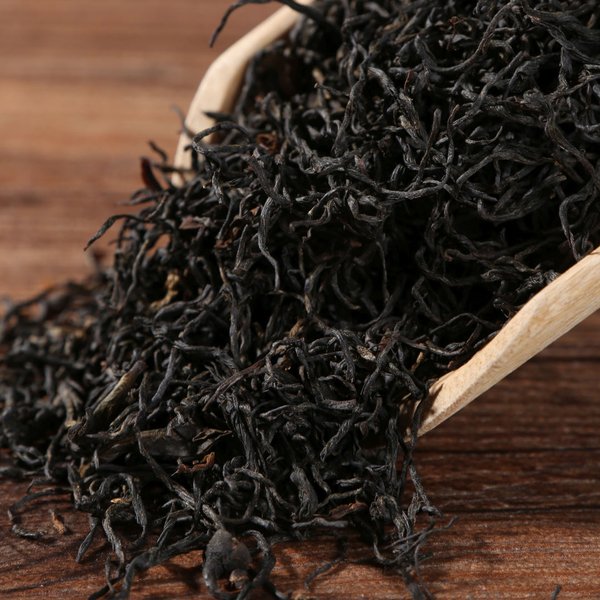
Yixing in Jiangsu is famous for one thing — Zisha clay teapots. Most drinkers never realize Yixing also makes a world-class black tea from the local "Yixing Big Leaf" cultivar (Yunnan Sourcing, 2026). The leaves are harvested in late April and processed at low temperature to preserve the leaf hairs.
Two styles dominate. The Imperial Tippy version uses bud-heavy plucks for a sweet, malty cup with a downy mouthfeel. The Classic grade is processed warmer for a thick, baked-bread aroma — Yunnan Sourcing's tasting notes call out "whole wheat raisin bread" (Yunnan Sourcing, 2026).
A third Yixing style is processed to emphasize fruit — apricot and longan dominate (Yunnan Sourcing, 2026). Pricing on Yunnan Sourcing's 2026 catalog runs $12-18 per 50 grams across grades. Brew gongfu in — yes — a Yixing pot if you have one. The clay rounds the malt and pulls out the bread note.
7. Zhengshan Unsmoked (正山小种) — Wuyi Without the Pine (Verdict: Best Wuyi gateway tea)
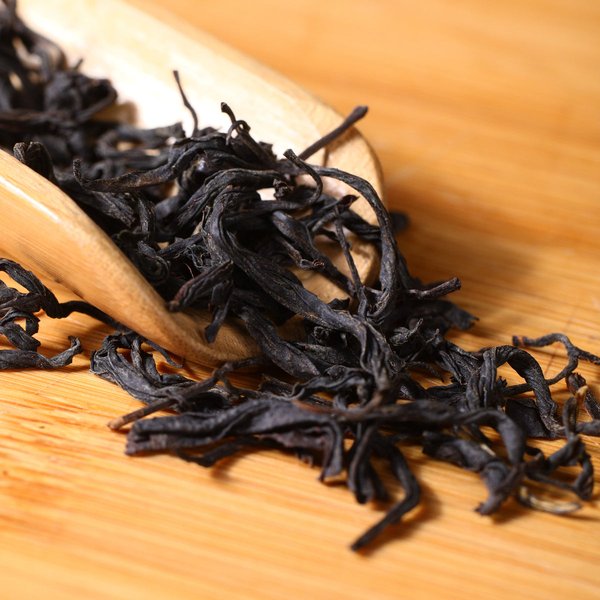
Zhengshan Xiaozhong has two faces. The smoked version (entry 2) gets the headlines. The unsmoked Tongmu lots — sometimes labeled "non-smoked Lapsang" or "Wuyi black tea" — are what most modern Wuyi farmers actually drink (One River Tea, 2025). Demand for smoked Lapsang has dropped sharply in China since 2015.
Unsmoked Zhengshan keeps the Tongmu terroir — longan, honey, a faint cinnamon-bark warmth from the Wuyi rock soil (Verdant Tea, 2025). The leaf is darker than Jin Jun Mei, the cup more amber than red. It is the cleanest expression of the original Hongcha process before smoking was bolted on.
One River Tea sells a Zhengshan sampler box covering smoked and unsmoked side by side (One River Tea, 2025). Tongmu unsmoked lots from reputable vendors run $20-35 per 50 grams in 2026. Brew at 90°C, 4g per 100ml, gongfu — eight steeps easily, each one shifting from longan to malt to a quiet mineral finish.
8. Sichuan Hong (川红) — The Value Workhorse (Verdict: Best value gongfu Hongcha)
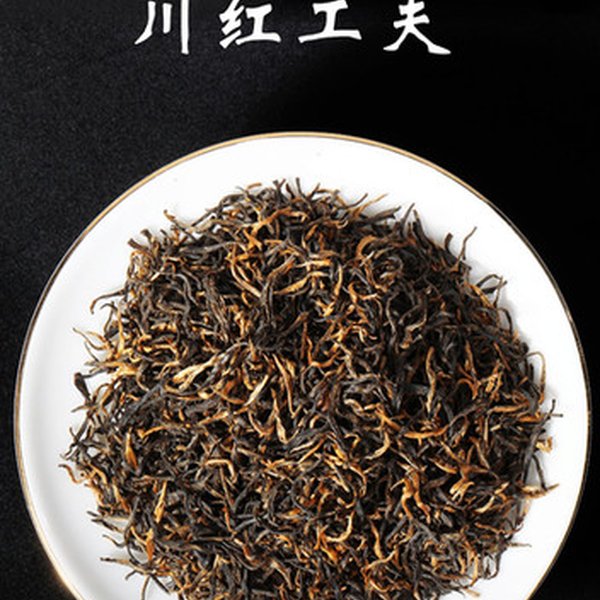
Chuan Hong Gongfu (chuān hóng gōng fū) is the black tea of Yibin, Junlian, and Gao counties in southern Sichuan. The category was codified in the 1950s and added to Sichuan's Intangible Cultural Heritage list in 2014 (Tea Epicure, 2025). The cultivar mix leans toward small-leaf varietals that produce a lighter, brighter cup than Yunnan.
The flavor is caramel-forward with a light citrus top note — closer to Ceylon than to Dianhong. Sichuan's high humidity and low elevation produce leaves that finish cleanly without the malt heft of Yunnan (Allen Teas, 2026). It is the rare Chinese black tea that works in a Western mug as cleanly as in a gaiwan.
Wholesale pricing in 2026 runs $35 per kilo for third grade up to $145 per kilo for supergrade (China Tea Wholesale, 2026). Dragon Tea House sells premium 100g for around $14 (Dragon Tea House, 2026). Brew at 95°C, 5g per 150ml. Forgiving steep window — the tea does not turn bitter quickly.
9. Bailin Gongfu (白琳工夫) — Fuding Gold (Verdict: Best golden-tip Fujian)
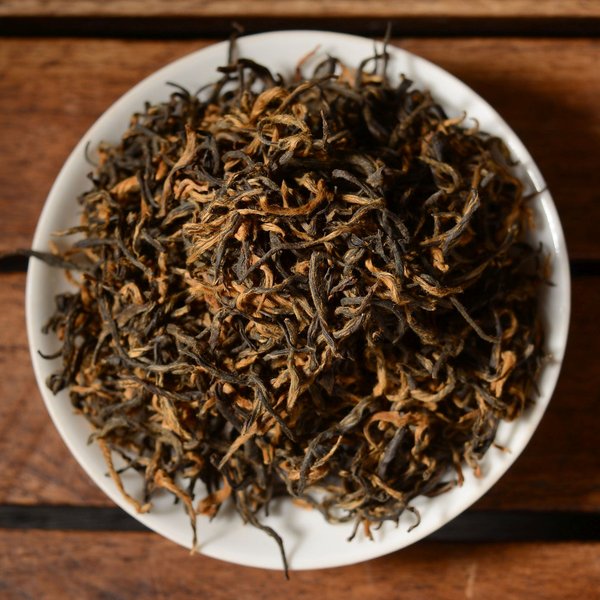
Bailin Gongfu (bái lín gōng fū) is made in the Bai Lin and Hulin villages of Taimu Mountain in Fuding, Fujian — the same county that produces Bai Mu Dan white tea (Yunnan Sourcing, 2026). The cultivar is the famed Fuding Da Bai Cha ("Big White"), the same varietal used for Silver Needle white tea.
Because the leaf is built for white tea, the Hongcha version retains an unusual sweetness — apricot and dried longan dominate, with a malty backbone underneath (Teavivre, 2026). Imperial grade is dense with golden tips, sometimes sold as "Golden Monkey" in Western catalogs (Yunnan Sourcing, 2026).
China Tea Wholesale prices standard Bailin Gongfu at $125 per kilo in 2026; the osmanthus-scented version is $150 per kilo (China Tea Wholesale, 2026). Retail runs $14-22 per 50 grams across vendors. Brew at 90°C, 4g per 100ml, short steeps — Bailin's bud content browns the cup fast.
10. Liu Bao (六堡茶) — The Dark Tea Crossover (Verdict: Best aged dark crossover)
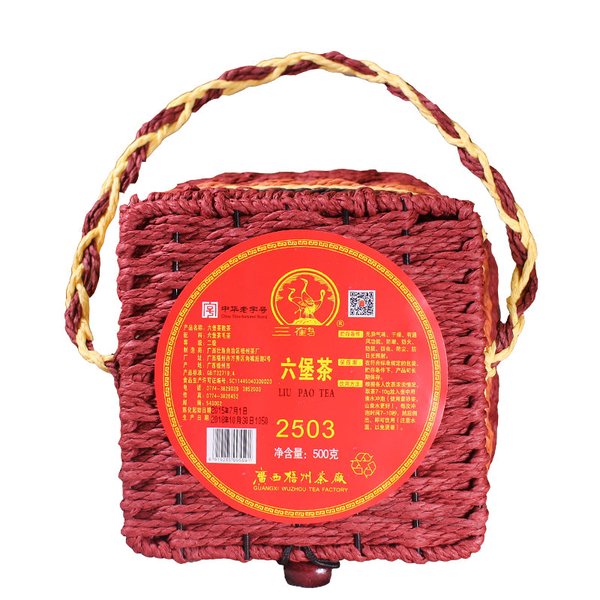
Liu Bao (liù bǎo / six fortresses) is technically Heicha (dark tea), not Hongcha — but the category lives in the same drawer for most Western drinkers, and a young Liu Bao tastes closer to a smoky Hongcha than to shou Pu-erh (Eastern Leaves, 2025). It belongs on this list as the dark-side companion piece.
Liu Bao comes from Wuzhou prefecture in Guangxi and has 1,000+ years of history. The tea is compressed into woven bamboo baskets ranging from 500 grams to 50 kilos and aged (Eastern Leaves, 2025). The signature flavor is "betel nut aroma" — sweet, faintly medicinal, with damp wood underneath (Vicony Teas, 2025).
Young 2-3 year Liu Bao runs $15-25 per 50 grams at Yunnan Sourcing in 2026 (Yunnan Sourcing, 2026). Mei Leaf's 1988 vintage demands collector pricing in the hundreds per 25 grams (Mei Leaf, 2025). Brew at 95°C, 6g per 100ml, gongfu. Rinse twice. The first three steeps are earthy; the cup opens to sweetness by steep five.
How We Ranked
Chinese-tea rankings combine three signals:
- Verifiable provenance: producing region (Yunnan, Fujian, Wuyi, etc.), cultivar, processing method (oxidation level, kill-green technique), and harvest year. Sourced from Chinese-language vendor documentation, translated where needed.
- Tea-expert tasting + research: editorial cupping sessions following ISO 3103 method, plus published evaluations from Tea Forum and Western Tea Importer notes.
- Vendor reliability: first-hand purchase testing from each ranked vendor — packaging quality, freshness on arrival, COA/lab testing if claimed, and customs/shipping experience.
What we never accept: paid placement, vendor commissions that would modify rankings. Affiliate links to vetted tea vendors (Yunnan Sourcing, White2Tea) appear on vendor pages — these never affect tea-by-tea rankings.
Update cadence: each tea revisited annually or when the harvest changes. Email research@teaatlasguide.com.
Frequently Asked Questions
Why do Chinese drinkers call it "red tea" instead of "black tea"?
Chinese tea taxonomy classifies by liquor color, not dry-leaf color. Hongcha (红茶 / red tea) brews a copper-red cup. The English term "black tea" describes the dark dry leaf. What English speakers call "black tea" (Heicha / 黑茶) refers to fermented dark teas like Pu-erh and Liu Bao — a completely separate category in Chinese.
What is the difference between Lapsang Souchong and Jin Jun Mei?
Both come from Tongmu village in the Wuyi Mountains and use the same Cai Cha varietal. Lapsang uses full leaf-and-bud sets, traditionally smoked over pine. Jin Jun Mei was invented in 2005 and uses pure unopened buds — no smoking. The Jin Jun Mei cup is pale honey-gold; the Lapsang cup is dark amber-red. Price-wise, Jin Jun Mei runs 10-50x more per gram.
How do I brew Chinese black tea gongfu style?
Use 4-6 grams of leaf per 100ml in a gaiwan or small pot. Water at 90-95°C. Rinse the leaf with a 5-second pour and discard. First steep 10-15 seconds, adding 5 seconds per subsequent steep. Expect 6-10 steeps from a good Hongcha. The leaf opens slowly across the session.
Are Chinese black teas oxidized or fermented?
Oxidized. Black tea processing involves enzymatic oxidation — leaves are rolled to bruise cell walls, then held at warm humid temperatures until oxidation hits 80-100%. True fermentation (microbial activity) only happens in Heicha categories like Pu-erh and Liu Bao. Many vendors confuse the two terms; only dark teas are actually fermented.
What is the best Chinese black tea for someone starting out?
Dianhong is the easiest entry point. It is malty, sweet, forgiving of brewing temperature, and works well both gongfu and Western-style with milk. A mid-grade Yunnan Gold from Teavivre or Path of Cha around $15 per 50 grams will show you what authentic Hongcha tastes like without the price of Jin Jun Mei or the smoke of Lapsang.
Related Reading: For deeper dives into specific Chinese tea categories, see our top 10 Chinese oolong teas compared, top 10 Chinese green teas compared, and top 10 Pu-erh tea mountains of Yunnan. For Hongcha aging and storage, see our Chinese tea storage humidity guide.
-- The Tea Atlas Team