Top 10 Chinese Oolong Teas Compared: Tieguanyin, Da Hong Pao, Dong Ding (2026)
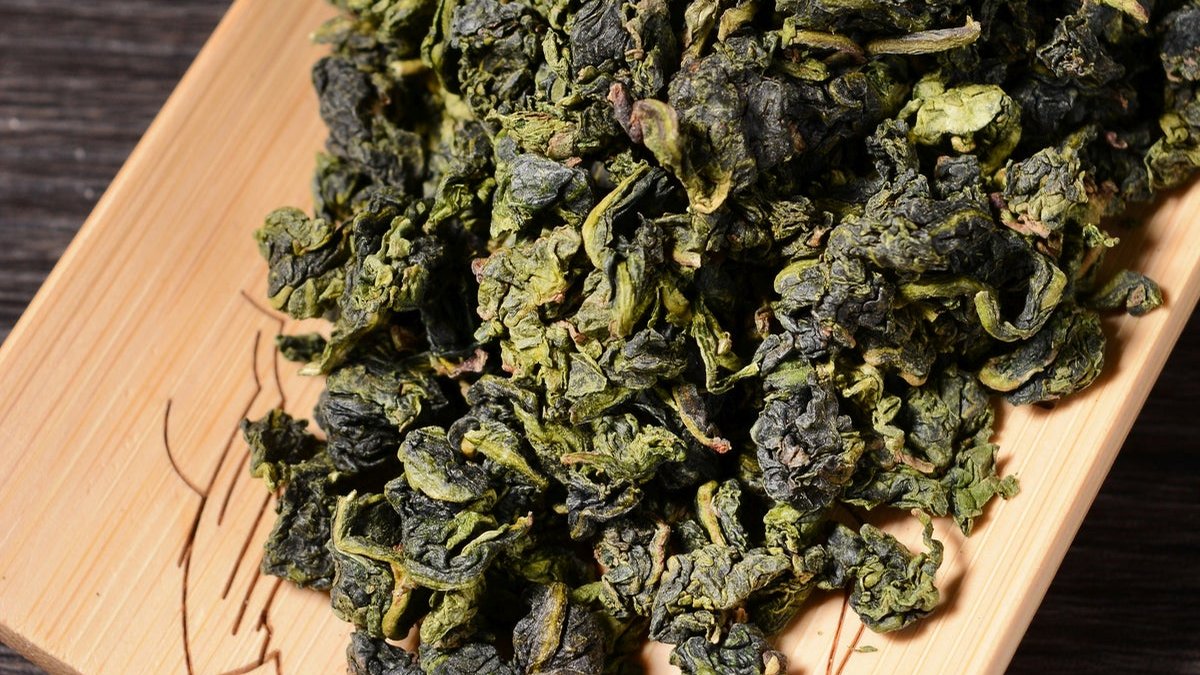
Oolong (wū lóng / 乌龙) sits between green and black tea on the oxidation spectrum — 10% to 80%. The style was codified in Fujian's Wuyi mountains during the late Ming, then spread to Anxi and Taiwan (Babelcarp, 2025). The name means "black dragon" after the dark twisted leaf of early Wuyi production.
Quick Answer
- Oolong (Wulong / 乌龙) spans 10-80% oxidation — six distinct styles.
- Anxi, Wuyi, Taiwan, and Phoenix are the four origin pillars.
- Wuyi rock teas peak with charcoal roast; Taiwan teas peak unroasted.
- Yunnan Sourcing, Eco-Cha, and Mei Leaf are the vetted Western vendors.
| Rank | Tea | Region | Oxidation Level | Verdict |
|---|---|---|---|---|
| 1 | Tieguanyin (铁观音) | Anxi, Fujian | 15-30% (modern) | Best floral oolong starter |
| 2 | Da Hong Pao (大红袍) | Wuyi Shan, Fujian | 40-50% | Best charcoal-roast benchmark |
| 3 | Rou Gui (肉桂) | Wuyi Shan, Fujian | 45-55% | Best spicy rock oolong |
| 4 | Shui Xian (水仙) | Wuyi Shan, Fujian | 40-50% | Best aged rock tea |
| 5 | Bai Ji Guan (白鸡冠) | Wuyi Shan, Fujian | 25-50% | Best collector rarity |
| 6 | Dong Ding (冻顶) | Lugu, Nantou, Taiwan | 30-40% | Best roasted Taiwan oolong |
| 7 | Alishan (阿里山) | Chiayi, Taiwan | 15-25% | Best high-mountain green oolong |
| 8 | Bai Hao (白毫) | Hsinchu/Miaoli, Taiwan | 60-80% | Best bug-bitten honey oolong |
| 9 | Dan Cong (单丛) | Fenghuang, Guangdong | 30-50% | Best aromatic oolong |
| 10 | Huang Jin Gui (黄金桂) | Anxi, Fujian | 20-30% | Best floral value pick |
Oolong (wū lóng / 乌龙) sits between green and black tea on the oxidation spectrum — 10% to 80%. The style was codified in Fujian's Wuyi mountains during the late Ming, then spread to Anxi and Taiwan (Babelcarp, 2025). The name means "black dragon" after the dark twisted leaf of early Wuyi production.
What separates oolong is the bruising step. Leaves are shaken (yáo qīng / 摇青) to break cell walls at the edges, triggering partial oxidation from the rim inward. A skilled maker halts the process at a target percentage, then kills enzymes with pan-fire (Mei Leaf, 2025). Pricing below reflects 2026 catalogs from Yunnan Sourcing, Eco-Cha, Mei Leaf, and Path of Cha.
1. Tieguanyin (铁观音 / Iron Goddess) — Anxi Cornerstone (Verdict: Best floral oolong starter)
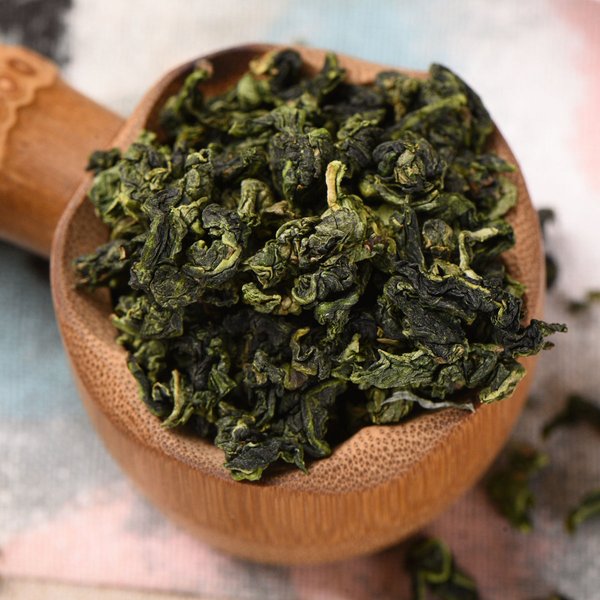
Tieguanyin (tiě guān yīn / iron goddess of mercy) comes from Anxi County, Fujian. The appellation centers on Xiping, Gande, and Xianghua townships at 700-1,200 meters (Yunnan Sourcing, 2026). Discovered around 1725, Anxi now produces 70% of Chinese oolong by volume.
Modern Tieguanyin splits in two. Qing Xiang (清香) sits at 15-25% oxidation, unroasted, with orchid aromatics. Nong Xiang (浓香) hits 30-50% with charcoal roast adding caramel and dried fruit (King Tea Mall, 2026).
Premium Zheng Wei (正味) Tieguanyin from named villages runs $30-$80 per 100g. Yunnan Sourcing Premium AA sits $18-$28 (Yunnan Sourcing USA, 2026). Below $10 per 100g is machine-rolled blends from outside Anxi. Verdict: best floral oolong starter.
2. Da Hong Pao (大红袍 / Big Red Robe) — Wuyi Standard (Verdict: Best charcoal-roast benchmark)
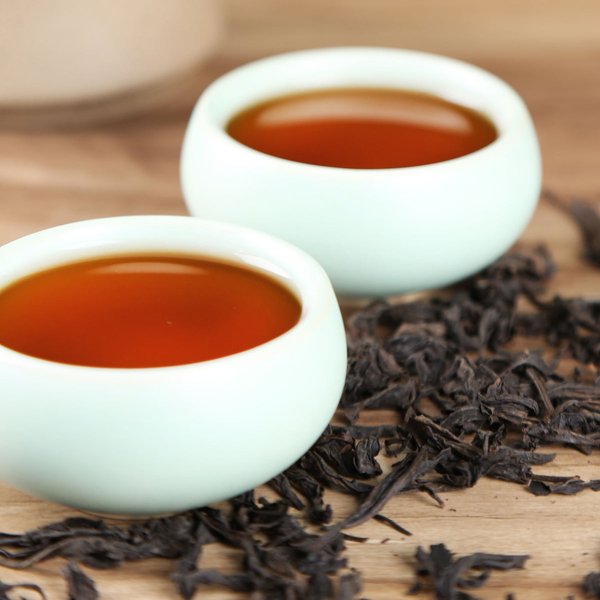
Da Hong Pao (dà hóng páo / big red robe) is the most famous Wuyi rock tea (yán chá / 岩茶). The six mother bushes still stand in Jiuquxi; harvest from them was banned in 2006. Modern Da Hong Pao is either a blend of Wuyi cultivars or grafted cuttings of the originals (Harney & Sons, 2026).
Oxidation runs 40-50% with charcoal roast in three rounds across weeks. The classic profile is "rock rhyme" (yán yùn / 岩韵) — mineral, roasted, with dried longan, dark caramel, and smoky stone. Premium uses light-medium roast; commodity grade hides thin leaf under heavy char.
Mid-tier Da Hong Pao runs $30-$60 per 100g; Zhengyan (正岩) from inside the 70-square-kilometer core hits $80-$300 per 100g (Yunnan Sourcing, 2026). Anything under $15 per 100g is outer-zone blend (Hence Tea, 2026). Verdict: best charcoal-roast benchmark.
3. Rou Gui (肉桂 / Cinnamon) — Spicy Single Cultivar (Verdict: Best spicy rock oolong)
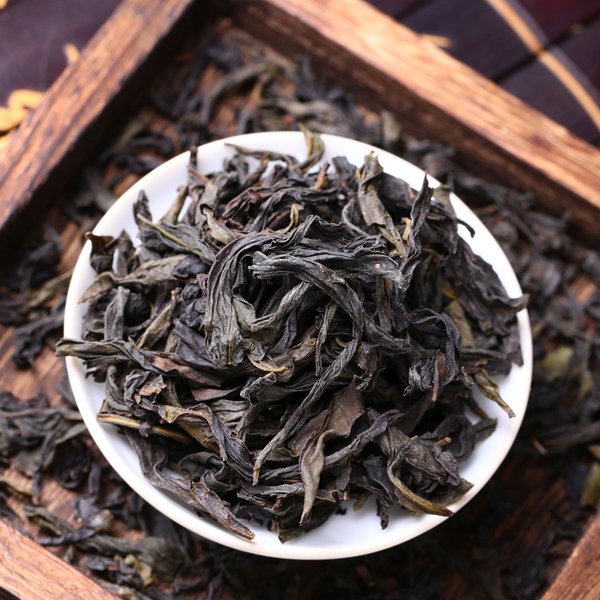
Rou Gui (ròu guì / cinnamon) is a Wuyi single-cultivar rock tea named for the natural cassia aroma in its finished leaf. The cultivar emerged in the late Qing from Mawei and has now overtaken Shui Xian as the most planted variety inside the rock-tea zone (Orientaleaf, 2026).
Oxidation lands 45-55% with medium-to-heavy charcoal roast. Classic descriptors are cinnamon bark, dried plum, peach pit, and a long mineral aftertaste. Niu Lan Keng (牛栏坑) Rou Gui from the deep Zhengyan ravines clears $1,000 per 100g at auction.
Standard Rou Gui from named gardens runs $40-$90 per 100g; mid-tier Zhengyan sits $100-$250 (Wuyi Origin, 2026). Cha Moods imports direct from named farmers (Cha Moods, 2026). Verdict: best spicy rock oolong.
4. Shui Xian (水仙 / Narcissus) — Old-Bush Depth (Verdict: Best aged rock tea)
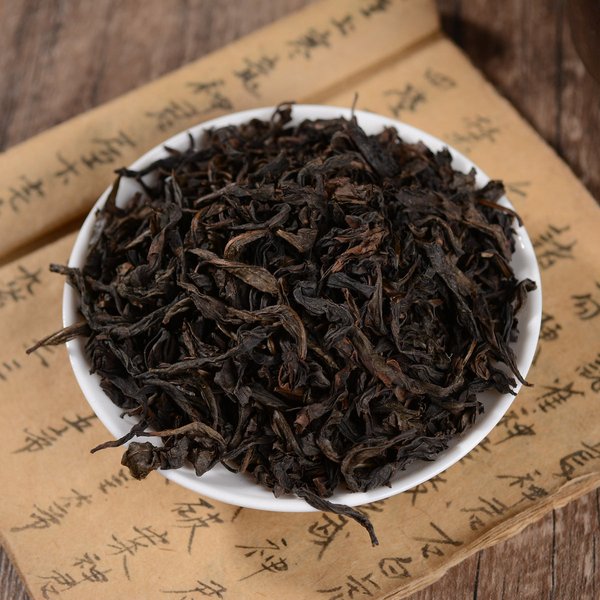
Shui Xian (shuǐ xiān / water immortal) is the historical workhorse of Wuyi rock tea. The cultivar arrived from Jianyang in the 1800s and was the most-planted variety until Rou Gui overtook it (Orientaleaf, 2026). Lao Cong (老枞 / old bush) Shui Xian comes from trunks over 50 years old.
Oxidation runs 40-50% with medium charcoal roast. Flavor signature is narcissus floral, mossy wood, and a creamy mouthfeel no other Wuyi cultivar matches. Lao Cong adds an "old wood" note (cōng wèi / 枞味) tasting of wet bark and aged lumber.
Standard Wuyi Shui Xian runs $20-$50 per 100g (Meimei Fine Teas, 2026). Lao Cong from named gardens lands $60-$150. Curious Tea publishes single-garden lots with harvest date (Curious Tea, 2026). Verdict: best aged rock tea.
5. Bai Ji Guan (白鸡冠 / White Cockscomb) — Albino Cultivar (Verdict: Best collector rarity)
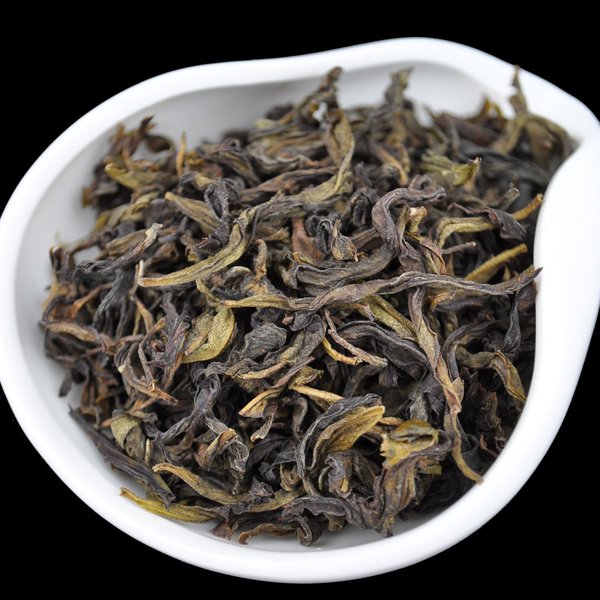
Bai Ji Guan (bái jī guān / white cockscomb) is one of the Si Da Ming Cong (四大名枞 / four famous bushes) of Wuyi, alongside Da Hong Pao, Tie Luo Han, and Shui Jin Gui. The cultivar is an albino mutant — spring leaves emerge pale yellow lacking typical chlorophyll (Meimei Fine Teas, 2026).
Annual yield from authentic Bai Ji Guan bushes runs under 200 kilograms. Oxidation sits 25-50% — narrower than other Wuyi cultivars because over-oxidation kills the delicate albino character. Flavor reads as sagebrush, dried herbs, old book paper, with a long sweet-savory finish.
Authentic Bai Ji Guan runs $80-$250 per 100g and batches sell out within weeks (Trident Booksellers, 2026). Morimatea and Si Cha each carry small lots (Morimatea, 2026). Skip vendors stocking it year-round at $20 per 100g. Verdict: best collector rarity.
6. Dong Ding (冻顶 / Frozen Summit) — Taiwan Classic (Verdict: Best roasted Taiwan oolong)
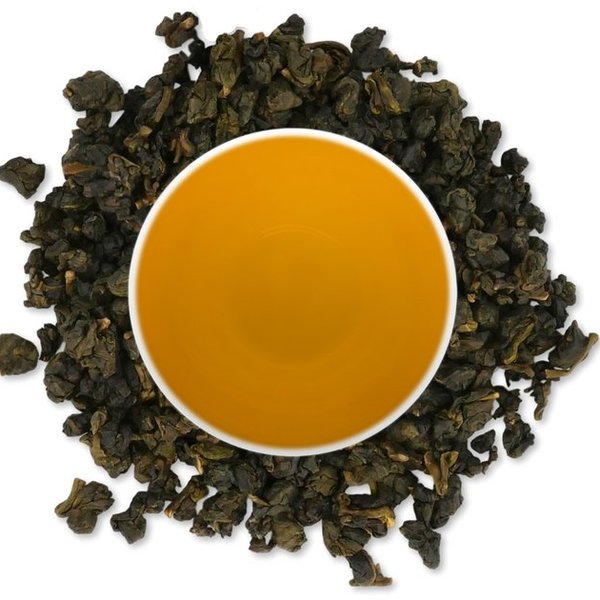
Dong Ding (dòng dǐng / frozen summit) is the original named Taiwan oolong, produced in Lugu Township, Nantou at 600-1,200 meters. The cultivar is Qing Xin (青心 / green heart), which arrived from Wuyi in 1855 (Eco-Cha, 2026).
Traditional Dong Ding sits 30-40% oxidized with multi-stage charcoal roast from 90°C up to 123°C. The cup balances honey-floral notes from oxidation with toasted caramel and roasted-grain notes. New Style Dong Ding skips most of the roast for a brighter cup resembling Alishan (What-Cha, 2026).
Standard Lugu Dong Ding runs $25-$45 per 150g; competition-grade hits $80-$150 (Taiwan Leaf Tea, 2026). Eco-Cha and Wang De Chuan source from named Lugu farmers. Verdict: best roasted Taiwan oolong.
7. Alishan (阿里山 / Ali Mountain) — Cloud-Forest Oolong (Verdict: Best high-mountain green oolong)
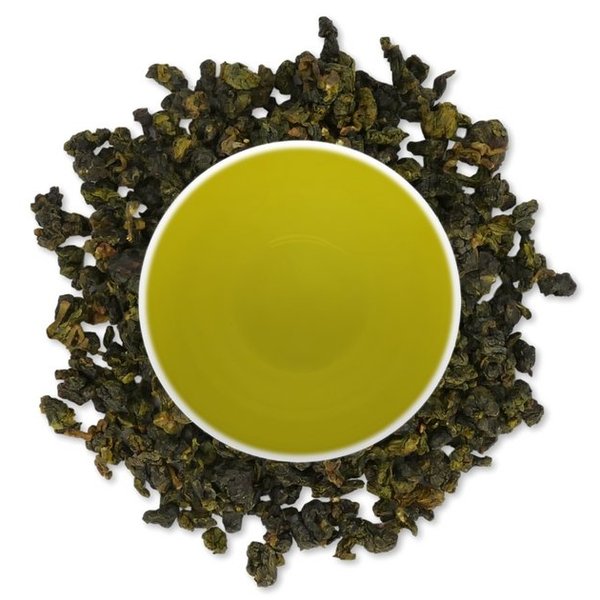
Alishan (ā lǐ shān / Ali Mountain) is the most famous Taiwan high-mountain oolong (gāo shān chá / 高山茶). Production sits at 1,000-1,700 meters in Chiayi, with morning fog that clears by midday (Eco-Cha, 2026). Cold nights produce leaves rich in theanine — Alishan brews thick and sweet.
Oxidation runs light at 15-25%, no roast in modern style. The tea is rolled into tight balls that open over infusions to release lily, butter, sugarcane, and creamy mineral notes. Spring and winter harvests are most prized.
Standard Alishan from named gardens runs $20-$40 per 75g (Beautiful Taiwan Tea, 2026). Lot 1300 from 1,300+ meter gardens sits $40-$80 (Trans Pacific Tea, 2026). Verdict: best high-mountain green oolong.
8. Bai Hao (白毫 / White Tip) — Oriental Beauty (Verdict: Best bug-bitten honey oolong)
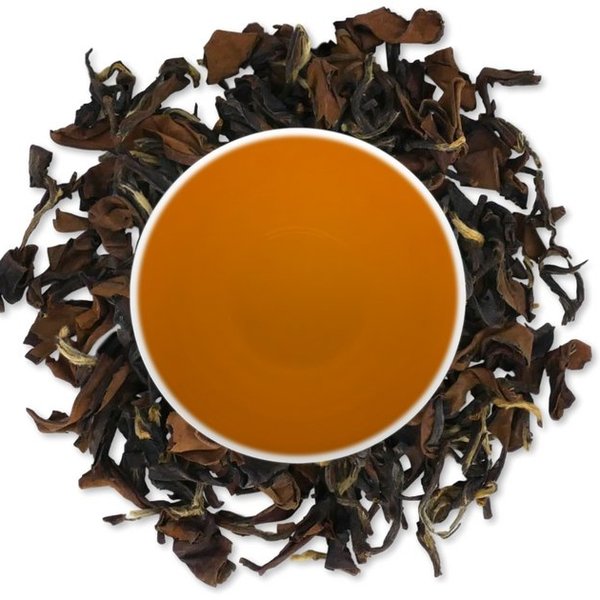
Bai Hao (bái háo / white tip) — also called Dongfang Meiren (东方美人 / Oriental Beauty) — is the most heavily oxidized Chinese oolong at 60-80%. From Hsinchu and Miaoli counties. The defining feature is the green leafhopper (Jacobiasca formosana); when bitten, the plant releases terpenes creating honey, muscatel, and stonefruit aromatics (Wikipedia, 2026).
Because the insect only colonizes unsprayed gardens, real Bai Hao demands organic farming. Summer harvest is the only window. The finished leaf is tippy, multi-colored, and brews to a bright reddish-orange cup without bitterness.
Authentic Miaoli Bai Hao runs $40-$80 per 75g (Mei Leaf, 2026). Taiwan Leaf Tea publishes single-garden Bai Hao at $32 per 30g (Taiwan Leaf Tea, 2026). Mainland imitations at $10-$20 per 100g lack the muscatel signature. Verdict: best bug-bitten honey oolong.
9. Dan Cong (单丛 / Single Bush) — Aroma Showcase (Verdict: Best aromatic oolong)
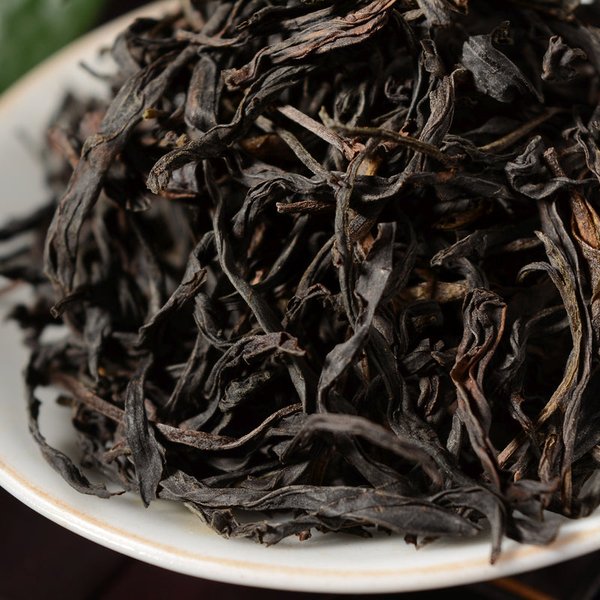
Dan Cong (dān cōng / single bush) comes from the Phoenix Mountains (Fenghuang Shan / 凤凰山) in Chaozhou, Guangdong. The name refers to production from individual ancient trees, each treated as its own cultivar (Rishi Tea, 2026). Modern Dan Cong splits into roughly 80 named "xiang" (香 / fragrances).
Mi Lan Xiang (蜜兰香 / honey orchid) is the most produced and easiest to source. Oxidation lands 30-50% with light-to-medium roast. Flavor reads as honey, nectarine, gardenia, and a long sweet finish with a peach-pit edge.
Standard Mi Lan Xiang runs $15-$30 per 100g; named-mountain old-tree lots hit $80-$300 (Path of Cha, 2026). Sazen imports direct from Fenghuang (Sazen Tea, 2026). Brew hot and short — 95-100°C, 8-15 second steeps. Verdict: best aromatic oolong.
10. Huang Jin Gui (黄金桂 / Golden Osmanthus) — Anxi Floral Value (Verdict: Best floral value pick)
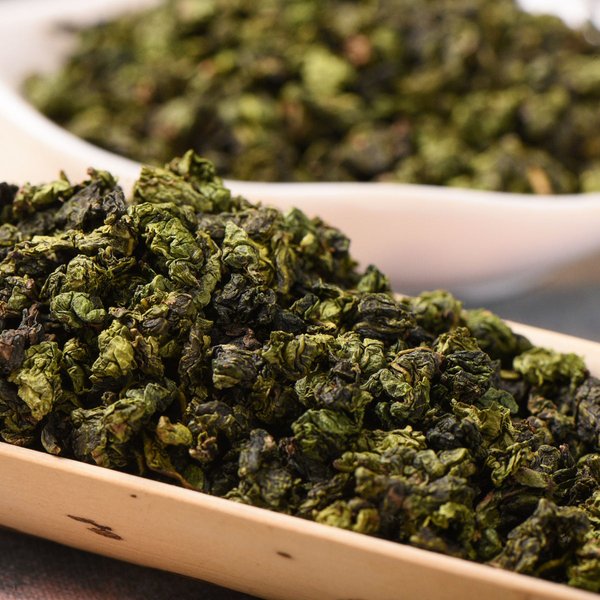
Huang Jin Gui (huáng jīn guì / golden osmanthus) is Anxi's second-most-planted cultivar after Tieguanyin. Locally called Huang Dan (黄旦 / yellow morning), it produces yellow-tinted leaves with strong sweet-osmanthus floral notes (Yunnan Sourcing USA, 2026). Production sits in Hutou Township at 500-900 meters.
Oxidation runs 20-30%, light roast or unroasted. Flavor signature is osmanthus blossom, light cinnamon spice, gardenia, and a smooth nutty finish. Less complex than Tieguanyin but less prone to the sour-bitter edge in second-rate Anxi production.
Premium Huang Jin Gui runs $12-$25 per 100g (Verdant Tea, 2024). Little Tree Tea stocks named-garden lots under $15 per 50g (Little Tree Tea, 2026). Verdict: best floral value pick.
How We Ranked
Chinese-tea rankings combine three signals:
- Verifiable provenance: producing region (Yunnan, Fujian, Wuyi, etc.), cultivar, processing method (oxidation level, kill-green technique), and harvest year. Sourced from Chinese-language vendor documentation, translated where needed.
- Tea-expert tasting + research: editorial cupping sessions following ISO 3103 method, plus published evaluations from Tea Forum and Western Tea Importer notes.
- Vendor reliability: first-hand purchase testing from each ranked vendor — packaging quality, freshness on arrival, COA/lab testing if claimed, and customs/shipping experience.
What we never accept: paid placement, vendor commissions that would modify rankings. Affiliate links to vetted tea vendors (Yunnan Sourcing, White2Tea) appear on vendor pages — these never affect tea-by-tea rankings.
Update cadence: each tea revisited annually or when the harvest changes. Email research@teaatlasguide.com.
Frequently Asked Questions
What is the right brewing temperature for Chinese oolong?
Light-oxidation Anxi and Taiwan teas (Tieguanyin, Alishan, Huang Jin Gui) brew best at 90-95°C. Wuyi rock teas, Dan Cong, and Bai Hao need 95-100°C for full aromatics. Use a gaiwan at 5-6g per 100ml with 10-30 second steeps for 6+ infusions.
What is the difference between Anxi oolong and Wuyi oolong?
Anxi oolong (Tieguanyin, Huang Jin Gui) is lighter-oxidized, often unroasted, with bright floral aromatics. Wuyi rock tea (Da Hong Pao, Rou Gui, Shui Xian) is heavier-oxidized with charcoal roasting that adds caramel, mineral, and roasted-fruit depth. Soil differs: granite-clay in Anxi versus weathered volcanic rock in Wuyi.
How do I avoid counterfeit Chinese oolong?
Three rules. Buy only from vendors naming the village, garden, and harvest year. Pay $25+ per 100g for real Zheng Wei Tieguanyin or Zhengyan Wuyi rock tea. Taste-check for regional signature: Wuyi mineral, Anxi floral, Taiwan creamy.
Which oolong is best for aging?
Wuyi rock teas with charcoal roast (Shui Xian, Da Hong Pao, Rou Gui) and roasted Dong Ding age beautifully over 10-30 years; the roast mellows into deeper caramel and dried-fruit notes. Light-oxidation greener oolongs (Alishan, Jade Tieguanyin) lose fresh aromatics within 12-18 months. Store aging teas dry, dark, sealed.
Can I order Chinese oolong directly from China and Taiwan?
Yes. Yunnan Sourcing ships from China; Eco-Cha and Taiwan Leaf Tea ship from Taiwan in 7-14 days. Western-warehouse vendors (Yunnan Sourcing USA, Mei Leaf UK, Path of Cha) deliver in 2-5 days at a 30-50% markup.
Related Reading: For brewing vessels, see our top 10 gongfu tea vessels compared. For matching clay pots to oolong styles, read our Yixing teapot pairing by tea type. For a head-to-head, see Da Hong Pao vs Tieguanyin tasting.
-- The Tea Atlas Team