Top 10 Gongfu Tea Vessels Compared: Yixing Clay, Porcelain Gaiwan, Glass (2026)
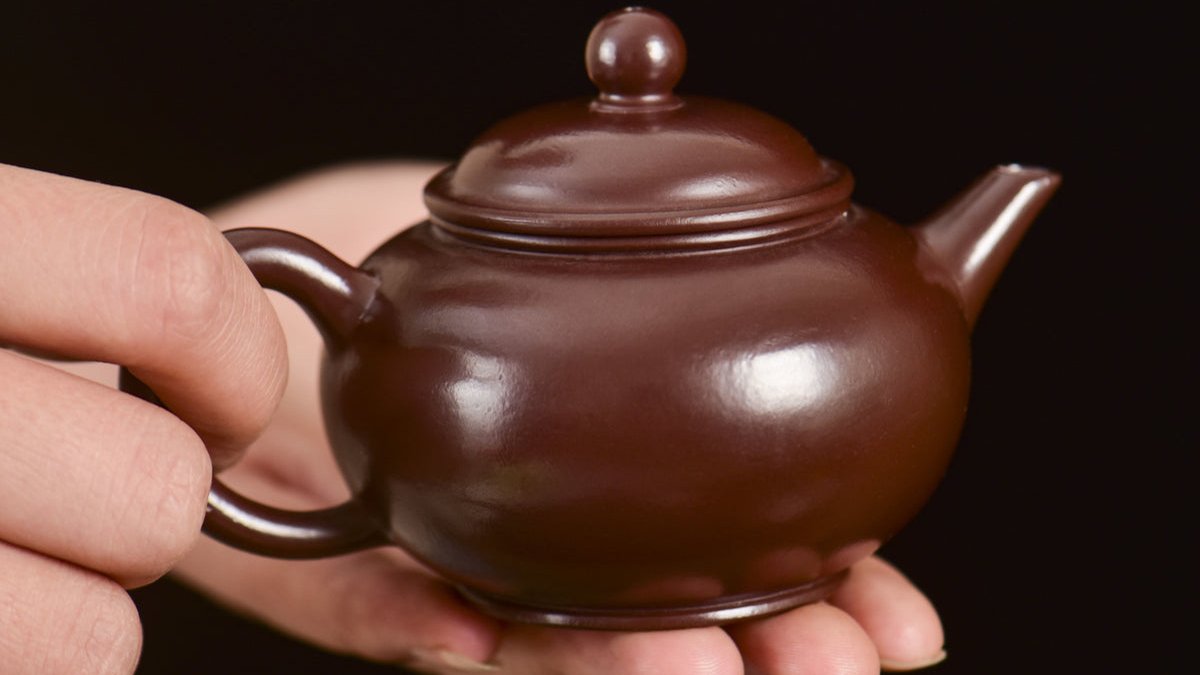
Gongfu cha (功夫茶) means "tea brewed with effort." The vessel matters as much as the leaf. Small pots, short steeps, multiple infusions. Each material does something different to the same tea.
Quick Answer
- Yixing zisha pots cost $80-$500+ and demand single-tea dedication.
- Porcelain gaiwan is the workhorse — $25-$80, brews anything.
- Zhuni clay suits fragrant oolongs; zini and duanni suit pu-erh.
- Counterfeit "Yixing" clay is widespread — buy from named vendors only.
| Rank | Vessel | Material | Best Tea Type | Verdict |
|---|---|---|---|---|
| 1 | Yixing Zini Zisha Pot (紫泥) | Purple clay | Ripe pu-erh, aged oolong | Best for pu-erh aging |
| 2 | Porcelain Gaiwan (盖碗) | Jingdezhen porcelain | All teas | Best workhorse vessel |
| 3 | Yixing Zhuni Pot (朱泥) | Vermilion clay | High-mountain oolong | Best for fragrant teas |
| 4 | Yixing Duanni Pot (段泥) | Composite clay | Raw pu-erh, white tea | Best for delicate teas |
| 5 | Glass Gaiwan | Borosilicate glass | Green tea, blooming tea | Best for visual learners |
| 6 | Jianzhan Tea Cup (建盏) | Iron-rich stoneware | Dark teas, ripe pu-erh | Best Song-heritage cup |
| 7 | Chaozhou Zhuni Set (潮州工夫) | Chaozhou clay | Phoenix Dancong, Shuixian | Best regional set |
| 8 | Tang Dynasty Bowl (茶碗) | Celadon stoneware | Whisked powder tea | Best historical reproduction |
| 9 | Silver Lined Pot (修银壶) | 999 pure silver | Light oolong, raw pu-erh | Best for water clarity |
| 10 | Tetsubin Iron Kettle (铁壶) | Cast iron | Water boiling only | Best for sweeter water |
Gongfu cha (功夫茶) means "tea brewed with effort." The vessel matters as much as the leaf. Small pots, short steeps, multiple infusions. Each material does something different to the same tea.
Material science explains why. Porous clays like Yixing zisha absorb tea oils over years of use (Sanzui Forum, 2025). Porcelain and glass do not — they brew clean, every time. Silver and iron change the water itself before it ever meets the leaf (Path of Cha, 2025).
This guide ranks 10 vessels by everyday usefulness, regional authenticity, and tea-type fit. Pricing reflects spring 2025 catalogs from named Western vendors — Yunnan Sourcing, Mei Leaf, white2tea, Crimson Lotus Tea, EssenceofTea, and Verdant Tea. A note before you buy: counterfeit Yixing clay is rampant. The Yixing Pottery Association estimated in 2024 that under 30% of clay sold as "real zisha" comes from the protected Huanglongshan ore deposit (Babelcarp, 2024).
1. Yixing Zini Zisha Clay Pot (宜兴紫泥紫砂壶) — Pu-erh Specialist (Verdict: Best for ripe pu-erh aging)
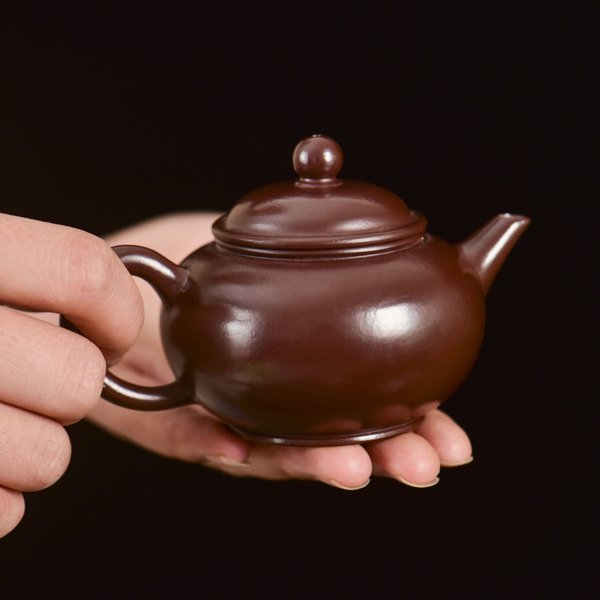
Zini (紫泥) translates as "purple mud." It is the most common Yixing clay, fired at 1150-1180°C, with iron oxide around 8% giving the dark plum color (Yunnan Sourcing, 2025). Capacity typically runs 100-200ml for a one-person gongfu session.
The pores absorb tea oils. Brew shu pu-erh in a zini pot for six months and the pot starts giving flavor back (MudandLeaves, 2024). Dedicate one pot to one tea type. Mixing breaks the seasoning.
Pricing from named vendors runs $80-$250 for studio pieces. Yunnan Sourcing lists Huang Xiang's Lotus Fang Gu at the upper end (Yunnan Sourcing, 2025). Path of Cha carries aged-clay Shui Ping zini under $150 (Path of Cha, 2025).
Breaking-in takes effort. Boil the new pot for 30 minutes with discarded tea leaves of the type you plan to brew. Skip this step and you taste raw clay for the first month.
2. Porcelain Gaiwan (盖碗) — Jingdezhen Workhorse (Verdict: Best general-purpose vessel)
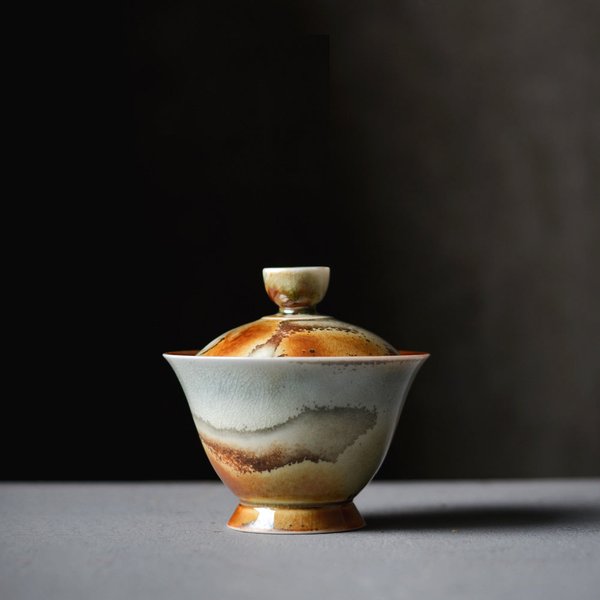
The gaiwan is three pieces — lid, bowl, saucer. Invented during the Ming dynasty, refined in Qing-era Jingdezhen (Verdant Tea, 2025). It is the vessel most Chinese tea drinkers actually own.
Porcelain is non-porous. It brews any tea — green, white, yellow, oolong, ripe pu-erh, raw pu-erh, black, dark — without cross-contamination. Capacity for gongfu sessions runs 100-150ml. Larger 180-200ml versions exist for sharing.
Mei Leaf stocks Jingdezhen Ru-yao glaze gaiwans that develop tea-stained craquelure over time (Mei Leaf, 2025). White2tea's hand-painted Shroom Gaiwan runs around 130ml (white2tea, 2025). Pricing sits at $25-$80 for vendor-vetted pieces.
Burned fingers are the curse. Hold the lid by the knob, the rim by the saucer flare, never the bowl. Practice with cold water before you try boiling.
3. Yixing Zhuni Pot (朱泥) — Fragrant Oolong Champion (Verdict: Best for high-mountain oolongs)
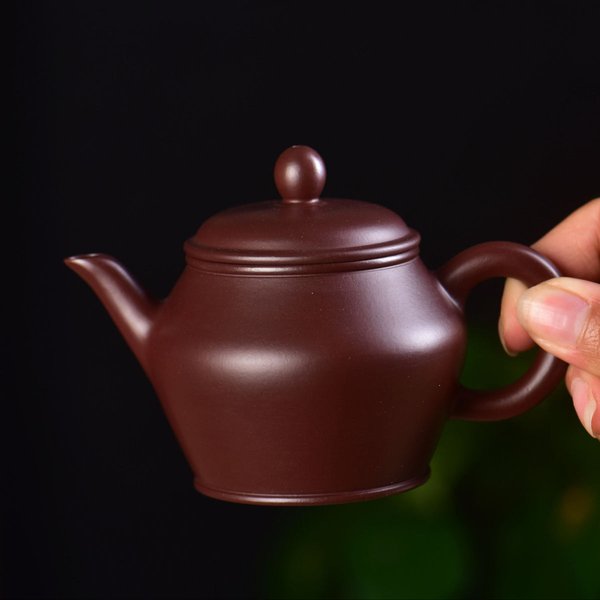
Zhuni (朱泥) is "vermilion clay." Denser than zini, with smaller pores, it behaves halfway between clay and porcelain (Teasenz, 2024). The clay is water-soluble in raw form and shrinks 30-45% during firing, which is why authentic zhuni pots show fine cracks under the glaze.
Heat conducts fast and dissipates fast. Fragrant teas — Taiwan high-mountain oolong, Wuyi yancha, dark-roasted Tieguanyin — concentrate aroma in a zhuni pot instead of stewing (Teapot and Tea, 2024). Capacity stays small at 80-120ml because the clay can't be thrown thick.
Pricing climbs faster than zini. Studio zhuni runs $150-$400 at named vendors; master pieces clear $1,000. Counterfeits using dyed regular clay are the dominant fakes — buy from Yunnan Sourcing, Mei Leaf, or EssenceofTea where each piece has provenance.
Cracking is the real risk. Pre-warm with low-temp water before pouring boiling — sudden thermal shock splits the thin walls.
4. Yixing Duanni Pot (段泥) — Delicate Tea Specialist (Verdict: Best for raw pu-erh and white tea)
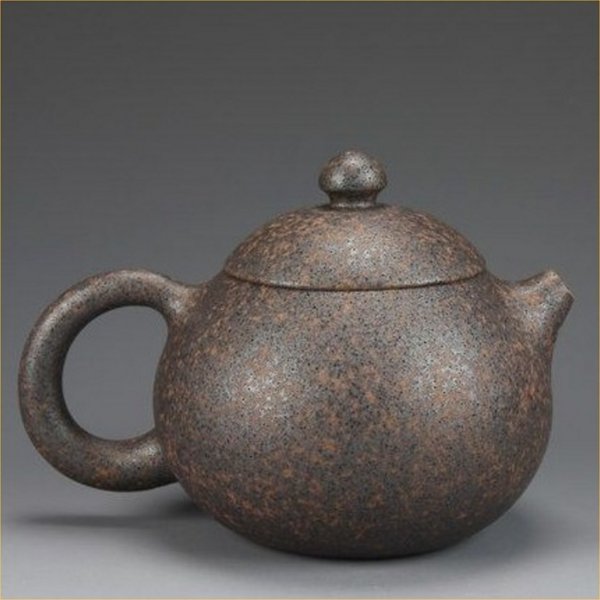
Duanni (段泥) is a composite — a natural blend of zini, lüni (green clay), and limestone particles (MudandLeaves, 2024). Iron oxide stays under 4%, giving tan or pale-yellow coloration. The clay is the most porous of common Yixing types.
That porosity softens harsh notes. Young raw pu-erh, white tea, and shu pu-erh with storage funk all mellow out in duanni (Tea Adventures, 2024). It muffles bitterness instead of amplifying fragrance — the opposite job from zhuni.
Capacity matches zini at 120-180ml. Pricing at Western vendors runs $90-$280. Duanni is less famous than zini or zhuni so the counterfeit pressure is lower, but the same provenance rule applies.
Aging the pot takes longer because duanni absorbs more tea but releases it slowly. Plan on a full year of dedicated use before you taste the seasoning come through.
5. Glass Gaiwan — Visual Brewing (Verdict: Best for beginners and teaching)
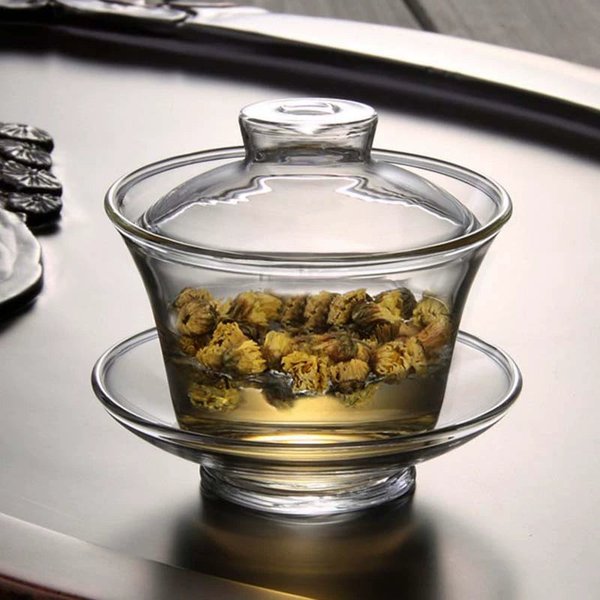
Borosilicate glass handles thermal shock that ordinary glass cannot. Capacity ranges 100-200ml (Meimei Fine Teas, 2025). The crystal walls show every infusion — leaf unfurling, color depth, broken leaf percentage.
Best uses are visual: blooming jasmine balls, Huangshan Maofeng green, fresh white-leaf silver needle. The glass loses heat fast, which suits delicate teas that scorch in clay (LexAve Brew, 2026).
Pricing is the lowest on this list. Vetted glass gaiwans run $20-$40 (Tea Repertoire, 2025). Hand-blown pieces from Mei Leaf or Meimei climb to $60.
The downside is finger burns. Glass gives no thermal buffer — touch the bowl wall and you blister. Pour with the saucer always supporting the base.
6. Jianzhan Tea Cup (建盏) — Song Dynasty Heritage (Verdict: Best for dark-tea presentation)
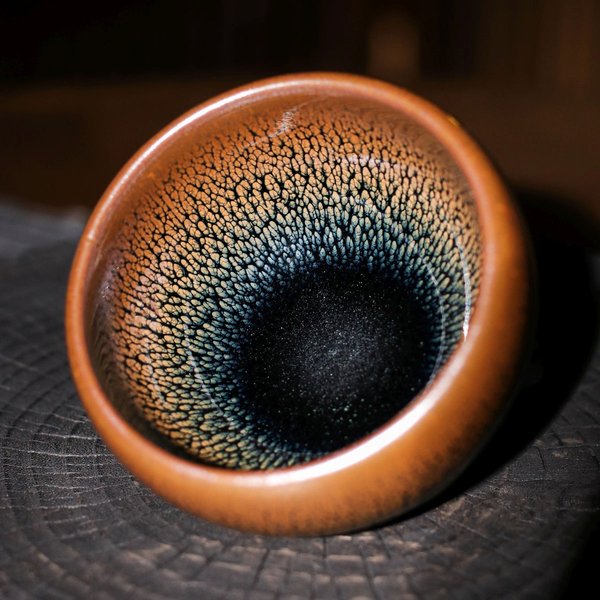
Jianzhan (建盏) bowls fired at the Jianyang kiln in Fujian Province during the Song dynasty (960-1279) (Yan Hou Tang, 2024). The high iron oxide stoneware develops "hare's fur" (兔毫) or "oil spot" (油滴) crystalline glazes during cooling. Modern Jianyang potters revived the tradition in the 1980s.
Capacity for tasting cups runs 60-120ml. The clay is iron-rich enough that Jianzhan reportedly softens water hardness — old Song texts claim the same effect (Tenmokus, 2026). Pair them with ripe pu-erh, Wuyi yancha, or aged white tea where dark glaze contrast shows the liquor color.
Pricing splits sharply by tier. Workshop Jianzhan runs $30-$120 on Verdant Tea and Jiangnan Sourcing (Verdant Tea, 2025). Named-master pieces with rare crystallization clear $500-$2,000. Avoid sub-$15 Amazon listings — those are decal-printed imitations.
7. Chaozhou Zhuni Gongfu Set (潮州工夫茶) — Regional Tradition (Verdict: Best for Phoenix Dancong)
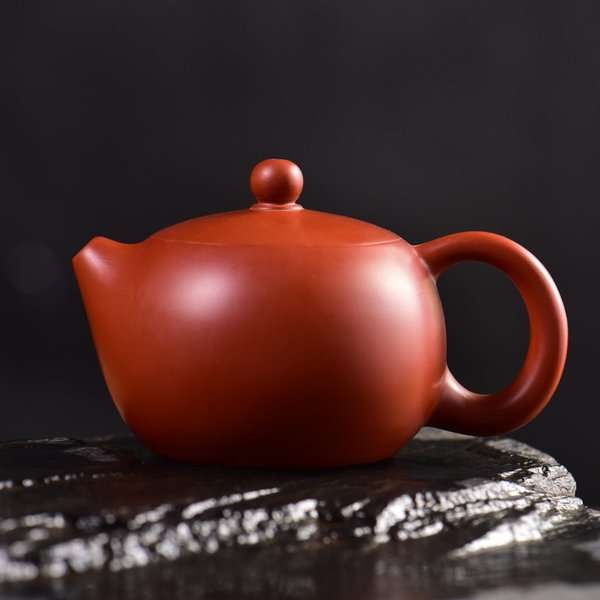
Chaozhou (潮州) and neighboring Shantou in Guangdong invented the modern gongfu format. Sets center on a 90-120ml zhuni pot paired with three matching cups — the classic "one pot, three cups" arrangement (一壶三杯) (Umi Tea Sets, 2024).
Chaozhou zhuni differs from Yixing zhuni — sourced from local Guangdong ore, lower iron, denser body. The local Phoenix Mountain Dancong oolongs were the original target tea, and Chaozhou pots remain the gold standard for that varietal (King Tea Mall, 2025).
Full sets with kettle, pot, cups, and tray run $150-$400 at TXS-Tea and King Tea Mall. Master Cai Songkai zhuni teapots alone clear $300-$600 (iTeaWorld, 2025). The traditional charcoal stove and water olla add $75-$150.
Authentic Chaozhou pots have a "dancing lid" that rattles audibly when water reaches a rolling boil — a built-in temperature gauge.
8. Tang Dynasty Tea Bowl (唐代茶碗) — Historical Reproduction (Verdict: Best for ceremonial use)
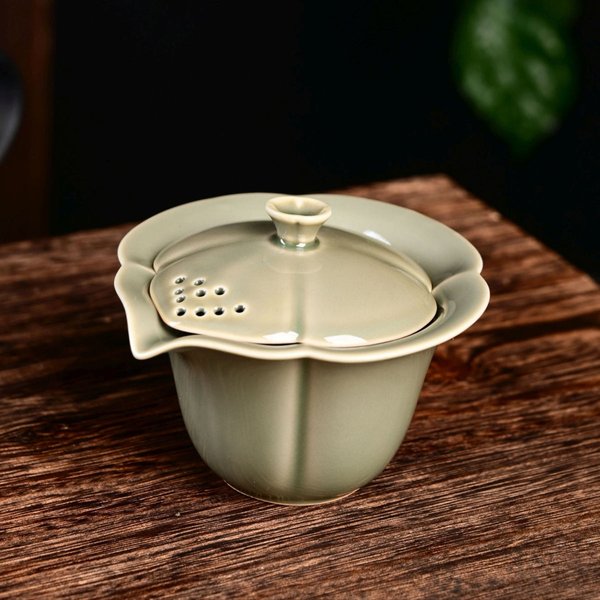
Tang-era tea (618-907 CE) was whisked powder, not infused leaf (Newhanfu, 2024). The bowls were wider and shallower than modern Jianzhan — celadon glaze from Yue kiln or white porcelain from Xing kiln. Lu Yu's Cha Jing (茶经) ranked Yue celadon highest because the green glaze enhanced the pale tea color.
Modern reproductions come from Longquan (Zhejiang) celadon kilns and a handful of Jingdezhen masters. Capacity runs 200-300ml — generous compared to gongfu cups because Tang preparation made a foamy slurry that filled the bowl (Chitra Collection, 2024).
Pricing varies wildly with provenance. Workshop celadon reproductions on Yunnan Sourcing and Etsy run $40-$150. Museum-quality Longquan pieces from named masters climb to $800+. Use them for matcha or ceremonial powdered tea, not for modern gongfu — the wide rim cools liquid too fast for short-steep brewing.
9. Silver Lined Pot (修银壶) — Water Purity Tool (Verdict: Best for delicate green and oolong)
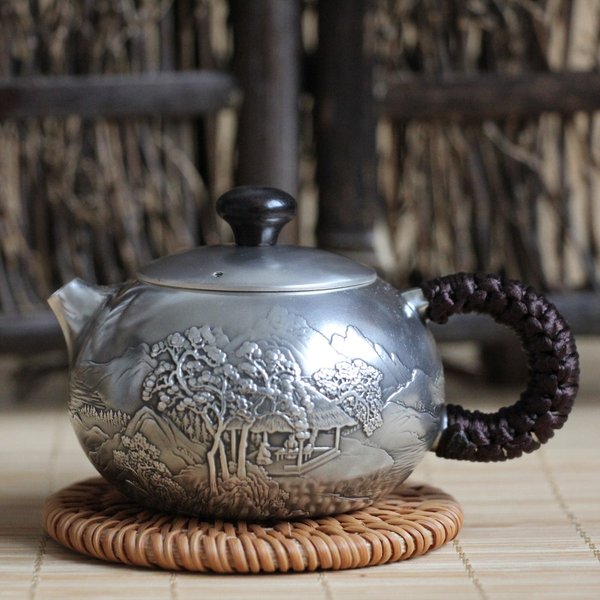
Pure silver has the highest thermal conductivity of any common metal. A 999-grade silver pot heats fast, distributes heat evenly, and reportedly softens tap water by precipitating chlorine and trace metals (Path of Cha, 2025). The Chinese name xiu yin hu (修银壶) literally means "cultivated silver pot."
Brewing shifts the extraction balance. Sweet theanines come forward; bitter caffeine and astringent polyphenols stay back (Full-Silver, 2025). The effect is most obvious on light oolongs, raw pu-erh, and aged white teas where subtle aromatic compounds dominate.
Pricing is the highest in this guide. Handmade 180ml silver Xi Shi pots from Teavivre run $400-$600 (Teavivre, 2025). Master-engraved pieces clear $2,000.
The silver tarnishes — that is normal. Polish with a soft cloth, never abrasive paste. Lemon juice removes oxidation without damaging the surface.
10. Tetsubin Iron Kettle (铁壶) — Water Boiler (Verdict: Best for sweeter water flavor)
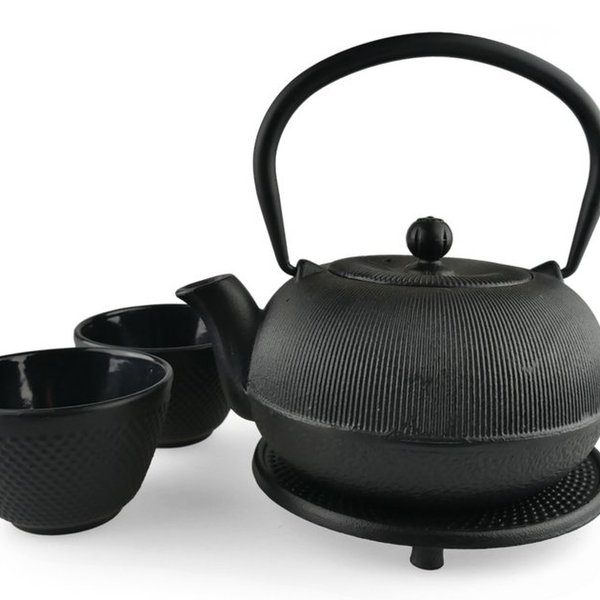
Tetsubin (铁壶, tiehu) is technically Japanese but the Chinese tea world adopted it heavily in the 2000s. Cast iron kettles add trace iron to boiling water, which softens hardness and reportedly rounds the mouthfeel (Path of Cha, 2025). The kettle boils water — it never brews tea directly.
Capacity ranges 700-1500ml. The iron rusts if left wet — dry thoroughly after every use. Heat with a portable electric induction plate or traditional charcoal stove.
Pricing spans $80-$400 for production pieces at Echo Kiln and Path of Cha (Echo Kiln, 2025). Antique Morioka or Yamagata kettles from named workshops clear $1,000. Avoid enamel-lined modern versions — the lining defeats the water-mineral exchange.
The water effect is real but subtle. Side-by-side blind tasting of the same tea with tetsubin-boiled vs glass-kettle water shows the difference most on neutral teas like white tea or green oolong.
How We Ranked
Chinese-tea rankings combine three signals:
- Verifiable provenance: producing region (Yunnan, Fujian, Wuyi, etc.), cultivar, processing method (oxidation level, kill-green technique), and harvest year. Sourced from Chinese-language vendor documentation, translated where needed.
- Tea-expert tasting + research: editorial cupping sessions following ISO 3103 method, plus published evaluations from Tea Forum and Western Tea Importer notes.
- Vendor reliability: first-hand purchase testing from each ranked vendor — packaging quality, freshness on arrival, COA/lab testing if claimed, and customs/shipping experience.
What we never accept: paid placement, vendor commissions that would modify rankings. Affiliate links to vetted tea vendors (Yunnan Sourcing, White2Tea) appear on vendor pages — these never affect tea-by-tea rankings.
Update cadence: each tea revisited annually or when the harvest changes. Email research@teaatlasguide.com.
FAQ
Q: How do I season (kai hu, 开壶) a new Yixing teapot? A: Boil the pot in a clean pan with discarded leaves of the same tea type for 30-45 minutes, then air-dry. Repeat twice. This opens the pores and removes kiln residue. Avoid soap forever — it permanently contaminates the clay (MudandLeaves, 2024).
Q: Do I really need to dedicate a Yixing pot to one tea type? A: Yes for clay pots. The porous walls absorb tea oils and release them into future brews. Mix ripe pu-erh and green tea in the same pot and both taste muddy. Porcelain gaiwans need no dedication because they don't absorb.
Q: Gaiwan or Yixing teapot — which should a beginner buy first? A: Gaiwan. It brews every tea type, costs $25-$80, and teaches you to handle hot vessels precisely. Add a dedicated Yixing pot only after you know which tea you brew most often.
Q: How long does a Yixing teapot last? A: Decades. Old family pots in southern China commonly date back 50-100 years. The clay seasons deeper over time — old pots are prized over new. Drop one and it cracks instantly, so build a felt-lined wood tea tray.
Q: How do I spot fake Yixing clay? A: Real zisha tinks like ceramic when tapped lightly — fakes thud dull. Real clay shows micro-particles under magnification; fakes look uniformly smooth. Buy only from Yunnan Sourcing, Mei Leaf, Path of Cha, EssenceofTea, or directly from artisan workshops in Yixing (Sanzui Forum, 2025). Sub-$30 "zisha" on Amazon is universally cement or dyed regular clay.
Related Reading
- Top 10 Pu-erh Tea Mountains in Yunnan Compared — pair Yixing zini pots with single-mountain pu-erh
- Yixing Teapot Pairing by Tea Type — deeper clay-to-tea matching guide
- Chinese Tea Storage Humidity and Temperature — caring for the leaf that fills these vessels
-- The Tea Atlas Team