Top 10 Chinese Green Teas Compared: Longjing, Bi Luo Chun, Anji Bai Cha (2026)
Chinese green tea has the longest documented history of any tea style. Lu Yu (陆羽) finished the Cha Jing (茶经 / Classic of Tea) around 760 CE during the Tang dynasty, recording 43 chapters on cultivation, processing, and brewing (Babelcarp, 2025). Most teas in this guide come from county-level Protected Geographic Indication zones the China National Tea Marketing Association tracks each spring.
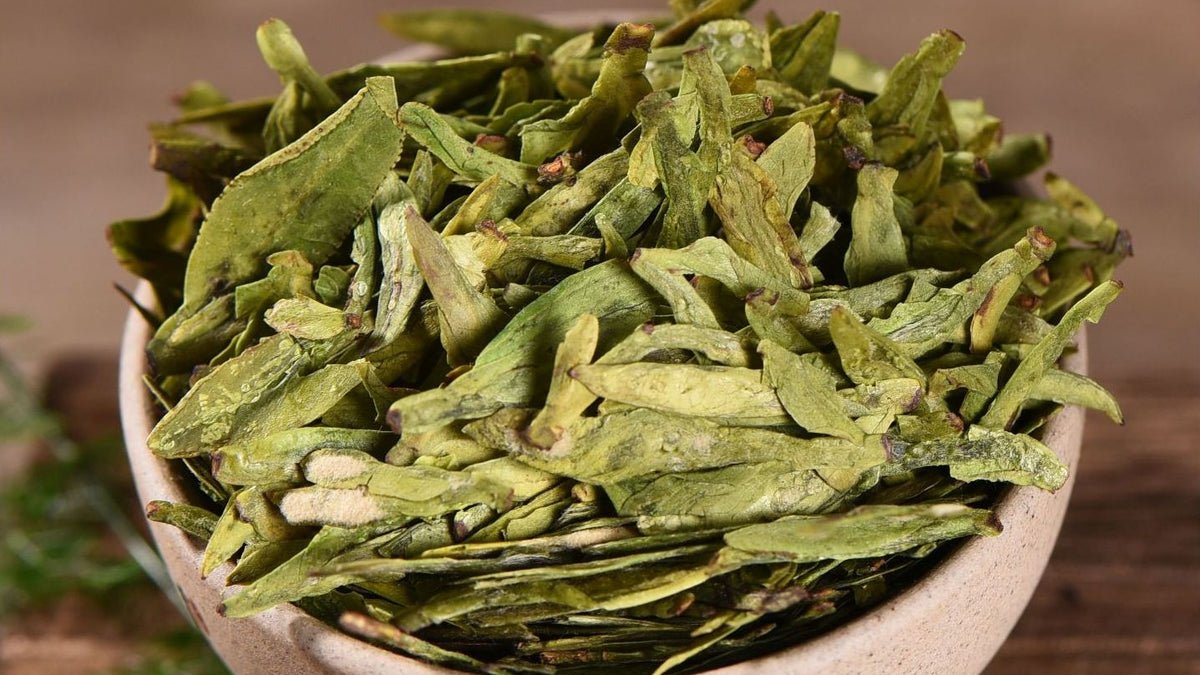
Quick Answer
- Longjing from Xihu is the benchmark — pan-fired, chestnut sweet.
- Bi Luo Chun and Anji Bai Cha beat it on aroma and amino sweetness.
- Mingqian (pre-April 5) harvest costs 2-4x Yuqian for real reason.
- Yunnan Sourcing, Mei Leaf, and Tea Drunk are vetted Western vendors.
| Rank | Tea | Region | Flavor Notes | Verdict |
|---|---|---|---|---|
| 1 | Longjing (龙井) | Hangzhou Xihu, Zhejiang | Chestnut, beany, orchid | Best premium starter |
| 2 | Bi Luo Chun (碧螺春) | Dongting, Jiangsu | Apricot, fruit-blossom, downy | Best aromatic green |
| 3 | Anji Bai Cha (安吉白茶) | Anji, Zhejiang | Sweet pea, asparagus, umami | Best low-bitterness tea |
| 4 | Huang Shan Mao Feng (黄山毛峰) | Huangshan, Anhui | Magnolia, fresh-cut grass | Best high-mountain green |
| 5 | Tai Ping Hou Kui (太平猴魁) | Houkeng village, Anhui | Orchid, sugarcane, smooth | Best ceremonial-grade tea |
| 6 | Liu An Gua Pian (六安瓜片) | Lu'an, Anhui | Roasted, sweet, nutty | Best leaf-only green |
| 7 | Xinyang Maojian (信阳毛尖) | Xinyang, Henan | Floral, brisk, slight bite | Best northern-style green |
| 8 | Meng Ding Gan Lu (蒙顶甘露) | Mengshan, Sichuan | Sweet dew, light vegetal | Best historical pick |
| 9 | Lu Shan Yun Wu (庐山云雾) | Lushan, Jiangxi | Cloud-mist, chestnut, soft | Best cloud-mountain green |
| 10 | Du Yun Mao Jian (都匀毛尖) | Duyun, Guizhou | Hay, melon, downy | Best mountain-frontier value |
Chinese green tea has the longest documented history of any tea style. Lu Yu (陆羽) finished the Cha Jing (茶经 / Classic of Tea) around 760 CE during the Tang dynasty, recording 43 chapters on cultivation, processing, and brewing (Babelcarp, 2025). Most teas in this guide come from county-level Protected Geographic Indication zones the China National Tea Marketing Association tracks each spring.
Two harvest windows matter more than any other variable. Mingqian (明前) means picked before the Qingming festival on April 4-5 — small buds, high amino acid content, no insect pressure. Yuqian (雨前) means picked before the Grain Rain on April 19-20 — bigger leaves, lower price, more body. The price gap between Mingqian and Yuqian from the same garden often runs 200-400% (Sanzui Forum, 2025).
This guide ranks 10 named green teas by quality consistency, regional authenticity, and what Western buyers can actually source. Pricing reflects spring 2026 catalogs from vendors with named provenance: Yunnan Sourcing, Mei Leaf, Tea Drunk, Verdant Tea, Seven Cups, and Path of Cha. One warning before you spend: counterfeit Longjing is the most-faked tea on the market, with the West Lake Longjing Association estimating in 2024 that under 25% of tea sold as "Xihu Longjing" comes from the protected 168-square-kilometer zone (Tea Drunk, 2025).
1. Longjing (龙井 / Dragon Well) — National Treasure (Verdict: Best premium starter)
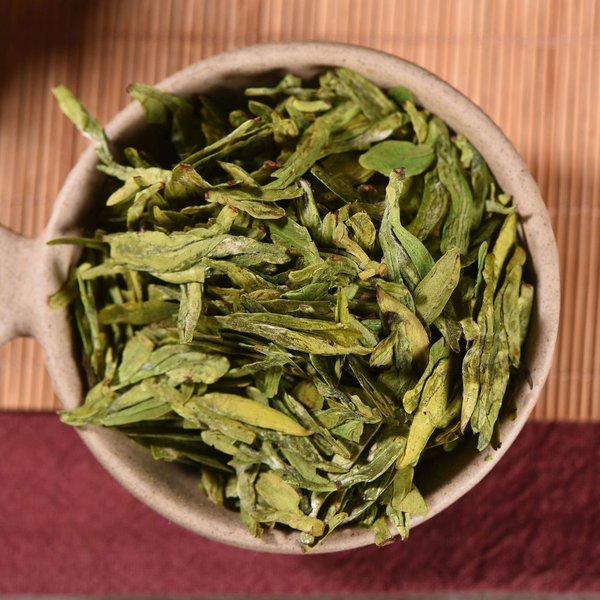
Longjing (lóng jǐng / dragon well) comes from the West Lake (Xihu / 西湖) area of Hangzhou, Zhejiang. The protected appellation covers five villages around the lake: Shifeng (狮峰), Longjing, Yunqi, Hupao, and Meijiawu (Yunnan Sourcing, 2026). Shifeng Mountain pre-Qingming is the textbook benchmark — pan-fired in iron woks at 180-220°C using ten traditional hand motions.
Flavor profile is chestnut, toasted soybean, and a quiet orchid finish. Grade tiers run Imperial (Te Ji 特级) > AAA > Premium > Fancy. Mingqian Imperial from Shifeng hits $40-$80 per 100g at Yunnan Sourcing (Yunnan Sourcing USA, 2026). Premium grade runs $20-$35.
Most "Longjing" sold under $10 per 100g is grown in Sichuan or Guizhou and pan-fired in the Longjing style. The flat-sword leaf shape is easy to fake, the terroir is not (Babelcarp, 2024).
2. Bi Luo Chun (碧螺春 / Green Snail Spring) — Aromatic Champion (Verdict: Best aromatic green)
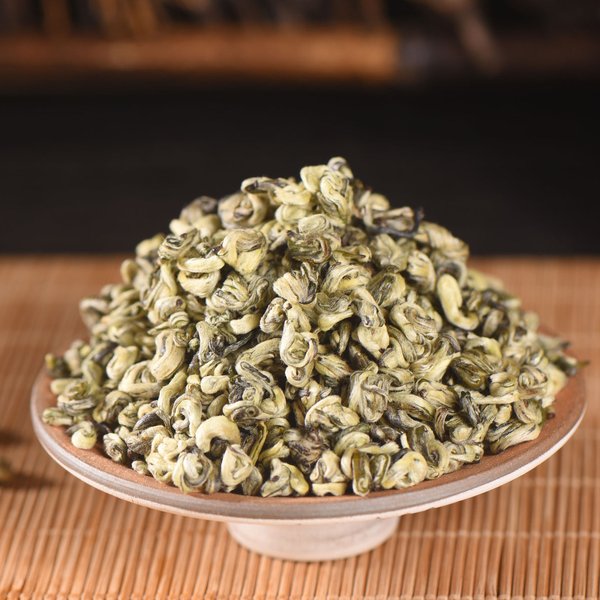
Bi Luo Chun (bì luó chūn) translates as "green snail spring" — the leaves curl tight during the hand-rolling step. It grows on Dongting (洞庭) — twin mountains east and west of Lake Tai (太湖) in Jiangsu Province (Mei Leaf, 2026). The defining trick is interplanting tea bushes with peach, apricot, and plum trees so the leaves absorb fruit-blossom aromatics.
Processing is pan-fired but at lower heat than Longjing — 130-160°C — to preserve the floral volatiles. White trichome down covers every leaf. Flavor is apricot, melon, and a fresh-cut-flower top note that no other green tea matches.
Mingqian Dongting Bi Luo Chun runs $50-$120 per 100g at vetted Western vendors (Seven Cups, 2026). Tea Drunk imports direct from Dongting and Mei Leaf publishes harvest dates on every batch. Mainland "Bi Luo Chun" from Sichuan exists at $8-$15 per 100g and tastes flat compared to the original.
3. Anji Bai Cha (安吉白茶 / Anji White Tea) — Amino Sweet Bomb (Verdict: Best low-bitterness tea)
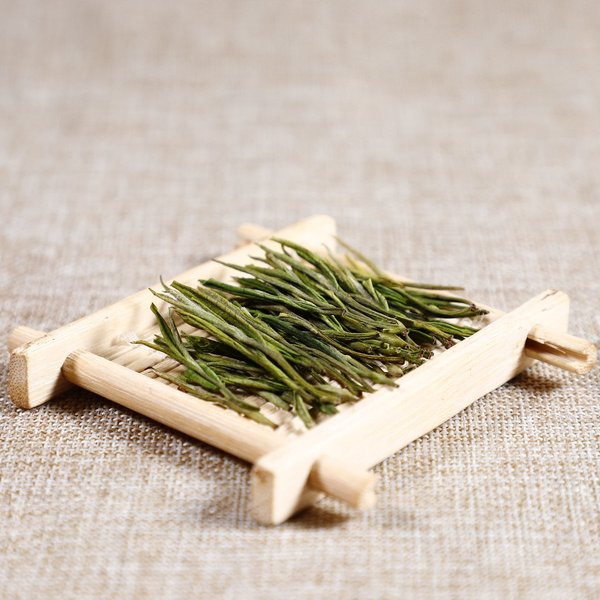
Anji Bai Cha (ān jí bái chá) is confusingly named — it is a green tea, not a white tea. The cultivar (Bai Ye 1 白叶1号) produces pale leaves in early spring because low temperatures suppress chlorophyll. Discovered on an abandoned bush in Anji County in 1982, propagated commercially since the 1990s (Yunnan Sourcing, 2026).
Amino acid content runs 2-3x other green teas. That means bright umami, low astringency, no bitterness at any reasonable brew temperature. Flavor reads as sweet pea, blanched asparagus, and chestnut milk.
Processing is steamed-then-pan-fired, leaves whole and flat. Mingqian harvests from Anji's Xilong Township run $30-$70 per 100g (One River Tea, 2026). Harney & Sons stocks a $42 package; Tea-Tao publishes single-garden origin info (Tea-Tao, 2026). Brew at 75°C — anything hotter wastes the amino sweetness.
4. Huang Shan Mao Feng (黄山毛峰 / Yellow Mountain Fur Peak) — Misty Mountain Classic (Verdict: Best high-mountain green)
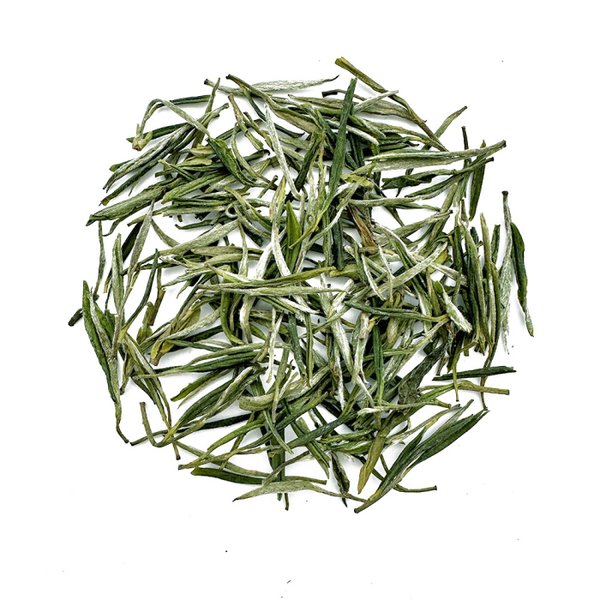
Huang Shan Mao Feng (huáng shān máo fēng / yellow mountain fur peak) grows on Huangshan Mountain in Anhui Province at 700-1,500 meters elevation. The "fur" refers to the fine white trichomes on each bud-and-leaf set (Teavivre, 2026). Discovered around 1875 by tea merchant Xie Zhengan during the late Qing dynasty.
Processing is pan-fired and shaped into a slight curve — narrower than Longjing's flat sword. The high-elevation cloud cover and low pollen pressure produce a clean magnolia aroma. Flavor is fresh-cut grass, slight chestnut sweetness, and a long throat-finish.
Mingqian Te Ji (Imperial) grade runs $30-$60 per 100g at named vendors (Treasure Green, 2026). Yuqian standard grade drops to $12-$20. Brew at 80°C in glass to watch the down release into the cup.
5. Tai Ping Hou Kui (太平猴魁 / Monkey King of Taiping) — Ceremonial-Grade Showpiece (Verdict: Best ceremonial-grade tea)
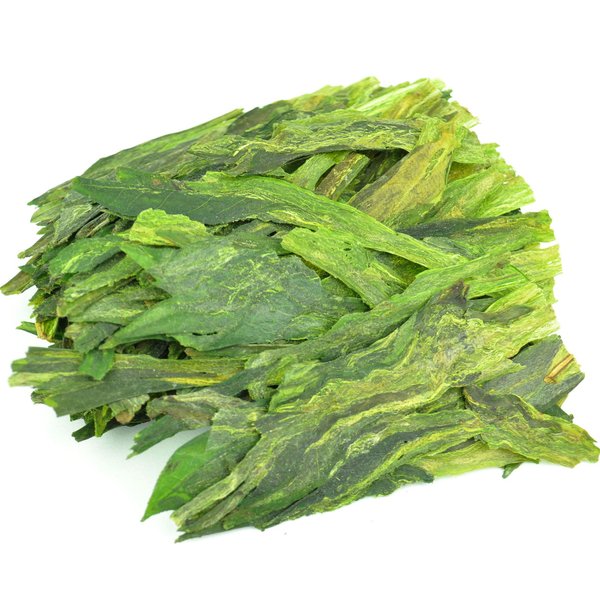
Tai Ping Hou Kui (tài píng hóu kuí / monkey king of Taiping) is the most visually distinctive tea in this guide. Leaves are huge — 5-7 cm long — pressed flat between cloth and wire mesh during processing, then pan-fired (Yunnan Sourcing, 2026). Made only from the Shi Da Cha (柿大茶) cultivar grown in Houkeng (猴坑), Houkang, and a handful of other villages in Anhui's Huangshan region.
The flat leaf shape is achieved by hand — two pickers can produce 250 grams of finished tea in a 14-hour day. Flavor is orchid, sugarcane, and a buttery vegetal note. The brew is the cleanest of any green tea — almost zero astringency.
A++ grade from Houkeng village runs $80-$200 per 100g at named vendors (King Tea Mall, 2026). Lower grades (A, B) from outlying villages drop to $25-$60. Use a tall glass — the long leaves stand upright when brewed.
6. Liu An Gua Pian (六安瓜片 / Liu An Melon Seed) — Leaf-Only Specialist (Verdict: Best leaf-only green)
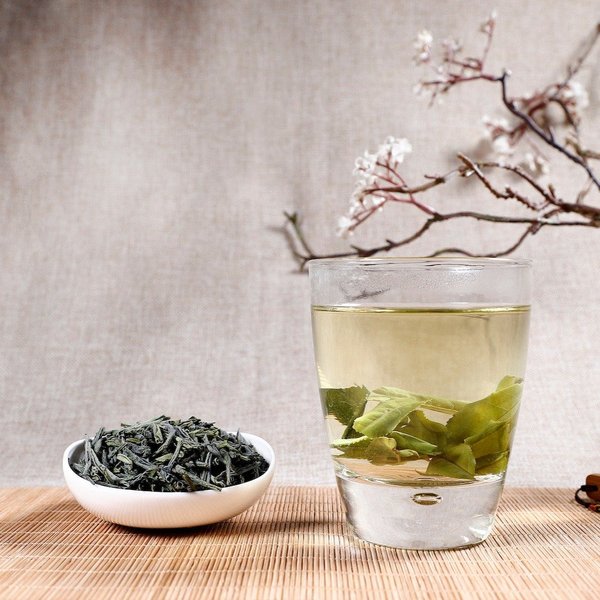
Liu An Gua Pian (liù ān guā piàn / Liu An melon seed) is the only Chinese tea made from the second leaf alone — no bud, no stem, no tip. The single leaf is plucked, deveined, and shaped to resemble a melon seed before being pan-fired and basket-roasted over charcoal (Tea Drunk, 2025). Production centers on Qiyun Mountain (齐云山) in Anhui's Lu'an region.
Charcoal finishing gives this tea a roasted, nutty character no other green tea has. Flavor reads as toasted almond, light caramel, and dried hay. The brew is sturdier than fragrant teas — it tolerates 90°C water and longer steeps.
Authentic Qiyun Mountain Liu An Gua Pian runs $40-$90 per 100g (Yunnan Sourcing, 2026). Lower-elevation knockoffs from outside Lu'an exist at $10-$15. The charcoal smoke note should be subtle — heavy smoke means bad charcoal, not authenticity.
7. Xinyang Maojian (信阳毛尖 / Xinyang Fur Tip) — Northern Bite (Verdict: Best northern-style green)
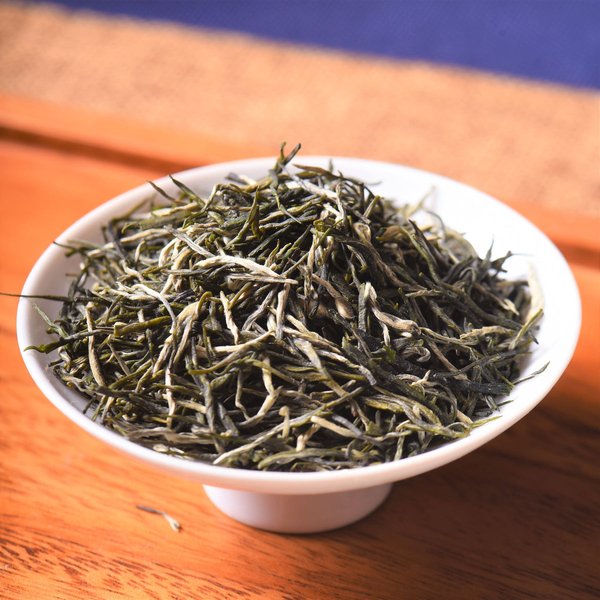
Xinyang Maojian (xìn yáng máo jiān / Xinyang fur tip) is the northernmost famous Chinese green tea, grown in Henan Province at 38-42° latitude (Wikipedia, 2025). Cold winters slow leaf metabolism — the result is high theanine, brisk caffeine, and a sharper edge than southern teas.
Tang dynasty texts already named Xinyang tea as tribute. Modern processing is pan-fired in small batches, leaves curled into thin needles covered in white down. Flavor is floral, slightly green-apple, with a clean bite at the finish.
Mingqian Imperial grade from Yunnan Sourcing runs $25-$50 per 100g (Yunnan Sourcing, 2026). Tea Drunk stocks heirloom-cultivar Xinyang at the higher end with field-walk video documentation (Tea Drunk, 2026). Yuqian grade drops to $12-$20.
8. Meng Ding Gan Lu (蒙顶甘露 / Sweet Dew of Mengding) — Historical Pick (Verdict: Best historical pick)
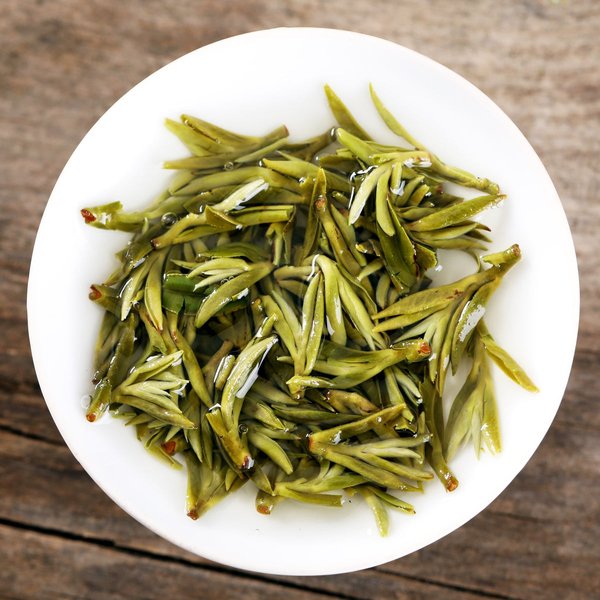
Meng Ding Gan Lu (méng dǐng gān lù / sweet dew of Mengding) grows on Mengshan (蒙山) in Sichuan Province, the documented origin of tea cultivation around 53 BCE under Wu Lizhen (Babelcarp, 2025). It is the oldest continuously-produced named tea on this list.
Processing involves three pan-firing rounds with hand-rolling between each. Leaves emerge tightly curled and covered in down. Flavor is sweet vegetal, light corn-silk, soft mineral finish — the "sweet dew" name is literal.
Mingqian A+++ grade from Mengshan runs $35-$75 per 100g at vendors with provenance (King Tea Mall, 2026). Sichuan also produces enormous volumes of generic green tea sold as "Meng Ding style" at $8-$15 — these come from lowland gardens, not Mengshan itself.
9. Lu Shan Yun Wu (庐山云雾 / Lu Mountain Cloud Mist) — Soft Mountain Tea (Verdict: Best cloud-mountain green)
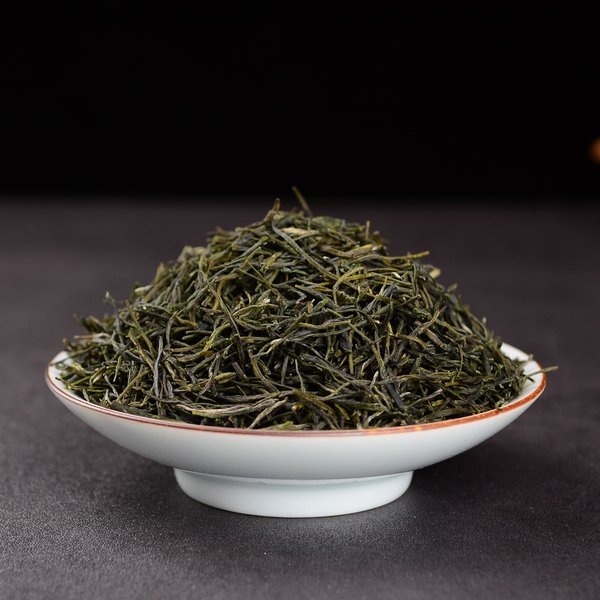
Lu Shan Yun Wu (lú shān yún wù / Lu Mountain cloud and mist) grows on Lushan in Jiangxi Province at 800-1,200 meters elevation. The mountain is wrapped in fog 200+ days per year, which diffuses sunlight and slows leaf growth (Yunnan Sourcing, 2025). The result is a slow-developing leaf with high amino acid and low polyphenol content.
Processing is pan-fired and shaped into thick curled strips — heavier than Mao Feng, lighter than Liu An Gua Pian. Flavor is chestnut sweet, soft mineral, and a quiet white-flower note. The brew has a noticeably thick body for a green tea.
Mingqian grade runs $20-$45 per 100g at Yunnan Sourcing's single-garden lots. Lower-elevation Jiangxi green sold as Lu Shan exists at $7-$12 and tastes thin. Pair this tea with light food — its softness disappears under strong flavors.
10. Du Yun Mao Jian (都匀毛尖 / Duyun Fur Tip) — Frontier Value (Verdict: Best mountain-frontier value)
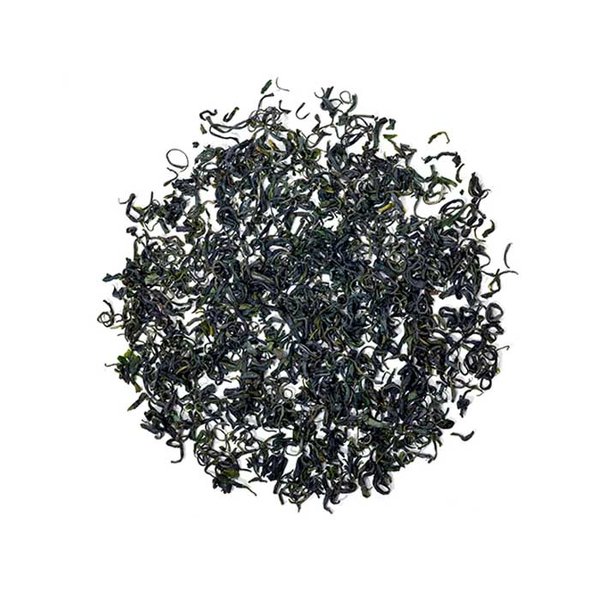
Du Yun Mao Jian (dū yún máo jiān / Duyun fur tip) grows in Duyun city, Guizhou Province, at 1,000-1,400 meters. Guizhou's karst limestone terrain and high cloud cover replicate growing conditions found in more famous tea regions at a fraction of the land cost (King Tea Mall, 2026). Mao Zedong wrote the tea's modern name in 1956 — before that it was known as Yu Gou Cha (鱼钩茶 / fish-hook tea).
Processing is pan-fired with hand-curling that produces fine fish-hook-shaped leaves covered in white trichomes. Flavor reads as hay, melon-rind, and a downy soft finish. Less complex than the eastern teas — but cleaner and sweeter than its price suggests.
Mingqian A+ grade runs $15-$35 per 100g (Sazen Tea, 2026). This is the entry point for buyers who want real Mingqian craft without paying Longjing prices.
How We Ranked
Chinese-tea rankings combine three signals:
- Verifiable provenance: producing region (Yunnan, Fujian, Wuyi, etc.), cultivar, processing method (oxidation level, kill-green technique), and harvest year. Sourced from Chinese-language vendor documentation, translated where needed.
- Tea-expert tasting + research: editorial cupping sessions following ISO 3103 method, plus published evaluations from Tea Forum and Western Tea Importer notes.
- Vendor reliability: first-hand purchase testing from each ranked vendor — packaging quality, freshness on arrival, COA/lab testing if claimed, and customs/shipping experience.
What we never accept: paid placement, vendor commissions that would modify rankings. Affiliate links to vetted tea vendors (Yunnan Sourcing, White2Tea) appear on vendor pages — these never affect tea-by-tea rankings.
Update cadence: each tea revisited annually or when the harvest changes. Email research@teaatlasguide.com.
Frequently Asked Questions
What is the right brewing temperature for Chinese green tea?
Most Chinese green teas brew at 75-85°C, never boiling. Delicate teas like Anji Bai Cha and Bi Luo Chun need 75-80°C to preserve amino sweetness. Sturdier teas like Liu An Gua Pian and Xinyang Maojian tolerate 85-90°C. Boiling water cooks the leaves and produces bitter, astringent, and grassy notes that mask the actual tea character.
How fresh does Chinese green tea need to be?
Spring-harvested Chinese green tea peaks within 6-9 months of processing and loses most of its character by 18 months. Mingqian teas show date stamps and harvest village — always check the bag. Vacuum-sealed and refrigerated tea lasts longest. Storing tea at room temperature in a paper pouch is fine for 3-4 months but degrades fast after that.
Western brewing vs gongfu — which is better for green tea?
Western brewing — 3 grams of leaf per 250ml mug, 2-3 minute steep at 80°C — works for everyday use and tastes broadly correct. Gongfu brewing — 4 grams in a 100ml glass gaiwan, 15-30 second steeps, 6+ infusions — reveals layers Western brewing flattens. Delicate teas like Anji Bai Cha benefit most from gongfu because the short steeps prevent over-extraction.
Can I order Chinese green tea directly from China?
Yes — Yunnan Sourcing, King Tea Mall, and Teavivre all ship from China to the US with reliable customs clearance. Shipping runs 7-14 days. Western-warehouse vendors like Yunnan Sourcing USA, Mei Leaf, Tea Drunk, and Path of Cha hold inventory in the US or UK for 2-5 day delivery at a 30-50% markup. Buy direct from China for serious quantities; buy local for fast turnaround.
How do I avoid counterfeit Chinese green tea?
Three rules. First, buy only from vendors who name the village, garden, and pick date — not just "Hangzhou" or "Anhui." Second, expect to pay $25+ per 100g for real Mingqian from any famous appellation; $5 Longjing is always Sichuan-grown. Third, taste-check the first brew at the right temperature — counterfeits show up as muddy, bitter, or one-dimensional next to a known reference tea.
Related Reading: For brewing vessels that suit these teas, see our top 10 gongfu tea vessels compared. For decoding factory packaging, read our guide to Chinese tea grading system. For timing your purchase to the harvest, see our Chinese tea harvest calendar.
-- The Tea Atlas Team