Chinese Tea for Beginners: How to Start Your Journey (From Chinese Tea Masters)
- China produces six categories of tea — green, white, yellow, oolong (blue), black (red), and dark (black) — classified by processing method and oxidation level, ranging from unoxidized (green, <5%) to fully fermented (dark, 100%), with over 2,000 named varieties across these categories
Quick Answer
- China produces six categories of tea — green, white, yellow, oolong (blue), black (red), and dark (black) — classified by processing method and oxidation level, ranging from unoxidized (green, <5%) to fully fermented (dark, 100%), with over 2,000 named varieties across these categories
- Start with 3–5 representative teas to calibrate your palate — Long Jing (green), Bai Mu Dan (white), Tie Guan Yin (oolong), Dian Hong (black), and shou pu-erh (dark) cover the full spectrum of Chinese tea flavor at accessible price points of ¥100–500 per jin
- You need only three pieces of equipment to begin — a white porcelain gaiwan (盖碗, 110–150ml), a glass fairness pitcher (公道杯), and a tasting cup (品茗杯), totaling under ¥100 for a complete setup that works with every tea type
- China's tea market reached ¥3,258 billion in domestic sales in 2024, with 241 million tons consumed internally, meaning there has never been more variety and accessibility for new tea drinkers — but the sheer volume of choice can paralyze beginners without a roadmap
Everybody starts somewhere. Maybe a friend brewed you a cup of something that tasted nothing like the tea bags you grew up with. Maybe you visited a Chinese tea shop and the owner poured you ten tiny cups of the same oolong and each one tasted different. Maybe you just saw a beautiful gaiwan online and thought: I want to learn this.
Whatever brought you here, the good news is that Chinese tea isn't as complicated as it looks from the outside. The fundamentals are simple. The equipment is affordable. And unlike wine — where a bad bottle costs ¥200 and teaches you nothing — a mediocre cup of tea still teaches you something about what you do and don't like.
This guide is written specifically for people who are curious about Chinese tea but don't know where to start. No jargon without explanation. No assumptions about what you already know. Everything here draws from Chinese tea masters, Zhihu community discussions, and the principle that the best way to learn tea is to drink it, not read about it — but a little reading helps you drink smarter.
Understanding the Six Types: Your Foundation
Every Chinese tea falls into one of six categories. This classification system, formalized by tea scientist Chen Chuan (陈椽) in the 1970s, is based on processing method — specifically the degree of oxidation (sometimes called fermentation) the leaves undergo.
Think of oxidation as a spectrum from fresh to transformed. Cut an apple and leave it on the counter — it browns. That's oxidation. Tea leaves do the same thing, and tea makers control how far that process goes.
The Six Categories at a Glance
| Category | Chinese | Oxidation | Character | Beginner Pick |
|---|---|---|---|---|
| Green Tea | 绿茶 | <5% | Fresh, vegetal, sweet | Long Jing (龙井) |
| White Tea | 白茶 | 5–10% | Subtle, clean, naturally sweet | Bai Mu Dan (白牡丹) |
| Yellow Tea | 黄茶 | 10–20% | Mellow, smooth, slightly sweet | Junshan Yin Zhen (君山银针) |
| Oolong Tea | 青茶/乌龙茶 | 15–50% | Floral, complex, aromatic | Tie Guan Yin (铁观音) |
| Black Tea | 红茶 | 70–80% | Sweet, malty, full-bodied | Dian Hong (滇红) |
| Dark Tea | 黑茶 | 100% (post-fermented) | Earthy, smooth, aged | Shou Pu-erh (熟普) |
For the complete deep dive, see our guide to the six types of Chinese tea.
Green Tea (绿茶): Where Most Chinese Start
Green tea is China's most produced and consumed tea category, accounting for the largest share of the country's 349.9 million tons of annual production (2024 data). It's minimally processed: leaves are picked, quickly heated to stop oxidation (either pan-fired or steamed), rolled, and dried.
What it tastes like: Fresh, clean, vegetal. The best green teas have a sweetness reminiscent of chestnut, bamboo, or fresh beans. No bitterness when brewed correctly.
Best beginner green teas:
- Long Jing (龙井) — China's most famous tea. Flat, pan-fired leaves, chestnut sweetness. ¥200–500/jin for good Qiantang-origin tea
- Bi Luo Chun (碧螺春) — Tiny rolled leaves with a fruity, floral aroma. From Jiangsu Province
- Huangshan Mao Feng (黄山毛峰) — Delicate, sweet, orchid-like. From Anhui Province
Brewing tip: Use water at 80–85°C, not boiling. Boiling water scalds green tea and makes it bitter. A glass cup works perfectly — watch the leaves unfurl.
For the definitive Long Jing guide, see our Dragon Well tea guide.
White Tea (白茶): The Gentle Introduction
White tea undergoes minimal processing — just withering and drying. No rolling, no firing. This simplicity preserves the leaf's natural sweetness and produces the most delicate of the six tea types.
What it tastes like: Subtle, clean, honeyed. White tea doesn't punch you with flavor — it whispers. The best examples have a natural floral sweetness that unfolds over multiple infusions.
Best beginner white teas:
- Bai Mu Dan (白牡丹, White Peony) — More flavorful than Silver Needle, more affordable. The ideal starting point
- Shou Mei (寿眉) — Made from larger leaves. Bolder flavor, excellent value. Often ¥50–150/jin
Why beginners should try it: White tea is impossible to brew badly. Use boiling water, steep for however long you want — it rarely becomes bitter. It's the most forgiving tea type.
For the complete guide, see our white tea and Bai Hao Yin Zhen guide.
Yellow Tea (黄茶): The Rare One
Yellow tea is China's least produced category. It's processed similarly to green tea but includes an additional step called "闷黄" (men huang, "sealed yellowing") — the leaves are wrapped and allowed to slowly oxidize in a warm, humid environment. This eliminates green tea's grassy edge and produces a smoother, sweeter cup.
What it tastes like: Like green tea with the rough edges sanded off. Smoother, slightly sweet, less vegetal.
Best beginner yellow tea:
- Junshan Yin Zhen (君山银针) — From a small island in Dongting Lake, Hunan. Rare and expensive (¥500+/jin for authentic), but worth trying once
Reality check: Yellow tea is hard to find and relatively expensive. Skip it for now and come back after you've explored the other five types.
Oolong Tea (青茶/乌龙茶): Where It Gets Interesting
Oolong sits between green and black tea on the oxidation spectrum. But that range is enormous — from lightly oxidized Tie Guan Yin (close to green tea) to heavily oxidized Da Hong Pao (closer to black tea). This is the category where Chinese tea gets endlessly complex and fascinating.
What it tastes like: Depends on the specific oolong. Light oolongs are floral and fragrant. Dark oolongs are deep, roasted, and mineral. The best oolongs have a complexity — layers of flavor that shift across multiple infusions — that no other tea type matches.
Best beginner oolongs:
- Tie Guan Yin (铁观音) — The gateway oolong. Orchid aroma, smooth sweetness, widely available. ¥100–300/jin for a decent example
- Da Hong Pao (大红袍) — The gateway to dark oolongs. Warm, roasted, mineral. ¥200–500/jin for good commercial blends
- Mi Lan Xiang Dan Cong (蜜兰香单丛) — Honey orchid fragrance. The gateway to Phoenix Mountain teas. ¥100–300/jin
For oolong comparisons, see our Da Hong Pao vs. Tie Guan Yin guide.
Black Tea (红茶): Sweet and Approachable
Chinese black tea (红茶, literally "red tea" — named for the color of the liquor, not the leaf) is fully oxidized. It's sweet, smooth, and the easiest type for people transitioning from Western tea habits.
What it tastes like: Malty, sweet, sometimes chocolatey or fruity. No grassiness, minimal bitterness. The most approachable Chinese tea type for Western palates.
Best beginner black teas:
- Dian Hong (滇红) — Yunnan black tea. Golden buds, honey sweetness, malty depth. ¥100–300/jin for excellent quality. The best value in Chinese tea
- Jin Jun Mei (金骏眉) — From Wuyi Mountain. Made entirely from single buds. Sweet, floral, refined. ¥500+/jin for authentic (many fakes at lower prices)
- Qi Men Hong Cha (祁门红茶) — Keemun black tea from Anhui. The "Burgundy of teas" — complex, wine-like
Brewing tip: Black tea is forgiving. Use boiling water (100°C). Steep 30–60 seconds for gongfu style, 3–5 minutes for a mug.
Dark Tea (黑茶): The Acquired Taste
Dark tea undergoes post-fermentation — microbial activity transforms the tea after initial processing. Pu-erh from Yunnan is the most famous type, but Hunan dark tea (including Fu Zhuan with its golden flower fungus) also falls in this category.
What it tastes like: Earthy, smooth, woody. Good shou (cooked) pu-erh has a clean, dark-chocolate quality. Bad pu-erh tastes like pond water. Quality matters enormously in this category.
Best beginner dark teas:
- Shou Pu-erh (熟普) — Factory-processed for immediate drinking. No need to age. Look for well-known factory names. ¥50–200 for a decent 357g cake
- Skip sheng (raw) pu-erh for now — Young sheng is aggressively bitter and astringent. It's an acquired taste that makes more sense after you've developed a palate baseline
For the full pu-erh guide, see our sheng vs. shou buying guide.
Your Starter Equipment: Keep It Simple
The Chinese tea community has an expression: "一只白瓷盖碗走天下" — "one white porcelain gaiwan conquers the world." It's true. You don't need a wall of teapots. Here's what you actually need:
The Essential Three
1. White porcelain gaiwan (白瓷盖碗) — 110 to 150ml
A gaiwan is a lidded bowl. It's the most versatile Chinese tea brewing vessel because it doesn't absorb flavor (unlike clay teapots) and works equally well with every tea type. White porcelain lets you see the tea liquor's true color.
- Recommended size: 110ml for one person, 150ml for 2–3 people
- Budget: ¥20–50 for a perfectly functional gaiwan
- What to look for: Smooth lid that fits well, flared rim that doesn't burn your fingers, comfortable weight
2. Glass fairness pitcher (玻璃公道杯) — 200ml
After brewing in the gaiwan, you pour the tea into this pitcher to distribute evenly across cups (the Chinese name "公道杯" literally means "fairness cup"). Glass lets you admire the tea color.
- Budget: ¥15–30
3. Tasting cup (品茗杯) — 30–50ml
Small cups are intentional. You drink tea in small amounts to focus on flavor. After each sip, notice the aroma in the empty cup, the taste on your tongue, the sensation in your throat.
- Budget: ¥5–15 per cup. Start with 2–3 cups
Total starter cost: ¥50–100. That's it. Everything else — tea trays, tea pets, aroma cups, tongs, scoops — is nice to have but not necessary.
What About a Yixing Teapot?
Not yet. Yixing clay pots are wonderful, but they absorb tea flavor and should be dedicated to one tea type. As a beginner, you're exploring multiple teas. A gaiwan lets you taste everything without cross-contamination. Once you know which tea you love most, then invest in a Yixing pot for that specific tea.
For when you're ready, see our Yixing teapot guide.
Your First Month: A Structured Tasting Plan
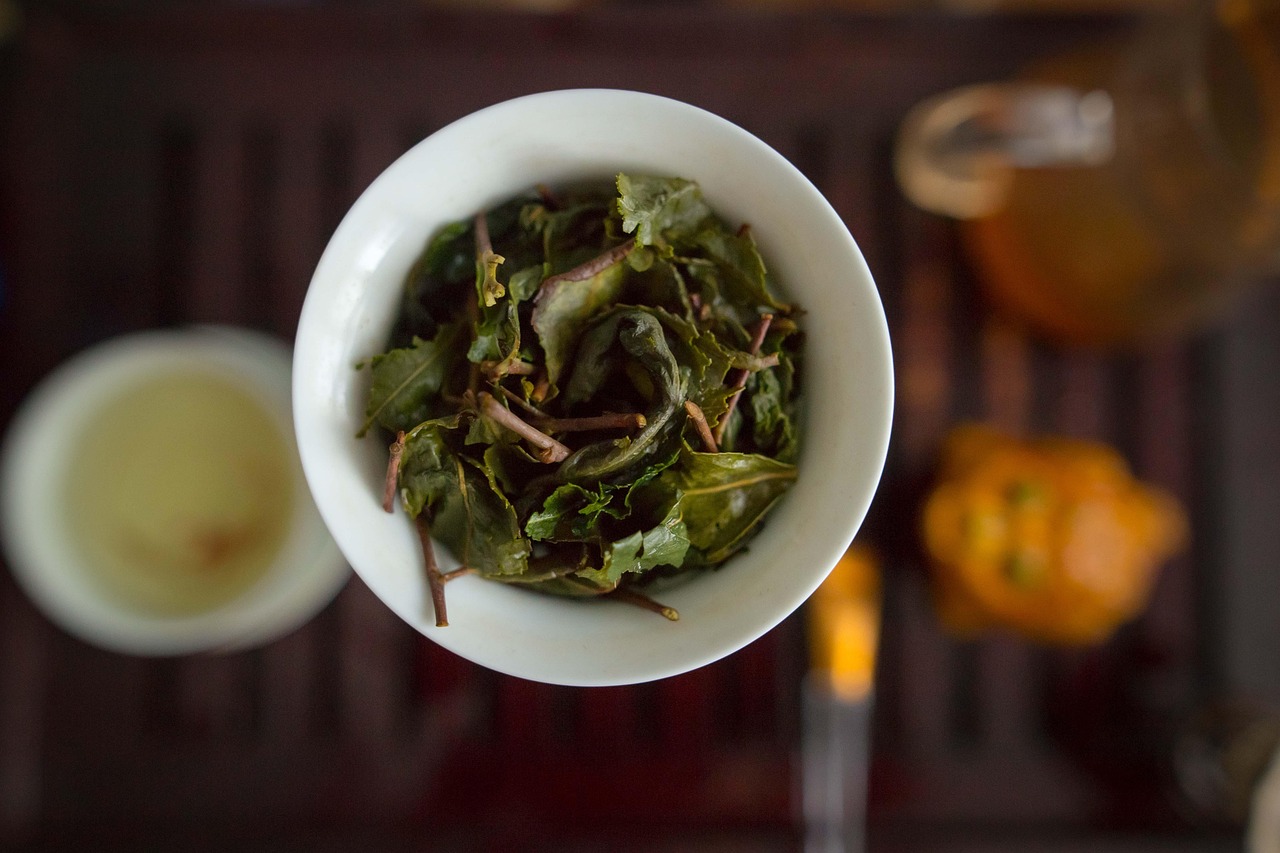 Photo by directmonitor on Pixabay
Don't buy twenty teas at once. Start with five — one from each major category (skip yellow tea for now) — and spend a week with each. Here's a specific plan:
Week 1: Green Tea — Long Jing
Buy: 50g of Qiantang or Yuezhou Long Jing (¥20–50 for 50g)
Brew: 3g of tea in your gaiwan, water at 80–85°C (boil water and let it cool for 2–3 minutes), steep for 60 seconds. Drink three infusions.
Pay attention to:
- The aroma of the dry leaves (chestnut? beans?)
- The color of the liquor (is it clear? green? yellow?)
- The sweetness after swallowing (huigan 回甘)
- How the flavor changes from first to third infusion
Week 2: White Tea — Bai Mu Dan
Buy: 50g of Fuding Bai Mu Dan (¥15–40 for 50g)
Brew: 5g in your gaiwan, boiling water (100°C), steep for 15–20 seconds. Drink five infusions.
Pay attention to:
- How different this tastes from green tea despite similar lightness
- The natural honeyed sweetness
- The soft, round mouthfeel
- How much more forgiving it is — try steeping longer and note how it doesn't go bitter the way green tea does
Week 3: Oolong — Tie Guan Yin
Buy: 50g of Anxi Tie Guan Yin (¥15–40 for 50g, often sold in individual 7g vacuum packets)
Brew: 7–8g in your gaiwan, boiling water (100°C), steep for 10 seconds for the first infusion, increasing by 5 seconds each round. Drink 7+ infusions.
Pay attention to:
- The orchid aroma (盖香, lid fragrance — lift the lid and inhale)
- How the flavor shifts across infusions
- The complexity compared to green and white tea
- The lasting sensation in your throat after swallowing
Week 4: Black Tea — Dian Hong
Buy: 50g of Yunnan Dian Hong (¥15–40 for 50g)
Brew: 5g in your gaiwan, boiling water, steep for 10–15 seconds. Drink 5–8 infusions.
Pay attention to:
- The sweetness — no bitterness at all if brewed correctly
- The malty, honey-like depth
- The golden color of the liquor
- How this compares to any Western black tea you've had before
Week 5: Dark Tea — Shou Pu-erh
Buy: A small cake or 50g sample of shou pu-erh (¥15–30 for 50g)
Brew: 7–8g, boiling water, rinse twice (pour water in, immediately pour out — pu-erh needs rinsing), then steep 10–15 seconds for the first real infusion.
Pay attention to:
- The earthy, dark quality — does it appeal to you or not?
- The thickness of the mouthfeel (shou pu-erh should feel viscous)
- The warmth in your body after drinking
- Whether the earthy flavor grows on you across infusions
After Five Weeks
You now have a baseline. You know which category appeals to you most. From here, go deeper into your favorite:
- Loved green tea? Try Bi Luo Chun and Huangshan Mao Feng. Read our Long Jing guide
- Loved oolong? Try Da Hong Pao and Mi Lan Xiang Dan Cong. Read our oolong comparison
- Loved pu-erh? Try sheng pu-erh (start with 3–5 year aged). Read our pu-erh guide
- Loved white tea? Try Bai Hao Yin Zhen and aged Shou Mei. Read our white tea guide
Learning to Taste: The Four Elements
Chinese tea tasting evaluates four dimensions. Practice noticing each one:
1. Observe the Tea Color (观茶色)
Look at the liquor in your cup. Good tea produces a clear, bright liquor — never cloudy or murky. Each type has its expected color range:
- Green tea: pale green to yellow-green
- White tea: pale gold to light amber
- Oolong: gold to deep amber (varies with oxidation)
- Black tea: bright orange-red to deep red
- Pu-erh (shou): dark ruby to near-black
Clarity and brightness indicate proper processing. Cloudiness suggests flaws.
2. Smell the Tea Fragrance (闻茶香)
Aroma is half the experience. Three places to smell:
- Dry leaves in the gaiwan before adding water
- The lid (盖香) after pouring — lift the lid and inhale immediately
- The empty cup (杯底香) after drinking — this tells you about the tea's staying power
Quality tea has a persistent, evolving aroma. Each infusion smells slightly different. Cheap tea has a flat, monotone scent that disappears quickly.
3. Taste the Tea Flavor (品茶味)
Take a small sip. Let it sit on your tongue for a moment before swallowing. Notice:
- Sweetness vs. bitterness — Some bitterness is normal (especially in pu-erh and young oolong), but it should transform into sweetness. If bitterness lingers without transforming, it's a quality issue
- Thickness (厚/薄) — Does the tea feel thick and coating in your mouth, or thin and watery?
- Huigan (回甘) — The returning sweetness that appears after swallowing. This is the most valued quality marker in Chinese tea. Great tea produces a sweetness deep in the throat that builds for seconds after you swallow
- Smoothness (滑) — Does the tea glide or catch?
4. Feel the Tea Rhyme (悟茶韵)
This is the advanced dimension — and honestly, it takes time. "Tea rhyme" (茶韵) refers to the overall sensation the tea creates: the feeling in your body, the mood it produces, the way it lingers in your awareness. Different teas have different "yun": oolongs have "yan yun" (rock rhyme) or "guan yin yun," pu-erh has "chen yun" (aged rhyme).
Don't force this. It develops naturally as you drink more tea and pay attention.
Common Beginner Mistakes (and How to Avoid Them)
Mistake 1: Using Too Much Tea
The gongfu ratio (7–8g per 110ml) seems like a lot compared to Western brewing. But gongfu steeps are short — 10–15 seconds. If you use the gongfu amount but steep for 3 minutes, the result will be unbearably strong. Match your tea quantity to your brewing method.
For gongfu: 7–8g, short steeps (10–30 seconds) For mug brewing: 3g, longer steeps (2–5 minutes)
Mistake 2: Boiling Water for Green Tea
Green tea is the one category where water temperature matters critically. Use 80–85°C water. Boiling water denatures the amino acids that create green tea's sweetness and brings out harsh tannins instead. Easy fix: boil water, then wait 2–3 minutes.
Mistake 3: Judging Tea by the First Sip
Chinese tea is designed to be experienced across multiple infusions. The first steep opens the leaves. The second and third steeps often reveal the tea's true character. By the fifth or sixth steep, you're tasting deeper, subtler qualities. Give every tea at least 3–4 infusions before forming an opinion.
Mistake 4: Buying Too Expensive Too Early
There's no point spending ¥3,000 on Mingqian Xi Hu Long Jing if you can't yet distinguish it from ¥300 Qiantang Long Jing. Start affordable, develop your palate, then upgrade. The value range for beginners is ¥100–500 per jin. You'll get genuinely good tea at these prices.
Mistake 5: Storing Tea Incorrectly
Green tea goes stale fast. Keep it sealed, refrigerated (in an airtight container so it doesn't absorb fridge odors). Oolong and black tea are fine at room temperature, sealed and away from light. Pu-erh needs airflow — don't seal it airtight.
For the complete storage guide, see our tea storage guide.
Where to Buy: A Beginner's Guide to Sourcing
 Source: Yunnan Sourcing
 Photo by
 Physical Tea Shops
If you have access to a Chinese tea market or shop, this is the best way to start. Shop owners typically brew tea for you before purchase — take advantage of this. Try before you buy. Don't feel pressured to purchase expensive teas; a good shop owner will respect your budget.
Online Platforms
Chinese e-commerce has made quality tea accessible globally:
- Taobao/Tmall — Massive selection, but quality varies wildly. Look for shops with high ratings and detailed origin information
- JD.com — More curated than Taobao. Brand-name teas with better quality control
- Specialty tea sellers with their own websites — often the best quality and most reliable sourcing
What to Look For in a Seller
- Specific origin information — "Xi Hu Long Jing from Meijia Wu" is better than just "Long Jing"
- Processing details — hand vs. machine, roast level, harvest date
- Sample sizes available — good sellers offer 50g or 100g samples so you can try before committing to larger quantities
- Willingness to answer questions — avoid sellers who are vague about origin or processing
Building Your Tea Knowledge Over Time
The Best Way to Learn
Drink side by side. Buy two teas of the same type at different prices or origins and brew them simultaneously. Tasting them back to back reveals differences that you'd miss tasting them days apart. Compare ¥200 Long Jing vs. ¥500 Long Jing. Compare light-roast vs. heavy-roast Tie Guan Yin.
Take notes. Keep a simple tea journal. For each tea, note: name, origin, price, brewing parameters, and your impressions (aroma, taste, mouthfeel, overall). Review your notes after a month — you'll be surprised how much your perception has sharpened.
Drink with experienced friends. If you know someone who's deep into Chinese tea, drink with them. They'll point out subtleties you'd miss alone. The Chinese tea community (both online and offline) is generally welcoming to beginners.
The Chinese Tea Saying That Matters Most
"茶无上品,适口为珍" — "Tea has no absolute best; what suits your mouth is precious."
Don't let anyone tell you that your taste is wrong. If you prefer Dian Hong over Long Jing, that's not a mistake — it's a preference. The goal of learning tea isn't to agree with experts. It's to understand what you enjoy and why, so you can find more of it.
Health Benefits: What the Research Says
Chinese tea has been studied extensively for health benefits. The key findings relevant to beginners, supported by research:
- Antioxidant activity: All tea types contain polyphenols (catechins in green tea, theaflavins in black tea) with demonstrated antioxidant properties
- Metabolic effects: Regular tea consumption is associated with modest improvements in metabolic markers. Green tea catechins have been most studied
- Cardiovascular associations: Large cohort studies in China have found associations between regular tea drinking and reduced cardiovascular risk
- Caffeine content varies significantly: Green and white teas are generally lower in caffeine; black tea and pu-erh moderate; heavily brewed oolong can be quite high
- L-theanine: An amino acid unique to tea that promotes calm alertness. This is why tea feels different from coffee — the caffeine is there but modulated by L-theanine
For the full research review, see our Chinese tea health benefits guide.
Important caveat: Tea is a beverage, not medicine. Enjoy it for its flavor and the ritual of preparation. Any health benefits are a bonus, not a guarantee.
Frequently Asked Questions
I only have a regular mug — can I still enjoy Chinese tea?
Absolutely. Pour 3g of tea into a mug, add hot water (temperature based on tea type), steep 2–5 minutes, and drink. This won't give you the nuanced multi-infusion experience of gongfu brewing, but it produces perfectly enjoyable tea. Many Chinese office workers brew tea exactly this way — leaves directly in a glass with hot water, sipping and refilling all day. A gaiwan is an upgrade, not a requirement.
How much should I budget for my first month of Chinese tea exploration?
Equipment: ¥50–100 (gaiwan, pitcher, cups). Tea: ¥100–200 for 50g samples of 5 different teas. Total: ¥150–300. That gets you a full month of exploration across all major categories. Chinese tea at the beginner level is remarkably affordable — far cheaper than specialty coffee.
Is it true that the first infusion should always be discarded?
For pu-erh: yes, rinse once or twice. For compressed teas: yes, the rinse helps loosen the leaves. For oolongs with heavy roasting: one quick rinse helps. For green tea, white tea, and light oolongs: no, the first infusion is drinkable and often excellent — rinsing wastes the freshest, most delicate flavors. The "always rinse" advice is one of those half-truths that gets applied too broadly.
I tried Chinese tea and found it bitter — what am I doing wrong?
Three likely causes: (1) Water too hot for the tea type — green and yellow teas need 80–85°C, not boiling. (2) Steeped too long — in gongfu style, the first few infusions should be 10–15 seconds, not minutes. (3) Too much tea for the water volume. Try cutting your tea amount in half and shortening your steep time. Bitterness in Chinese tea is almost always a brewing error, not a tea quality issue (assuming you didn't buy the cheapest possible commodity tea).
What's the difference between gongfu brewing and Western-style brewing?
Gongfu uses more tea (7–8g), less water (110ml), and very short steep times (10–30 seconds) for many infusions (8–15+). Western style uses less tea (3–5g), more water (200–400ml), and longer steep times (2–5 minutes) for fewer infusions (2–3). Gongfu extracts more nuance and produces a more concentrated, evolving experience. Western style is simpler and still enjoyable. Start with whichever fits your lifestyle. Full details in our gongfu brewing guide.
Related Reading
- The Six Types of Chinese Tea: A Complete Guide
- Gongfu Brewing: The Chinese Method That Transforms How Tea Tastes
- Chinese Tea Health Benefits: What Medical Research Actually Says
— The Tea Atlas Team