Best Gongfu Tea Sets for Beginners
- Start with a white porcelain gaiwan set (¥80–200/$11–28) — it's what Chinese tea shops use
Quick Answer:
- Start with a white porcelain gaiwan set (¥80–200/$11–28) — it's what Chinese tea shops use
- Avoid Yixing teapots as your first purchase — they absorb flavor and require tea-specific dedication
- A complete beginner set needs: gaiwan, fair cup (公道杯), 2–4 cups, strainer, and tea tray
- Buy from established ceramic brands on JD.com or Taobao — not tourist shops
Gongfu tea brewing (功夫茶) is the Chinese method of making tea with high leaf-to-water ratio and short steeping times, producing concentrated, flavorful cups across multiple infusions. The equipment is simple, but choosing the right set matters — the wrong starter kit creates frustration, not enjoyment.
This guide draws from Zhihu (知乎) recommendations, Taobao bestseller data, and Chinese tea community consensus to recommend the best beginner-friendly gongfu setups at every budget.
For the complete brewing technique, see our gongfu brewing guide.
1. Dehua White Porcelain Gaiwan Set (德化白瓷盖碗套装)
Best For: The #1 recommended first gongfu set — period
Dehua, Fujian produces China's finest white porcelain, and a Dehua gaiwan set is what 90% of Chinese tea forums recommend for beginners. White porcelain doesn't absorb flavor (unlike Yixing clay), shows liquor color accurately, and works for every tea type. It's the universal tool.
A good starter set includes: 120ml gaiwan, 200ml fair cup (公道杯), 4 tasting cups (品茗杯), and a mesh strainer.
 Image: TeaVivre
Pros:
- Works for every tea type — green, oolong, pu-erh, black, white
- Thin-walled Dehua porcelain dissipates heat quickly, preventing burned fingers
- Easy to clean and doesn't retain flavors between sessions
Cons:
- Porcelain is fragile — expect to break your first gaiwan within a few months
- The gaiwan technique takes practice; expect some spilled tea early on
Price: ¥80–200 for a complete set ($11–28 USD) | Premium Dehua: ¥200–400
Our Yixing teapot guide explains why porcelain comes first.
2. Glass Gaiwan or Glass Teapot Set (玻璃盖碗/玻璃壶套装)
Best For: Visual learners who want to watch leaves unfurl
Glass gaiwans and small glass teapots (200–300ml) are popular with Chinese tea drinkers who brew green tea and flowering tea. Watching Long Jing leaves sink and Jasmine pearls unfurl is part of the experience. Heat-resistant borosilicate glass handles repeated boiling water without cracking.
Pros:
- Full visual access to the brewing process — educational and beautiful
- Neutral material that imparts zero flavor to the tea
- Affordable and widely available
Cons:
- Glass conducts heat — gaiwan lids get very hot, increasing burn risk for beginners
- Doesn't retain heat as well as porcelain or clay, affecting oolong and pu-erh brewing
Price: ¥40–150 for a glass gaiwan or teapot set ($6–21 USD)
3. Bamboo Tea Tray Starter Kit (竹制茶盘入门套装)
Best For: Setting up a proper gongfu station at home
A small bamboo tea tray (干泡台 or 湿泡盘) with built-in drainage catches spills and overflow during gongfu brewing — and there will be spills. Starter kits on Taobao bundle the tray with a gaiwan, fair cup, cups, and basic tea tools (tongs, pick, funnel) for a complete setup.
Pros:
- Everything you need in one purchase — no piecemeal buying
- The tea tray makes gongfu brewing less messy and more enjoyable
- Bamboo is warm, natural, and aesthetically pleasing
Cons:
- Takes up table space — measure before buying (most beginner trays are 30×20cm minimum)
- Wet-style trays need regular emptying and drying to prevent mold
Price: ¥150–350 for a complete bundled set ($21–49 USD)
4. Portable Gongfu Travel Set (旅行功夫茶具)
Best For: Office tea drinkers and people who travel frequently
Travel gongfu sets pack a small gaiwan or teapot, 2–3 cups, and sometimes a fair cup into a padded carrying case. They're hugely popular among Chinese office workers who want to brew properly at their desk. The set doubles as a minimal home setup for people with limited space.
Pros:
- Brew gongfu-style anywhere — office, hotel, outdoors
- Compact carrying case protects ceramics and keeps everything organized
- Often includes anti-scald design features (wider rim, insulated lid knob)
Cons:
- Small capacity (80–100ml gaiwan) means very small cups of tea
- Some travel sets sacrifice quality for portability — cheap ceramic chips easily
Price: ¥100–300 ($14–42 USD) for quality travel sets
5. Ru Kiln Style Gaiwan Set (汝窑风格盖碗套装)
Best For: Those who want gongfu equipment that looks like art
Ru kiln (汝窑) style ceramics feature a distinctive ice-crackle glaze in soft blue-green, grey, or celadon tones. Modern reproductions from Jingdezhen and Dehua capture the Song Dynasty aesthetic at accessible prices. The crackle glaze develops a tea-stained patina over time that collectors love — it's called 养杯 (nurturing the cup).
Pros:
- Stunning visual aesthetics that elevate the brewing experience
- The crackle glaze develops unique patina with use — each set becomes one-of-a-kind
- Same functionality as white porcelain with more visual character
Cons:
- The crackle glaze can trap tea stains — harder to keep "clean" (though staining is desired by some)
- More expensive than plain white porcelain for equivalent functional quality
Price: ¥150–400 for a complete set ($21–56 USD)
6. Small Yixing Clay Teapot — Beginner Grade (宜兴紫砂壶入门款)
Best For: Dedicated oolong or pu-erh drinkers ready for the next level
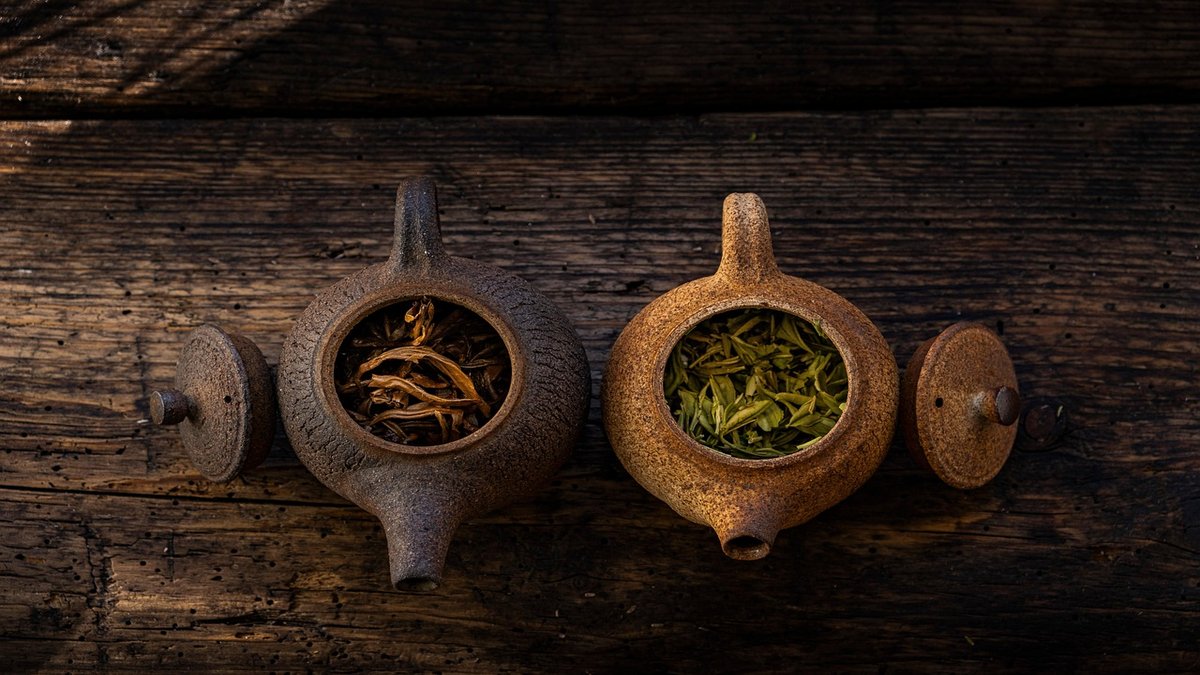
A small (100–150ml) Yixing teapot is not a first purchase — it's a second one, after you've used a gaiwan long enough to know which tea type you prefer. Yixing clay absorbs tea oils over time, enhancing the flavor of the one tea type you dedicate it to. A genuine entry-level Yixing pot from a known clay type (紫泥 Zini, 段泥 Duanni, 红泥 Hongni) starts the journey.
 Image: TeaVivre
Pros:
- Enhances the flavor of dedicated tea types over time — a living, evolving tool
- Beautiful craftsmanship and cultural significance
- A well-maintained Yixing pot lasts a lifetime
Cons:
- Must be dedicated to one tea type — using multiple teas "confuses" the clay
- The fake Yixing market is enormous — most pots under ¥200 are not genuine Yixing clay
- Requires seasoning and careful maintenance
Price: ¥200–500 for genuine entry-level ($28–70 USD) | Established artist: ¥800+
Our comprehensive Yixing teapot guide covers selection, seasoning, and care.
What NOT to Buy as a Beginner
Based on Chinese tea forum discussions, avoid these common beginner mistakes:
- Expensive Yixing teapots before you know your tea preference — You'll either dedicate it to the wrong tea or use it for multiple teas and ruin the seasoning
- Large tea trays — Start with a small dry-pour tray (干泡台) or tea boat (茶船). Giant wet trays are for serious home setups
- Electric tea tables — These built-in brewing stations cost ¥500–2000+ and are overkill for beginners
- Full Jingdezhen ceramic sets — Beautiful but fragile and expensive. Master the basics first
- Tea canisters before you have tea — Buy storage after you know what and how much you'll store
FAQ
What is the best gongfu tea set for a complete beginner? A Dehua white porcelain gaiwan set with a 120ml gaiwan, fair cup, 4 tasting cups, and a strainer. Budget ¥80–200 ($11–28). This is what Chinese tea professionals use for evaluation and what tea forums universally recommend as a first set.
Do I need a tea tray for gongfu brewing? Not strictly. You can brew over a towel, plate, or small tea boat (茶船). But a small bamboo tray (¥50–150) makes the experience more enjoyable and less messy. The "dry-pour" (干泡) style that's popular now uses a minimal tray or even just a tea mat.
Gaiwan or teapot — which should I start with? Gaiwan. It works for every tea type, is cheaper, and teaches you to control brewing variables directly. A teapot is a specialized tool for when you know your preferred tea type. Chinese tea forums are nearly unanimous on this: 盖碗先, 紫砂后 (gaiwan first, Yixing later).
How do I avoid burning my fingers with a gaiwan? Use the proper grip: thumb and middle finger on the saucer rim, index finger on the lid knob. The lid should be slightly offset to create a pouring gap. Pour in one smooth motion — don't hesitate. Thin-walled Dehua porcelain dissipates heat faster than thick ceramic. Practice with room-temperature water first.
Where can I buy quality gongfu tea sets online? For Chinese buyers: JD.com (京东) and Taobao/Tmall for the widest selection. For international buyers: Yunnan Sourcing, TeaVivre, and Bitterleaf Teas carry curated selections. Avoid Amazon — most "gongfu sets" there are overpriced tourist-grade ceramic.
Related Reading
- Gongfu Brewing: The Chinese Method That Transforms Tea
- Yixing Teapots: How to Choose, Season, and Use Zisha Clay
- Chinese Tea for Beginners: How to Start Your Journey
— The Chinese Tea Trends Team